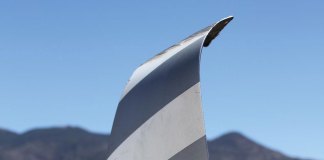
![After nearly 75 years, the basic Tailwind design remains sound. [Credit: LeRoy Cook]](https://www.kitplanes.com/wp-content/uploads/2026/07/IMG_4636.jpg?resize=1024,682)
Still viable in an age of uber-expensive composite homebuilts, the Wittman Tailwind continues to attract builders seeking maximum performance on minimum cost. Plans for the W-8 Tailwind were initially offered in 1953, when it was nicknamed the “Flying Carpet,” perhaps owing to a perceived less-than-aerodynamic shape at first glance. Nevertheless, like all of Steve Wittman’s creations, it proved to fly fast and well.
Even after nearly 75 years, the basic Tailwind design remains sound. It has been upgraded by wingtip extensions and a lengthened fuselage as the W-10 version, enabling it to accommodate heavier engines but even so, it’s still a Tailwind. Construction remains conventional with a steel-tube and fabric fuselage, wooden wing structure and the famous Wittman-patented tapered-spring landing gear.
Sylvester J. “Steve” Wittman was born only a year after the Wright Brothers first flew, spending most of his life in the Fond Du Lac and Oshkosh, Wisconsin area. A natural mechanic, he overcame deficient vision in one eye to learn how to fly in a Standard J-1. He built a self-designed airplane using a 12-hp motorcycle engine, dubbed the “Hardly Ableson,” that was barely capable of flight, and later went on to build successful pylon racing airplanes in the early 1930s. He continued his air racing exploits until World War II intervened and then resumed designing Goodyear-class racers after the War.
His air racing experiences taught Wittman how to build airplanes that were both fast and light. In the early 1950s he became a supporter of Paul Poberezny’s efforts to found the Experimental Aircraft Association. Resurrecting his Buttercup race-support airplane from the mid-1930s, Wittman created a two-seat homebuilt as soon as the Civil Aeronautics Association allowed such aircraft under CAR 174-3. The Tailwind, using a Continental C-90 engine from a Formula One racer, became an overnight success.
![Mike Wilson spent 30 years building his Wittman W-10 Tailwind. He’s shown on the ramp at St. Charles, Missouri, with N105MW. [Credit: LeRoy Cook]](https://www.kitplanes.com/wp-content/uploads/2026/07/IMG_4629.jpg?resize=1024,682)
The secrets behind the Tailwind’s performance on nominal horsepower are simple; a clean drag-free airframe and minimum weight. The side-by-side cabin is adequate for two, but not overly spacious, reducing wetted area to the least possible amount. Its truss fuselage and plywood-covered wing give strength, but with lightness. The airplane’s boxy shape is designed to slip through the air with minimal disturbance; the flat Plexiglas windshield is raked back over the cabin, with wing root notches at the junction of the wing and fuselage to improve visibility during turns. Only a single wing strut is needed for bracing and the simple tapered rod? landing gear maintains the minimalist concept.
In its original configuration, the Wittman Tailwind featured a 22.5-foot wingspan and an empty weight of 700 pounds, grossing at 1300 pounds, down in the initial light-sport airplane category. The up-rated W-10 featured a 24-foot wing and a target gross weight of 1425 pounds. Various engines have been used, from the small Continentals up to four-cylinder Lycomings. Steve Wittman himself installed an inverted Oldsmobile aluminum V-8 car engine in the W-10 at one point.
After Steve Wittman’s death in 1995, the rights to the Tailwind design were acquired by Aircraft Spruce & Specialty, which offers plans as well all the supplies needed.
An Award-Winning Tailwind, Decades in the Making
We were privileged to visit and fly with Mike Wilson of St. Charles, MO, sampling his N105MW, a fine example of Steve Wittman’s design. “It took me 30 years of building, taking time out for family and work,” Wilson said. “I bought the plans when Steve Wittman was still alive and enjoyed visiting with him at Oshkosh early on. The W-10 version was Wittman’s recommendation, and I chose the Lycoming O-320 engine as the acknowledged ‘sweet spot’ powerplant for the airplane.”
Wilson’s project began in the family garage, as most do. As the years went on, a house with more building space was chosen, and eventually a hangar at the St. Charles County airport was obtained. The Tailwind is a multi-media execution of aeronautical art, involving woodworking for the wing spars, ribs and plywood sheathing, welding up the steel fuselage frame, and applying fabric covering for the entire airplane aft of the cowling. Fortunately, Wilson had acquired welding skills as a teenager that stood him in good stead when working on his dream machine.
The core O-320 Lycoming engine was obtained from a parting-out Rockwell Darter Commander, rebuilt with 8.5:1 compression and a new cam to a 160-hp configuration. Wilson installed one standard magneto, with a P-Mag on the other ignition position. An efficient WhirlWind ground-adjustable carbon-fiber propeller was used, with a sleek fiberglass cowling following behind. Fuel is carried in a 33-gallon aft-of-firewall tank, its filler neck found just forward of the windshield. The Tailwind’s windscreen is flat, like most of the airplane’s lines, but streamlined into a nearly-seamless profile back over the cockpit to join the carefully tapered upper fuselage. When viewed from the front, it becomes apparent that there are minimal protrusions into the airflow, giving Tailwinds blazing speed for their horsepower.
The landing gear legs are, of course, the Wittman-patented tapered rod springs, encased in streamlining fairings that Wilson built of wood and fiberglass. Simple and maintenance free, the main gear have also worked well in homebuilts like RV 6’s over the years. Wilson’s mainwheel tires are 5.00 x 5 doughnuts, mounted with Matco wheels and brakes. The tapered rod tail spring, mounting a solid tire, was obtained from Langair Machining, the supplier of Van’s RV landing gear.
The few deviations from Wittman’s original plans that were incorporated by Wilson are the “Jim Clement” mods to the aft wing spar, joggled where it passes through the overhead for a little more headroom in the cabin, and Clement’s doorframe mod, altering the tubing at the rear of the door opening to make boarding easier. The Tailwind is a “low-highwing” airplane, requiring a bit of a crouch to reach the entryway. A compact but adequate baggage area behind the seats has a capacity of 40 to 60 pounds, Wilson said.
No dihedral angle is used in the Tailwind’s wings; the inherent stability of a high wing layout serves well enough. The left wing carries a heated pitot/static mast. The wing struts are placed well forward, minimizing impact on accessing the doors. The W-10’s wingtips are tapered extensions to the original W-8 wing panels that create an extra 18 inches of span. Wilson used fabric covering for the ailerons and flaps, at a slight increase in weight over the aluminum skins favored by some builders.
At the tail, the unbraced stabilizers and controls have a squared-off planform, versus Wittman’s original rounded tips. Balanced elevators lighten pitch forces. A small rudder only occupies the lower half of the vertical stabilizer, but it’s more than enough for yaw control.
The fabric finishing method Wilson used was the Stewart Systems water-based process, which he opted for to minimize odor and mess in the house, after initially considering the use of Super-Flight covering. To achieve his award-winning finish required hours upon hours of sanding and buffing. Spraying on the last coat is hardest, he says, since it’s difficult to keep track of where you’ve been. The bright yellow striping is vinyl because, as Wilson put it, “There’s a thousand ways to mess up paint. Vinyl is simpler.”
Mike Wilson learned to fly at 16 in a Piper Warrior, concurrently with his father, and his first plane ownership was a partnership in a 1956 Cessna 172. He then switched to an Aeronca Super Chief, and later owned an Acrosport II, followed by a Davis DA-2A. Those experimental designs fostered a desire to build something on his own; after initially considering a Cozy canard composite project, he chose the more-conventional Tailwind.
The lengthy Tailwind build was completed in 2023, which happened to coincide with the 70th Anniversary of the type. Wilson completed his task-based test flying using the new EAA flight test manual. As it turned out, the testing was accomplished in time to make it to the post-Covid restarting of AirVenture, and his attendance was rewarded with a Bronze Lindy recognition at the show.
Wilson logged 1800 hours of building time, but that’s only a partial recording. He estimates the total monetary investment to be around $60,000. His Tailwind’s empty weight came out at just over 900 lbs, and with the airplane’s gross weight set at 1550 lbs there’s plenty of useful load.
![Tha landing gear legs are Wittman’s patented tapered rod springs. The tail wheel is designed with a tapered rod spring and a solid tire. [Credit: LeRoy Cook]](https://www.kitplanes.com/wp-content/uploads/2026/07/IMG_4640.jpg?resize=1024,682)
Flying The Tailwind
Mike Wilson built his W-10 mostly per the original plans, with foldaway right-hand rudder pedals and a control yoke that only has a left-seat grip. The over-the-leg centrally-mounted yoke was Steve Wittman’s solution to joy-stick interference during entry. After I boarded by stepping in and hoisting myself into the saddle with a handy truss tube, I found there was adequate room. Only the left door has a pop-open exterior button; the right-hand door must be opened from the inside.
Wilson is an electrical engineer by trade, as reflected in his cleanly-appointed interior and flight deck. The anodized aluminum instrument panel was produced with the aid of SolidWorks CAD software. There’s not a steam gauge in sight; the dashboard contains a full suite of GRT displays (standby, PFD/MFD, engine monitor and autopilot) plus an MGL comm and nav radio.
A quick twist of the key-activated starter brought the O-320 instantly to life. Taxi visibility is better than I expected for a compact tailwheel airplane with a birdcage of trusswork ahead, as long as one remembers to S-turn regularly to clear blind spots. The pre-takeoff checks and run-up were brief, once the avionics were set up.
Using one notch of flaps, we were off and climbing before reaching the 1000-foot mark at taxiway F on KSET’s short runway 27. At 120 mph IAS, we ascended at 1500 to 1700 fpm and quickly leveled off at 2000 feet under the Class B overhang of the nearby STL airport. Accelerating into level flight, the Tailwind’s forte, the IAS climbed to 150, 160, 170 and finally 180 mph, where the engine was turning 2500 rpm. Wilson reports full-throttle runs into the upper-190s, and eventually he expects the Tailwind will be clocking 200 mph.
And the Tailwind runs slow as well, as Steve Wittman designed it. Wilson coaxed the little speedster into slow flight at 65 mph, where the angle of attack warning started sounding, and with flaps up the stall came at about 55 mph. With the flaps down, the break was delayed to an observed 40 mph IAS. Returning to the pattern, we were flying at about 120 mph on a leisurely 2000 rpm, and we then entered the downwind at 100 mph using 1700 rpm, curving into the base leg at 90 mph. Slowing to 75 on short final and skimming over the threshold at 70, there was considerable float experienced in the gusting crosswind before turning off at the end of the 2000-foot strip.
For now, Mike Wilson has every reason to be satisfied with his speedy traveling airplane, a tribute to a master designer who knew how to go fast in style. The Wittman Tailwind is truly a classic homebuilt, one that’ll probably still be seeing examples under construction on its 100th birthday. An active Wittman Tailwind support group can be found at https://groups.io/g/TailwindForum
![Ten hours of dual instruction in a tailwheel-equipped aircraft is usually required for proficiency. [Credit: AdobeStock]](https://www.kitplanes.com/wp-content/uploads/2026/07/AdobeStock_354747155.jpg?w=218&h=150&crop=1 "Learning How to Drag Your Tail")