
![[Credit: Wikimedia Commons]](https://www.kitplanes.com/wp-content/uploads/2026/07/F-117_Nighthawk_Front.jpg?resize=1024,682)
If you look at the books in my library, and by that, I mean the ones on the shelves, not the ones next to… (well, you know), you might notice a trend toward books about odd and unusual airplanes. I don’t know why I have such a fascination with the oddball aircraft other than I find it interesting to see all the different designs that were tried and discarded versus the same two or three basic layouts that are common today. These early oddballs were the efforts of the ancestors of homebuilding.
Some of the titles have adjectives such as “worst” or “failures” however fairly or unfairly applied.
I see these designs more as the ideas others have had in trying to be innovative in their approach to committing to aviation and flight. Some of these quirky aircraft are from the infancy of aviation, before a lot of the now-ubiquitous configurations and flight controls had been worked out, and there was still a lot of experimenting going on. Some of the others are more recent and are usually aircraft designed to satisfy a particular mission.
Thankfully, a number of the early experiments were captured on film and viewed by so many of us in the opening scenes of “Those Magnificent Men in Their Flying Machines” (full title: “Those Magnificent Men in their Flying Machines, or How I Flew from London to Paris in 25 Hours and 11 Minutes”) and can now be found on the internet. Search under “early flying machine failures”; definitely worth a few minutes of viewing entertainment. Fun fact: TMMiTFM was Red Skelton’s last film appearance.
A number of the early attempts were with ornithopters, a concept as old as sketches by Leonardo daVinci and a feat that was finally accomplished about 530 years later with the University of Toronto Snowbird. The Snowbird, like other human-powered aircraft, was by necessity an extremely flimsy aircraft similar to the Gossamer Albatross and Gossamer Condor that flew over forty-six years ago. As Paul MacCready and others have shown, the power output of even a very fit human is pathetically small compared to what is needed for powered flight. From our present-day perspective, the early ornithopters (indeed many of the early aircraft in general) were laughably heavy and had absolutely no chance of achieving flight, especially the human-powered ones. On the other hand, it did mean most of those early aviators were safe from a crash landing unless they went off a cliff or rooftop.
After watching clips online of the early flying machines, I’m struck by how much time and effort went into building some rather complex contraptions with all manner of spinning/whirling/flailing appendages intended to create lift. Others make one wonder exactly what problem they were trying to solve, since flight seemed not to be it. With the hindsight of history, it is easy to shake one’s head at these attempts that not only failed spectacularly, but consumed what had to have been a lot of these guys’ time and money. Those early contraptions were largely a product of people who didn’t quite know what the heck they were doing, and in some respect seemed as if they were flailing (not unlike their machines) around for nearly any kind of solution that didn’t look like an existing solution. One must admire their creativity and confidence, if not their results.
![Another, broader view of the Convair XFY-1 “Pogo.” [Credit: Andrew Robinson]](https://www.kitplanes.com/wp-content/uploads/2026/07/XFV.jpg?resize=875,1024)
Later failures were technology experiments like the “tail sitters” from Lockheed, Convair, and Ryan.
An example of that trio of oddities is sitting on the grounds of Sun ‘n Fun in Lakeland, Florida: the propeller driven tail sitter from Lockheed, the XFV-1. Particularly clever is the logo on the tail that has both horizontal and vertical orientations. One of its jet powered contemporaries that I last saw at the San Diego Air Museum is the Ryan X-13 Vertijet literally hanging on the wall.
Both, along with the Convair XFY-1 “Pogo,” were potential solutions for a STOL fighter that could take off vertically, transition to horizontal flight, and fly much faster than a helicopter. It was a nice idea but ultimately proved to be difficult to execute in real life, especially for the flight-to-landing transition wherein the pilot is looking over his shoulder. The desire/need for a VSTOL aircraft didn’t end there, with funding going to other prototypes such as the Canadair CL-84, Ling-Temco-Vought (LTV) XC-142, and Bell X-22, all with combinations of tilting wings and/or engines.
Of that latter group, all were ultimately – in part – replaced by the V-22 Osprey, a faster, convertible VSTOL aircraft for utility and troop transport. Back to the tail-sitters. The fighter role was initially filled by the Harrier, an aircraft spectacular for converting fuel into noise (in a good way), and presently by the F-35B variant with its articulated exhaust and mid-body lift fan. Both “jump jets” are just amazing to watch as they show off their VSTOL capabilities and not to be missed if you have the opportunity to see them at an air show. To see what is clearly a fighter jet hovering, much less pirouetting about its vertical axis, gives extreme pause to most observers. For the most part, better air-to-air refueling and modern aircraft carriers, combined with the overall impracticality of tail sitters, rendered them to the discard heap of aircraft history. The Space-X boosters may come back down and land vertically, but that bit of Buck Rogers still eludes piloted aircraft. Yes, some of the recent EVs are touching on this capability, but they still have a long way to go before achieving the VSTOL mission profiles of the aforementioned aircraft.
It’s always interesting to see what somebody thought might be a better mouse trap if you will, and sometimes it was trying an idea that was a non-starter from the get-go, and other times the idea got overtaken by events. For instance, sitting on the grounds at Sun ‘n Fun in Lakeland and at the San Diego Air Museum is a jet fighter on floats: the Convair F2Y Sea Dart. It sure looks cool and pictures of it on the water look even cooler (like a Batman vehicle) but the reality is that the fast takeoff and landing speeds just about beat the pilots to death on the waves, and bigger, faster aircraft carriers pretty much rendered a water-capable fighter a moot point.
Interesting ideas like the Custer Channel Wing and the Stipa-Caproni ducted fuselage were intended to increase thrust and/or lift efficiency, but to little avail. Other aircraft consigned to these books were actually quite successful for their intended mission, and I am not quite sure why they wound up within the pages of those books other than they appeared odd in the eyes of the writer, plus the desire to have more pages to publish.
Never mind that many of these “oddities” did the job they were designed for. Take for instance the GB racers: they won races. Tricky to pilot, to be sure, but successful for their designed purpose. Likewise, the North American XB-70 bomber; it never went beyond the two prototypes, but can be argued as having been successful in having caused the Soviets to spend themselves silly trying to develop interceptors to counter the Valkyrie. As an aside, I count the XB-70 and B-36 amongst the historic aircraft that I would truly have loved to have seen fly with my own eyes.
Likewise, it would have been amazing to see it fly as intended, but the Avro Canada VZ-9 Avrocar flying saucer just wasn’t going to be anything more than a ground-hugging hovercraft, no matter how much money they threw at it. Just dang. Speaking of flying cars, most have been equally suspect: they tend to either be a flimsy, ill performing car, or a modestly performing airplane that is heavy. And not terribly good at either mission. Layer on the idea of having both the DOT and the FAA involved, and you have a regulatory nightmare, not to mention unobtainium insurance. That said, unlike some of the other aerial oddities mentioned, a practical flying automobile is a product that many of us wish was available, but alas, likely won’t ever be. The key word here is “practical”; most of us love the idea of driving to the airport, deploying wings and flying away, but a minor parking lot ding in auto-mode could damage a flight control and mean a long drive back home instead of a short flight. Alas.
![The Avro-Canada VZ-9AV AvroCar was so unstable it had to be tethered to the ground during testing. [Credit: U.S. Airforce]](https://www.kitplanes.com/wp-content/uploads/2026/07/AVRO_car.jpg?resize=1024,683)
A slightly more modern aircraft in the “unusual” category would be the F-117 Nighthawk with its angular, faceted shape that was unlike anything that had ever been seen before. Ahead of its time in certain respects, its exterior was a product of radar physics and lack of computational horsepower in the 1970s. Advances in computing meant that its faceted profile was pretty much a one-time deal, with later stealth aircraft having curved, blended surfaces. A notable exception was the Wainfan FMX-4 Facetmobile, a homebuilt designed and constructed by a prior Kitplanes contributor.
On the stealth theme, the B-2 could also fit in the unusual category, especially given that its flying wing ancestors, the YB-35 and YB-49, are already in the pages of those books.
While the wide variety and fast-paced rush of new designs for legacy aircraft is likely a thing of the past, we are now moving into a similar era with EV aircraft and drones. It will be and already is interesting to see all the different designs that come forth.

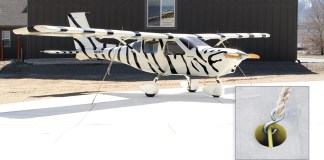


Loved the article on Odd and Unusual Aircraft. I agree the aviation landscape is covered in human drop dead intelligence of brain-dead designs. Aviation boneyard is full of money soaked off beat planes that drained someone’s pocketbook till there was nothing left. But this is the stuff that dreams are made of. The future of electric flight still has opened the possibilities of new designs that will ultimately change the shape and design of what will take to the air. Yes, I am a pilot with lots of hours under my belt, but my love of getting my hands dirty in the shop drives me even more. What I am taking here is the future of electrostatic winged flight. No more propellors or jet engines or rockets technology. As Townsen Brown proved in the late 50s that forward flight can happen just using electric current. The more voltage you throw at the wing, the faster it flies. You still can use the wing camber to generate your required lift overweight. My years of work in my shop experimenting with wings in this area is exciting. Electrostatic field energy can also operate an electric motor without the need for wires. just thinking of what you can do with these possibilities is endless. I could elaborate further but I feel you would just throw this into a garbage can and walk away. I published on You-Tube a video called Electrostatic wings flying on a 36-inch diameter carrousel and it was removed 3 times. Watch it and see what I know. That is the future. Thanks for writing your articles. Gives the “Hanger Fliers” something to talk about.
I am interested in your thoughts about the Robinson Wren aircraft. I think I understand the accident history and I can see some unexplored benefits. Three Wing aircraft seem to have great potential for increased payload and small field operations.
Convair XFY-1 “Pogo.” was a delta main wing vertical takeoff that had more success in testing than the Lockeed XFV-1 pictured. The Convair was at one time located at Pensacola
Comments are closed.