A scratch-built Douglas World Cruiser, the powered hang glider that launched the ultralight movement and a replica of a 1912 monoplane by Georgia’s first aviator now share the EAA Aviation Museum floor with three warbirds.
The EAA Aviation Museum in Oshkosh has added six aircraft to its exhibits. Three are warbirds on loan: a Curtiss P-40 Warhawk and a General Motors-built FM-2 Wildcat from the Frasca Collection, and a PBY-5A Catalina from the American Heritage Museum and Collings Foundation. The other three tell a story KITPLANES readers will recognize, about people who built the airplane they wanted to fly.
“It is a testament to how, whether you are a homebuilder, a restorer, or amateur aviator who dreams of flight, you have a true community at EAA,” said Chris Henry, the museum’s director.
Seattle II
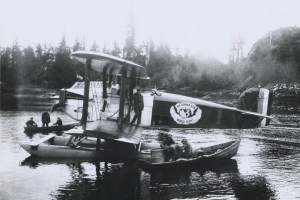
Bob and Diane Dempster of Washington flew their own light airplane around the world in the mid-1990s and came home fascinated by the first aerial circumnavigation, completed by U.S. Army Air Service crews in 1924. Four Douglas World Cruisers left Seattle that April; two finished the 175-day trip. The lead airplane, Seattle, crashed in Alaska.
Bob decided to build another one. He conceived the project around 2000, studied original plans at the National Air and Space Museum and visited the Alaska site where the original Seattle went down. The couple formed the nonprofit Seattle World Cruiser Association in 2001, and construction began in 2005 in their coffee shop. Volunteers helped, including members of EAA Chapter 26, who built wing ribs at “Build-A-Rib” sessions.
The result, Seattle II, is a full-scale, airworthy reproduction with a 50-foot wingspan, a 35-foot fuselage and a gross weight of 7,800 pounds on floats. Structure follows the original: welded steel-tube fuselage, wood-and-wire trusses, and wooden spars and ribs. Power comes from a 420-hp Liberty L-12 built in 1918 by the Lincoln Motor Company. The wooden propeller was made from 3D scans of an original World Cruiser prop held by the Museum of Flight in Seattle. Concessions to modern flying include a radio, a tailwheel instead of a skid, wheel brakes, aluminum Edo floats and synthetic fabric.
Seattle II first flew on December 20, 2014, from Boeing Field, with Dempster and former Boeing test pilot Tom Imrich aboard, and flew on floats in 2016. It was Dempster’s first homebuilt.
EAA invited the airplane to AirVenture 2026, where it was displayed on floats in the Vintage area. Afterward it moved into the museum on wheels, on loan from Dempster.
Icarus II
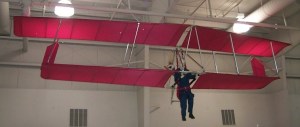
At the other end of the size scale is a 90-pound powered hang glider. The Icarus II was a rigid, swept-wing biplane hang glider designed by California teenager Taras Kiceniuk Jr., who sold plans to homebuilders. John Moody built one in the mid-1970s and taught himself to fly it.
Wisconsin’s flat terrain offered no hills to launch from, so Moody mounted a 12.5-hp McCulloch MAC-101 go-kart engine and a small pusher propeller on the back. On March 15, 1975, he started the engine, picked up the glider, ran about a dozen steps across frozen Long Lake and climbed away. The rig cruised at about 26 mph and could climb for roughly 30 minutes before Moody shut the engine down to soar.
Moody described the machine in “Back Yard Aviation” in the February 1976 issue of EAA Sport Aviation, then flew it for the crowds at Oshkosh that summer. Powered ultralights took off from there. Moody founded Ultralight Flying Machines of Wisconsin, the FAA created Part 103 in 1982 and Moody entered the EAA Ultralight Hall of Fame in 1999. He is widely called the father of modern ultralight aviation.
For the 50th anniversary of that Oshkosh flight, Moody donated the Icarus II to EAA. Members of the Michigan Ultralight Association collected it from his Florida home in 2025 and spent months cleaning, repairing and recovering it. It was displayed in the Ultralights area at AirVenture 2026 before moving into the museum.
“John told us he never had the money it takes to build and maintain a general aviation aircraft, so he built the best aircraft he could afford,” said Bill Darnell, one of the association members who brought the glider north.
Epps 1912 Monoplane
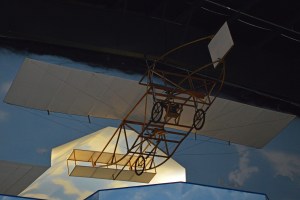
The oldest design of the three comes from Ben T. Epps, a self-taught mechanic in Athens, Georgia, who flew his first airplane in 1907 and became the state’s first aviator. Between 1907 and 1930 he designed and built six aircraft. His 1912 monoplane, reproduced in the museum’s replica, was an open-cockpit, wire-braced, mid-wing design built from scrap timber, cotton covering, bicycle wheels and a low-horsepower engine. Epps died in 1937 in a crash during a test flight near Athens.
All three aircraft are on display now at the EAA Aviation Museum, 3000 Poberezny Road, Oshkosh.