FAA Order 8130.2M frees Phase I flight testing from assigned areas, sends new homebuilts to a different FAA office for certification and shows non-builder owners the paperwork they need to do their own condition inspections.
If you plan to finish a homebuilt this winter, the first call you make for an airworthiness inspection may go to a different FAA office than it would have a year ago. And if you already fly an Experimental/Amateur-Built airplane you didn’t build, the same document spells out what has to happen before you can sign off your own condition inspection.
The document is FAA Order 8130.2, Airworthiness Certification of Aircraft. Revision M arrived in late August as one of the final pieces of the MOSAIC rollout, superseding Revision L, which was issued in January. Besides covering the new light-sport category, 8130.2M sets new standard operating limitations for experimental aircraft. Three changes matter most to homebuilders.
Phase I Without a Box
Until now, operating limitations for a new homebuilt assigned a specific flight-test area, typically a radius around the home airport. Under 8130.2M, the FAA no longer assigns an area automatically. Instead, the standard limitations accept any location in the United States that conforms with 14 CFR 91.305, which reads in full: “No person may flight test an aircraft except over open water, or sparsely populated areas, having light air traffic.”
EAA calls this the most significant positive change for builders, and it is. A builder based at a busy suburban field can plan Phase I over open country instead of a circle drawn around congested airspace. But the freedom comes with judgment attached. The FAA reserves the right to assign an area when safety requires it, and not every airport is suitable for flight testing. A field ringed by neighborhoods, or busy at certain hours, may be the wrong place to fly off an untested airframe. That call now rests with the operator, and EAA has warned that how long the flexible language survives will depend on how responsibly builders use it.
A Different Office for New Certificates
The second change is less welcome in some places. FAA Certificate Management Sections, the offices formerly known as MIDOs, now have primary oversight of all original airworthiness applications, a duty they previously split with Flight Standards District Offices.
Designated airworthiness representatives who work under a FSDO, known as DAR-Ts, can still issue original certificates for amateur-built aircraft. But the Certificate Management Section gets the first opportunity to issue the certificate itself or delegate the inspection. It can hand the job to a FSDO inspector or a DAR-T through the FAA’s Airworthiness Certification system, but only after the section manager contacts the gaining FSDO and confirms it will accept the work.
In practice, a builder seeking an original airworthiness certificate should start with the Certificate Management Section, not the local DAR. EAA reports member concerns about delays, particularly in areas where the familiar local DAR is a DAR-T who must now receive a delegation first. Builders and DARs who run into trouble are asked to email EAA at govt@eaa.org.
Amending the Limitations You Already Have
The third change affects airplanes that are already flying. The first phase of MOSAIC, effective October 22, 2025, extended the privileges of light-sport repairmen to the annual condition inspection on any E-AB aircraft, regardless of size or performance. That means a non-builder owner who earns the light-sport repairman certificate with an inspection rating can, in principle, inspect his or her own airplane.
The catch is the operating limitations. Most E-AB limitations list who may perform the condition inspection, and the FAA’s position is that if light-sport repairmen aren’t listed, they can’t do the inspection, whatever the rule says. Limitations issued before Revision L generally lack that language. The enabling wording became available with Revision L in January and carries forward in Revision M.
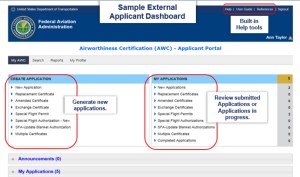
Amending is optional. It is only necessary if you want to use a light-sport repairman’s inspection rating yourself or hire a repairman with a maintenance rating to do the work. An owner or authorized agent can request the amendment through the local FSDO or online, using the Amended Certificate application in the FAA’s Airworthiness Certification applicant portal. The amended limitations are updated to match the current table of standard limitations in Order 8130.2, so they also pick up the new flight-test wording. That matters if a major change ever sends the airplane back into Phase I.
Because the portal is not always intuitive, EAA recorded a step-by-step video with FAA DAR Joe Norris, “How to Amend E-AB Operating Limitations,” available on EAA’s website.
Read Them First
Either way, start by reading your own operating limitations. They are legally binding under 14 CFR 91.319, and the wording printed on them decides what you may do. Builders nearing first flight should know which office will handle their inspection before scheduling it. Owners who want to do their own condition inspections should confirm that their limitations allow it before they pick up the inspection mirror.