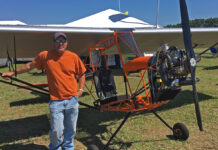
When Harold Chapman first toured the Just Aircraft factory in Walhalla, South Carolina, in August 2019, he knew he had found something special. “I walked out of the plant and I told my wife, ‘I think I want to buy that company one day,’” Chapman recalled. Five years later, on April 18, 2025, that dream became reality when the manufacturing executive with 13 years of experience at Bosch took the reins of one of America’s most celebrated kit aircraft manufacturers.
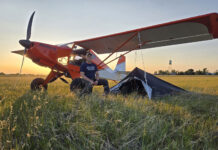
The acquisition opens a new chapter for a company that has shipped more than 850 kits worldwide since its founding in 2002, establishing itself as a dominant force in the short takeoff and landing (STOL) aircraft market. Under Chapman’s ownership, Just Aircraft continues to offer five (yes five) distinct models—Escapade, Highlander, Highlander XL, Super STOL, and Super STOL XL—each designed for pilots who believe airports should be optional.
Origins in the Idaho Mountains
The Just Aircraft story begins with Troy Woodland, an aircraft designer who had worked at Flying K Enterprises, manufacturer of the Sky Raider kit. In 2002, Woodland left to pursue his own vision for a light aircraft that could access places other planes simply could not reach. He founded Just Aircraft in Caldwell, Idaho, bringing with him the skills and insights gained from years of kit aircraft development.
At an air show shortly after the company’s founding, Woodland met Gary Schmitt, a pilot and builder from Highlands, North Carolina. The two men discovered they shared remarkably similar ideas about what constitutes the ideal personal aircraft. Schmitt recognized the exceptional quality in Woodland’s work—craftsmanship that clearly exceeded the competition—and decided to invest in the fledgling venture. With Schmitt’s backing, the pair collaborated on what would become their first production aircraft, the Escapade.
The partnership proved complementary. Woodland brought engineering genius and design innovation, while Schmitt contributed business acumen and an investor’s perspective. By 2003, Schmitt had officially joined as a partner, and the company was shipping kits to customers.
The Escapade: Where It All Began
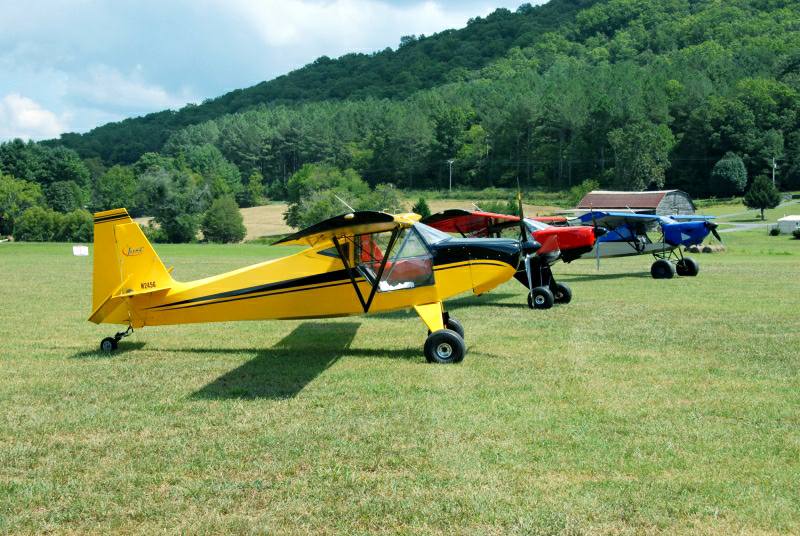
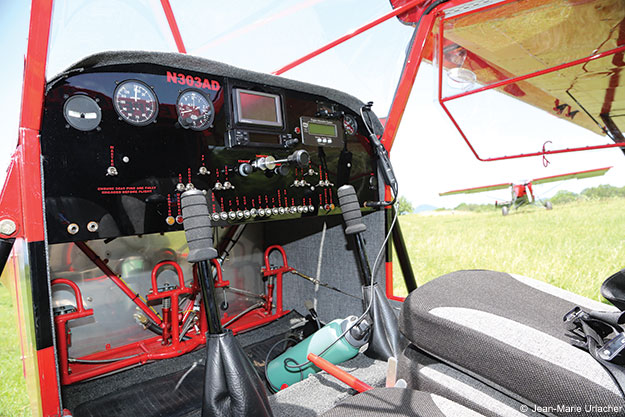
The Escapade made its first flight on February 22, 2003, establishing the design philosophy that would define all subsequent Just Aircraft models. Developed to meet demand for a two-seat, side-by-side, dual-control aircraft suitable for both training and recreation, the Escapade distinguished itself through several innovative features.
Most notably, the Escapade’s wings could be folded in under two minutes without disconnecting any control linkages—a significant advancement that simplified transport and storage. The aircraft also offered an unusually spacious cabin at 44 inches wide, with more than 30 cubic feet of luggage compartment space—enough, the company noted, that pilots could actually sleep inside the aircraft.
- The Escapade has several features that distinguish it from other airplanes of similar size:
- Folding Wings: Under 2 minutes, No disconnecting of controls or control surfaces.
- Two-Person, Side-by-Side: Dual Control.
- Nose Wheel or Tail Wheel: Once initially installed, swap between configurations in about 1 hour. • Aluminum Fuel Tanks
- Larger than Normal Baggage Compartment: over 30 cu. ft.: Haul everything you need and sleep inside.
- Larger than Normal Cabin – 44″
- Wide with lots of head room: Adjustable Seats. Engine Weight Range: up to 200 lb. (Rotax 503, Rotax 912, Rotax 914)
- High quality Materials: 4130 Chrome-moly steel, Fuselage, Tail Feathers, Landing Gear. Passed worldwide recognized standards: UK Section S Static & Flight Testing Certification Requirements.
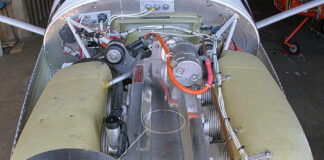
Construction centered on a fuselage, tail, and landing gear fabricated from 4130 chrome-moly steel, with fabric covering. The design earned certification to British Civil Airworthiness Requirements (BCAR) Section S standards, validating its structural integrity through rigorous static and flight testing. Engine options ranged from the Rotax 503 to the more powerful Rotax 912 and 914, providing flexibility based on pilot preferences and mission requirements.
By 2010, Just Aircraft had shipped 230 Escapade kits, with the design proving popular internationally as well as domestically.
The Highlander: A Bush Plane Takes Shape
While the Escapade attracted recreational pilots, Woodland and Schmitt knew they wanted something more rugged—a true bush plane that could handle the demands of backcountry flying. The result was the Highlander, which debuted at Arlington in 2004.
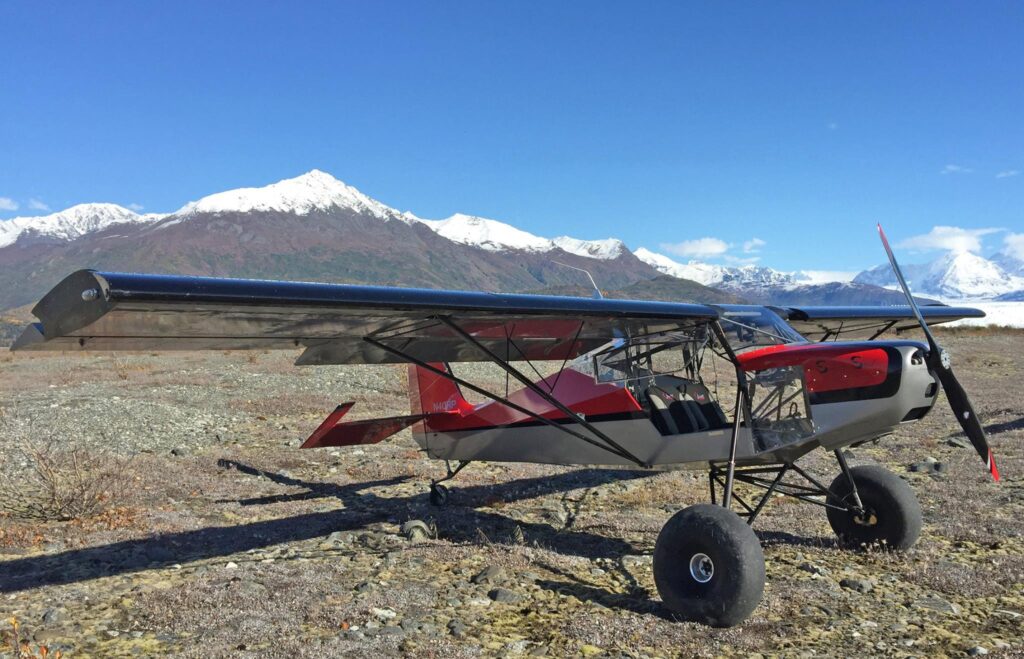
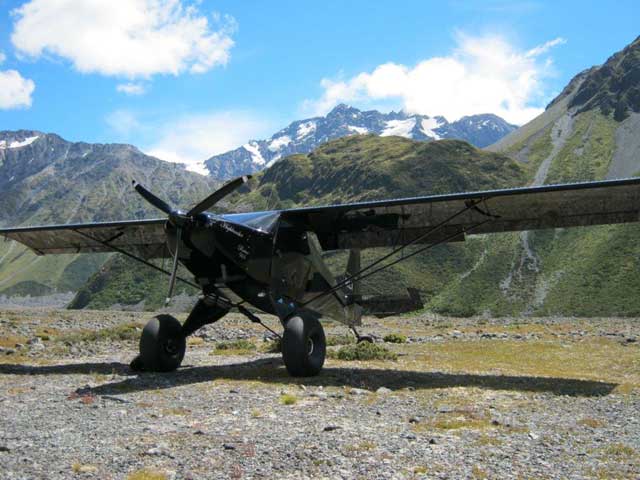
The Highlander took the Escapade’s proven fuselage and enhanced it for off-airport operations. Extended wings incorporating vortex generators improved low-speed handling and short-field performance. Larger tail surfaces with balanced elevator and rudder provided better control authority. Most visibly, the Highlander rode on taller, heavier landing gear designed to accept 29- to 31-inch tundra tires—the kind of rubber that could absorb the punishment of gravel bars, grass strips, and mountain meadows.
The market responded enthusiastically. By 2013, the Highlander was outselling the Escapade by a ratio of 10 to 1, with approximately one-third of sales going to international customers. The bush plane Woodland and Schmitt had always wanted turned out to be exactly what many other pilots were looking for as well.
Also in 2004, the company made a pivotal decision to relocate nearly 2,500 miles from Idaho to a 32,000-square-foot production facility at 170 Duck Pond Road in Oconee County, South Carolina, about 2.5 miles south of the small town of Walhalla. The move placed Just Aircraft closer to its primary customer base. “We were selling more aircraft on the East Coast,” Schmitt explained. “We decided we needed to be closer to where all the action was.”
The South Carolina location came with a particular advantage. The property includes its own runway, allowing the company to test aircraft on-site and demonstrate their capabilities to visiting customers.
The SuperSTOL: Making Airports Optional
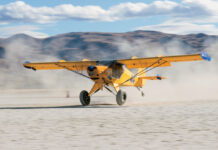
In 2013, Woodland went back to the drawing board. The result was the SuperSTOL, an airplane explicitly designed around the concept that runways should be optional.
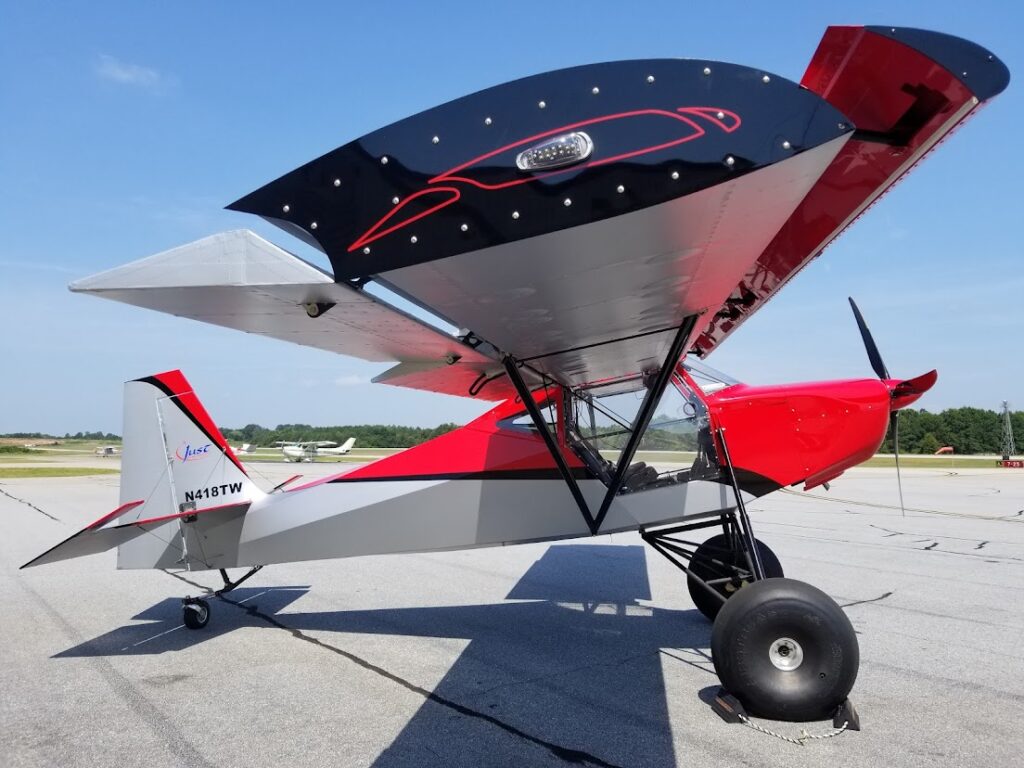
The SuperSTOL represented a fundamental reimagining of the platform. While the Escapade and Highlander used wooden ribs in their wing construction, the SuperSTOL featured an entirely new all-aluminum wing with a thicker airfoil optimized for slow-flight capabilities. More dramatically, the wing incorporated self-deploying leading-edge slats—aerodynamic surfaces that automatically extend at high angles of attack to delay stalling.
Combined with long-span Fowler flaps extending across two-thirds of the wingspan, these slats allowed the SuperSTOL to fly at remarkably steep approach angles without losing control. Woodland added spoilers that deploy with the ailerons to counteract adverse yaw at low speeds, and vortex generators to further enhance slow-flight handling.
“The dual slatted wing significantly enhanced performance and slow flight control,” Woodland explained. “This provides access to considerably more off-airport landing sites, making the SuperSTOL one of the most versatile backcountry machines out there.”
Below the wing, an equally innovative landing gear system used hydraulic shock struts with 12 inches of travel, rated for landings at +4g—allowing pilots to essentially drop the aircraft from several feet without damage. A shock-absorbing tailwheel complemented the main gear, and 29-inch tundra tires cushioned the interface with rough terrain.
Performance numbers validated the design’s effectiveness. With a 100-horsepower Rotax 912, the SuperSTOL could cruise at 100 mph yet stall at just 32 mph with flaps deployed. Takeoff and landing rolls under 100 feet became routine, with skilled pilots achieving even shorter distances. Climb rate reached 1,000 feet per minute, while the aircraft could clear a 50-foot obstacle in just 550 feet.
The industry took notice. In 2014, Woodland received the Experimental Aircraft Association’s August Raspet Award, one of the most prestigious recognitions in light aircraft design. The award, named for the pioneering aeronautical engineer Dr. August Raspet, had previously gone to luminaries including Burt Rutan, Dick VanGrunsven, Curtiss Pitts, and Paul Poberezny.
“It took a while for the meaning of the award to sink in,” Woodland said, “but then I realized that I’m joining a very exclusive club of honorees and it is truly a humbling experience.”
The XL Models: More Power, More Capability
By 2015, Just Aircraft recognized that some pilots wanted even more capability. The solution was the SuperSTOL XL—essentially the same proven design stretched by two feet aft of the cockpit and six inches at the nose to accommodate larger engines.
Where the standard SuperSTOL was limited to Rotax powerplants of up to 115 horsepower, the XL could handle engines weighing up to 315 pounds, opening the door to the 180-horsepower Titan OX-340 (a Continental Motors subsidiary product), the UL Power 520, or even the Lycoming O-320.
The performance gains proved dramatic. With 180 horsepower pulling from the front, the SuperSTOL XL achieved climb rates of 3,000 feet per minute—three times what the Rotax-powered version delivered—while maintaining a stall speed of just 32 mph and cruising at 109 to 110 mph. Takeoffs and landings remained possible in as little as 150 feet.
The Highlander XL followed a similar formula, adding approximately two feet to the fuselage to balance the heavier powerplants that backcountry pilots increasingly demanded. Current pricing for a Highlander XL kit starts at $41,700, with options for quick-build components and factory assistance adding to the cost.
Building Dreams in Walhalla
Just Aircraft has always offered more than kits in boxes. The company’s factory build program allows customers to construct their aircraft at the Walhalla facility, working alongside experienced technicians who can guide them through the process. For those with more money than time, Just Aircraft will build 100 percent of the airplane to customer specifications.
This builder assist approach has proven popular, accelerating the journey from kit to flying aircraft while still allowing the owner to claim the satisfaction of having built their own plane. “It helps the pilot keep the airplane going straight on takeoffs and landings,” one description noted of the SuperSTOL XL’s locking tailwheel. “It takes about 10 hours to transition for the moderately experienced tailwheel pilot, and we do have customers who build their aircraft at the factory through the Builder’s Assist Program and have nothing but Cessna 150 time. We can usually solo them in a SuperSTOL in about the 15 hour range.”
The company maintains a network of authorized dealers across the United States and internationally, with representatives in Australia, New Zealand, and the United Kingdom, among other markets. Approximately 70 percent of sales remain domestic, with the remaining 30 percent exported worldwide to customers in countries including Australia, England, France, Spain, New Zealand, Canada, and Ecuador.
By its own accounting, Just Aircraft ranks as the second-largest aircraft manufacturer in South Carolina, trailing only Boeing’s massive North Charleston operation. The company employs 12 workers at its Walhalla facility.
A New Era Under Chapman
When Harold Chapman acquired Just Aircraft in April 2025, he brought a manufacturing mindset honed through years at Bosch, where he engineered anti-lock brake systems. But he also brought something equally important: a passion for aviation fostered through earning his pilot certificate under instructor Allan Melton.
“Being a pilot, aviation is a passion of mine. Manufacturing is obviously a passion of mine. And I’ve dedicated my life to it. So having that combination come together—it happened to be at Just Aircraft—is really kind of what brought me here,” Chapman explained.
His vision for the company emphasizes operational excellence and economies of scale, potentially bringing prices down over time through improved manufacturing efficiency.[1] He plans increased outreach through demo days, believing that pilots who fly a Just Aircraft will become buyers. “We believe that if you fly one of our aircraft, you will buy one of our aircraft,” he said.
Perhaps most importantly, Chapman views the acquisition as the foundation for a generational business. “Eventually this will be a generational company—it’ll be the Chapmans. We’ll keep it going.”
The existing team remains in place, including key personnel like Buddy Bargerin who gave Chapman his original factory tour back in 2019. With the company approaching its 25th anniversary in 2026, the new ownership represents continuity as much as change—a commitment to the backcountry-flying vision that Troy Woodland and Gary Schmitt established more than two decades ago.
The Fleet Today
Today’s Just Aircraft lineup encompasses five models, each serving distinct segments of the backcountry and recreational flying markets:
The Escapade remains available as the entry-level offering, featuring folding wings, side-by-side seating, and the option of tricycle or tailwheel configuration. The Highlander builds on that foundation with enhanced STOL capability through longer wings, vortex generators, and heavy-duty landing gear with tundra tires. The Highlander XL extends the fuselage two feet to accommodate more powerful engine options.
The SuperSTOL represents the pinnacle of short-field capability with its all-aluminum slatted wing, Fowler flaps, spoilers, and shock-absorbing landing gear. The SuperSTOL XL stretches that design to accept engines up to 180 horsepower, delivering climb rates that must be experienced to be believed.
With 850-plus kits shipped worldwide and a new owner committed to expanding production and improving operations, Just Aircraft appears well-positioned to continue its mission of making airports optional for the next generation of backcountry aviators.
For pilots who have ever looked at a meadow, a sandbar, or a mountain clearing and wondered “Could I land there?”—the answer, in a Just Aircraft, is increasingly likely to be yes.