Angle of attack, not airspeed or nose attitude, decides when a wing stalls. Here is how the classroom explanation lines up with what you feel in the cockpit.
Just as you begin to think you have stalls all figured out from reading the explanations in the training manuals, you try to match up these concepts in flight, and nothing you have read seems to fit. While stalls are easy enough to perform as a maneuver, you, being a good student of aviation, would like to know more about them. That’s the reason you studied up on them, and now you’re confused.
Well, even the aerodynamicists get confused at times, so you needn’t feel lonesome. There is a correlation between the textbook stall and the one experienced in the airplane, though it may not seem like it. To find out why the classroom ideas don’t always seem to match, let’s re-examine some of the details.
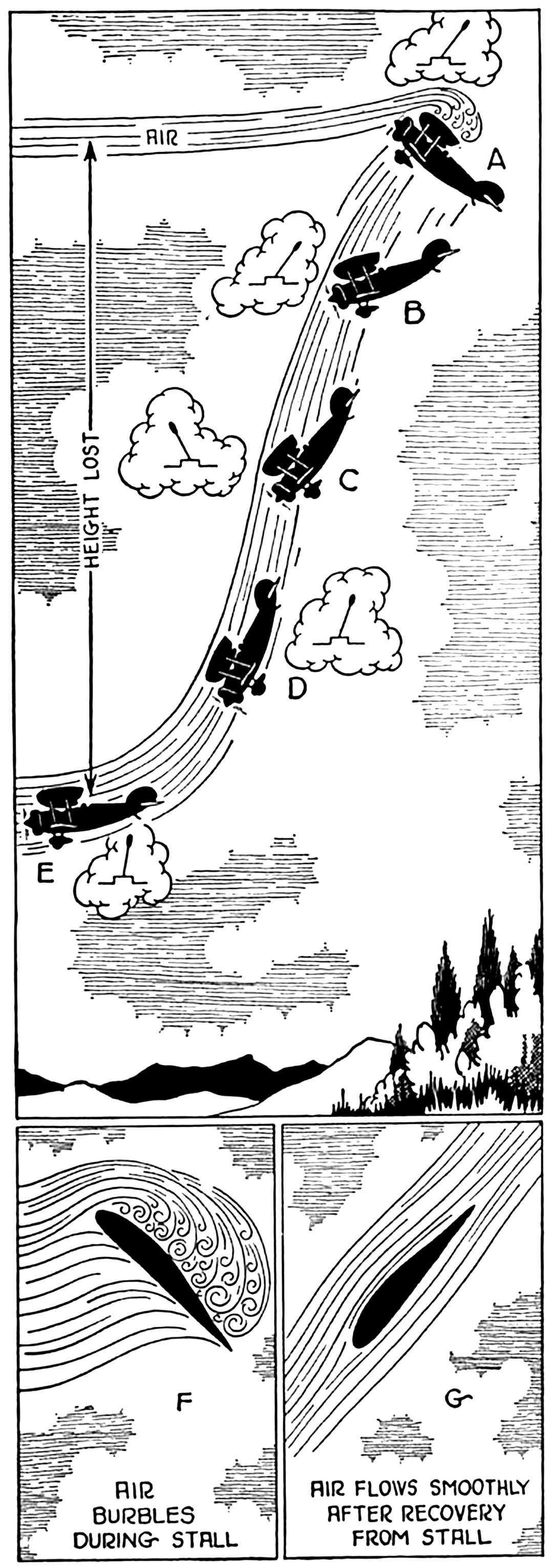
What is a stall? The textbook says a stall is the loss of attached flow, the lift-producing stream of air flowing more or less smoothly across a wing’s upper surface. When this flow no longer follows the wing’s surface, but breaks away into burbling eddies, effective lift is lost and the wing stalls. Exceeding the critical angle of attack is the root cause of the stall. As long as the wing meets the oncoming relative wind at less than the critical angle of attack, the air is parted by the wing’s leading edge, flows smoothly along upper and lower surfaces, and leaves the trailing edge cleanly. If the wing is raised beyond this critical angle, airflow is disrupted and the stall occurs.
Now, that’s the textbook explanation and it’s quite correct, as far as it goes, but where does all this fit in, when experienced in the airplane? Angle of attack indicators remain uncommon in certificated general aviation airplanes, though many homebuilt glass panels now display AOA, and a pilot without one must look for other clues for guidance during stall practice. Unfortunately, these clues may be subtle and confusing at times. The stall, as performed in training, apparently consists of pulling back on the yoke until the speed gets slow, where a warning horn or light goes off, then continuing to pull until the nose bobs down, the “break” that signals loss of control. This is followed by an immediate “recovery,” which usually means adding power and maneuvering the airplane back into straight and level flight. All through this exercise, the instructor is cautioning “pull back, more, more” or “keep the ball centered, watch the bank angle.” Thus, the in-flight stall comes across as a simple, albeit slightly thrilling, maneuver, just like S-turns across a road or slow flight.
It’s important to relate the textbook explanation to what happens in the air. Pulling back on the elevator control raises the nose and causes the speed to slow, and the student often interprets stalls as being a condition of extreme nose-up attitude with airspeed near the bottom of the scale. However, we must remember that it’s actually angle of attack that is being varied by the pull on the stick, and the combination of airspeed and nose attitude, in relation to the horizon, is only being used in lieu of an angle of attack indicator.
So, the nose-up attitude is not directly indicative of angle of attack. Angle of attack is the angle at which the oncoming air meets the wing, not the angle at which the airplane is pointed at the horizon. With a high-drag, low-power situation, such as a landing approach, it is possible to achieve a stall with the nose practically level. Since the angle of attack at which a stall occurs remains constant in a given airplane configuration, it follows that nose-up angle alone is not sufficient warning of an impending stall. One has only to see the nose-down attitude in a spin, during which the airplane remains stalled, to believe this.
How Slow Is Too Slow?
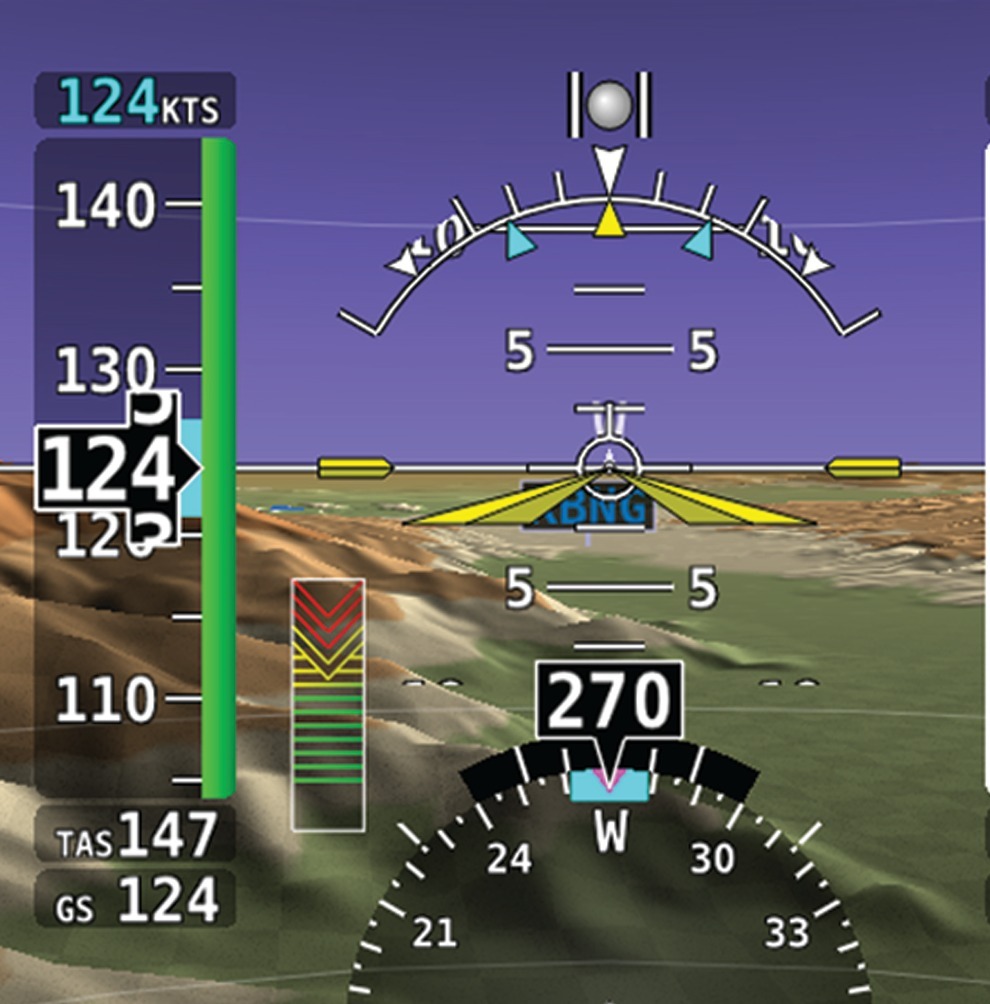
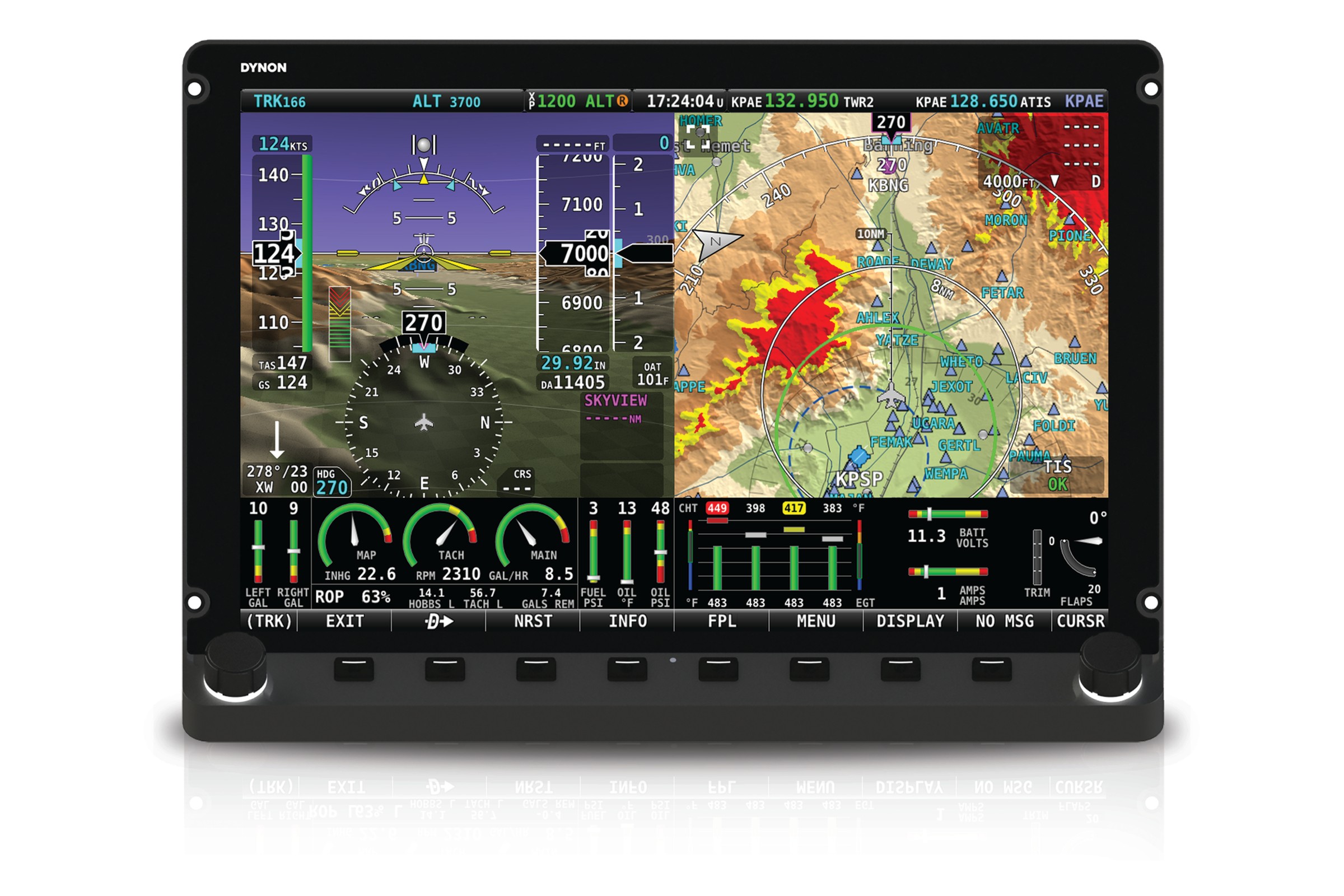
Without an angle of attack indicator, the only readout we have from the changing angle of attack is the airspeed indicator, which unfortunately suffers from some delay due to the inertia of the airplane’s mass. An angle of attack indicator reacts instantly as the stick is pulled back, while the airspeed indicator takes a second or so to respond. On a Dynon SkyView HDX, for example, it appears as a colored bar beside the airspeed tape. Likewise, a slow airspeed alone is not enough stall warning, since the inevitable question is, how slow is too slow? Loading affects this magic number considerably, either in terms of gross weight or the additional G-loading of a turn or pull-out. When the wings are asked to support more load, extra lift must come from somewhere. Angle of attack can be increased, producing more lift up to the point the stall burble begins, or speed can be increased to bring more energy-laden air across the wing. If the angle of attack is already at the stall angle, only an increase in airspeed is available as a means of ensuring flight.
Complicating the choice of a safe airspeed are the vagaries of indicated versus calibrated airspeed. Years ago, owner’s manuals and instrument markings recorded stall speed as calibrated airspeed, the indicated reading corrected for instrument and installation error, as determined in flight test with a precision articulated pitot head. With the static ports and fixed pitot tube of the production airplane, some error must be tolerated over the instrument’s range, generally becoming quite prevalent at low speeds. Hence, the actual indicated speed observed at the stall break was usually much slower than the handbook figure, and the student pilot tended to discount published stall speed figures as invalid.
The GAMA-format Pilot’s Operating Handbooks introduced in 1975 list stall speeds in indicated airspeed alongside calibrated, which would seem to be a good idea, except that the speeds observed can still vary somewhat from book numbers, because of power being used during the stall, yaw altering airflow around static ports, CG location and other factors. The only defense is to keep extra margin above stall during all maneuvering. The stall warner works as a direct function of angle of attack, so its warning can be considered very reliable if properly calibrated initially. For this reason, an operative stall warning device is a required-for-flight item on certificated airplanes. Amateur-built airplanes carry no such requirement, but their operating limitations require the builder to record a demonstrated Vso, along with Vx, Vy and the weight and CG at which they were obtained, before leaving Phase I flight testing.
Any Attitude, Any Speed
Bear in mind that an airplane can be stalled in any attitude or at any speed. Pull too hard at the top of a loop, for instance, and the airplane will stall just as surely as if you pull too hard in a gliding turn. The angle of the chord line to the relative wind is all that matters. If enough load is placed on the wings, the airplane will stall with mucho airspeed; one definition of maneuvering speed is the maximum speed at which the airplane may be stalled without exceeding the design load factor, such as +4.4 G in the utility category. Thus, a Cessna 150 with a maneuvering speed of 97 knots at gross weight will stall at 97 KIAS if 4.4 G is placed on it; the stall unloads the wing and prevents damage to the structure. Maneuvering speed drops as weight comes off, so a lightly loaded airplane reaches its limit load at a lower speed.
Approach With Care, Recover Fully
All practice stalls should be done in a controlled, standardized manner, to ensure a predictable result and to prevent exceeding the aircraft’s limitations. For instance, many light airplanes are placarded against whip stalls, or tailslides. Yet many students will mechanically enter a stall by applying excessive back pressure until the nose is raised nearly vertical, making a whip stall quite possible, as well as creating a long, anxious recovery period. Most stalls should be approached in a slow deceleration, so that the load factor is kept at or near 1 G, and so the stalling angle of attack is reached with the nose attitude no higher than necessary. Certification stall testing is done with a one-knot-per-second deceleration rate.
A true stall is manifested by an increase in rate of descent, or an inability to maintain altitude, despite further application of up elevator. In other words, if you try to pull the stick back farther and get no response, you are, practically, stalled. Certificated aircraft should demonstrate aerodynamic indication of stalling. Normally, the uncontrollable dipping of the aircraft’s nose, or a sudden roll-off, signals recovery time. There should be no delay in recovery after the stall occurs, unless the instructor desires to demonstrate controllability in a prolonged stall. However, care must be taken in gusty, turbulent air not to mistake a jolt from rough air as the stall.
Recovery should be accomplished by moving the stick forward to lower the angle of attack positively. This can be done by releasing the back pressure being held, or shoving forward against trim forces, whatever it takes to get the nose down! While nose attitude is not a definite guide to being out of the stall, if the nose is lowered from where it was at the stall, angle of attack should be lowered as well. The exception is in a delayed recovery, where the airplane has started to settle in a nose-high attitude; a much lower nose attitude than normal will be required to achieve recovery. In any event, if stall symptoms persist, such as stall warning, uncontrollable pitching and rolling, or shuddering of the tail surfaces and airframe, lower the nose still further with a healthy shove on the stick, even if it looks plenty low already.
Emphasis should be placed on minimum altitude loss as a guide to effective stall detection; catch it early and little altitude is likely to be lost. However, this technique can prevent students from lowering the nose sufficiently to break the stall, in an effort to conserve altitude. A fine line must be drawn between diving away altitude in the recovery and prolonging the stall by not lowering the nose enough. Nose attitude should be at or below that of level cruising flight, as a guide to full recovery, so get that horizon up above the cowling. All available power should be applied to assist recovery, of course, taking care to break the stall at the same time. Otherwise, torque and P-factor may roll a high-powered airplane into a spin if throttle is suddenly applied while still in a stall. Directional control should be as important a criterion of judging stall recoveries as altitude loss; recovery should be completed on or near the same heading as when the stall occurred.
Turns and Power
Turning stalls, such as departure stalls or approach stalls entered from turns, can deliver more thrills than intended if not flown properly. Fly the airplane under full coordinated control throughout the stall entry. Do not yank it blindly in and out of the stall. Power-on stalls, such as departure stalls, should be entered from lift-off speed at climb power, to minimize the likelihood of reaching extreme whip stall attitudes. Slow deceleration allows the stall to be reached at the minimum nose-up attitude, which will still be much higher than in a power-off stall, of course, since the airplane tends to hang from the prop. Any intentional turn should be entered and stabilized as the maneuver is begun, not allowed to slowly steepen in bank as the pull-up is made.
Bank control is important to ensure a predictable recovery; if uncorrected, many students will allow a bank of 60 degrees or more to develop by the time the stall is reached. This can make the stall difficult to detect, as well as requiring a lot of altitude to regain straight and level flight. It is particularly important to reach the stall with the slip indicator nearly centered and the ailerons neutralized, if one wishes the stall to break straight ahead.
All this emphasis on carefully controlling the airplane during an entry to a practice stall may seem a little academic. Wouldn’t it be better to concentrate on the recovery, permitting any sort of entry that exceeds critical angle of attack? No; achieving a stable, consistent entry teaches much about the characteristics of stalls and polishes flying skills. Controlling the airplane and respecting its nasty side also makes for greater safety in training. It is true that one should not look on a practice stall as an end in itself, just another maneuver to be flown exactly by the book. Rather, it is to be done by the book in order to safely familiarize students with the handling and capabilities of the aircraft near the stall.
Thus, stall practice serves two purposes: instilling confidence in your ability to thwart disaster and improving piloting skills at marginally slow flying speeds. Now that we understand stalls, let’s go out and practice them regularly.