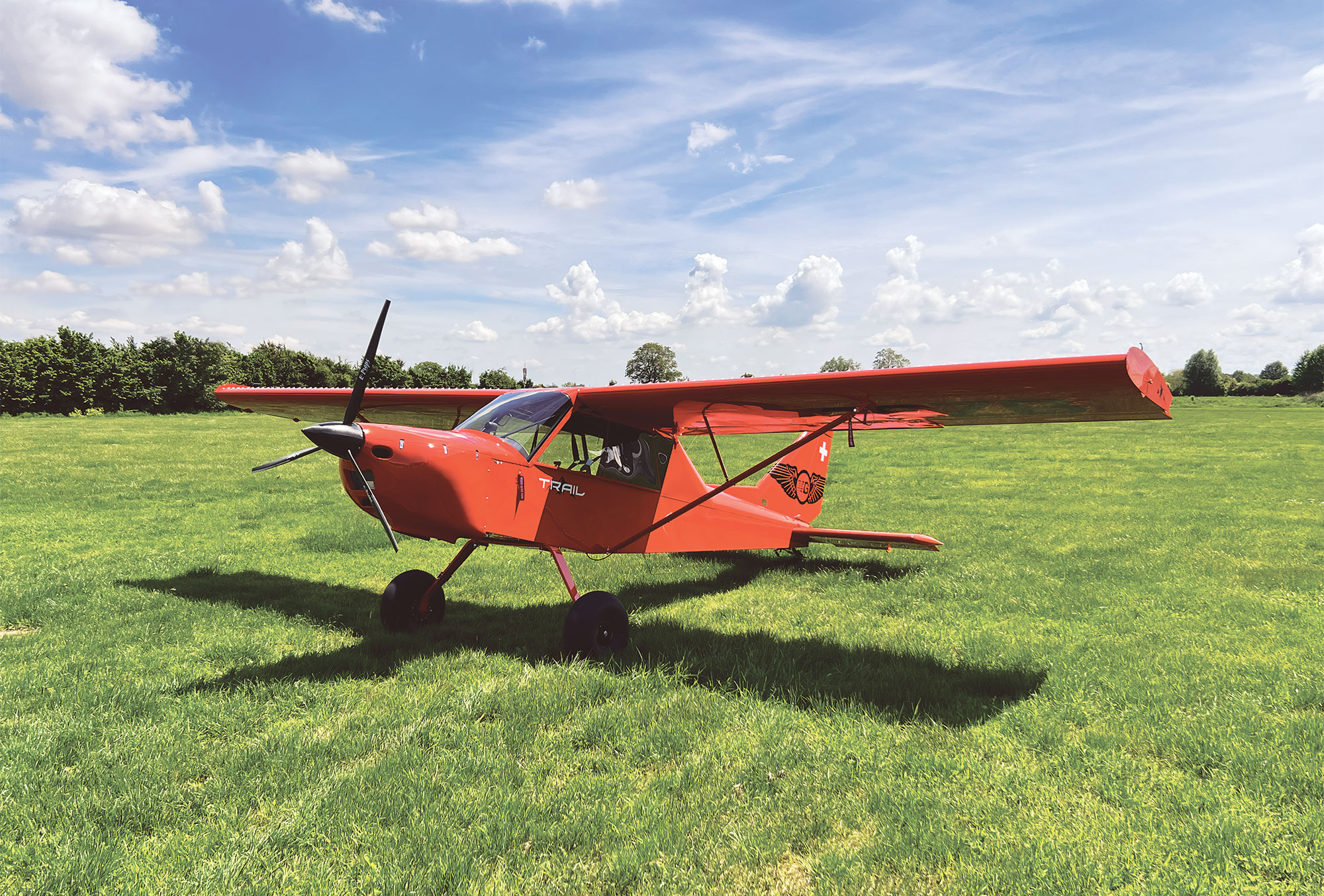
 As a pilot, I grew up at an airport that was home to one of the few Mountain Flight Schools in Europe. I soloed in a Piper Super Cub and, when the time came, earned my mountain rating, allowing me to land uphill in a PA-18 with skis if needed. Super Cubs and Huskies were the most common bush planes around.
However, as lighter, tailwheel-strong airplanes began entering the scene, one in particular caught the attention of the mountain flying community: the Trail, from the Italian company Groppo Aviazione.
At the Factory
I called the company to arrange a flight review and a few days later found myself driving three hours to their airfield—then unsuitable for general aviation traffic. Groppo Aviazione is based in northern Italy, not far from Milan, in a relaxing landscape surrounded by traditional rice paddies.
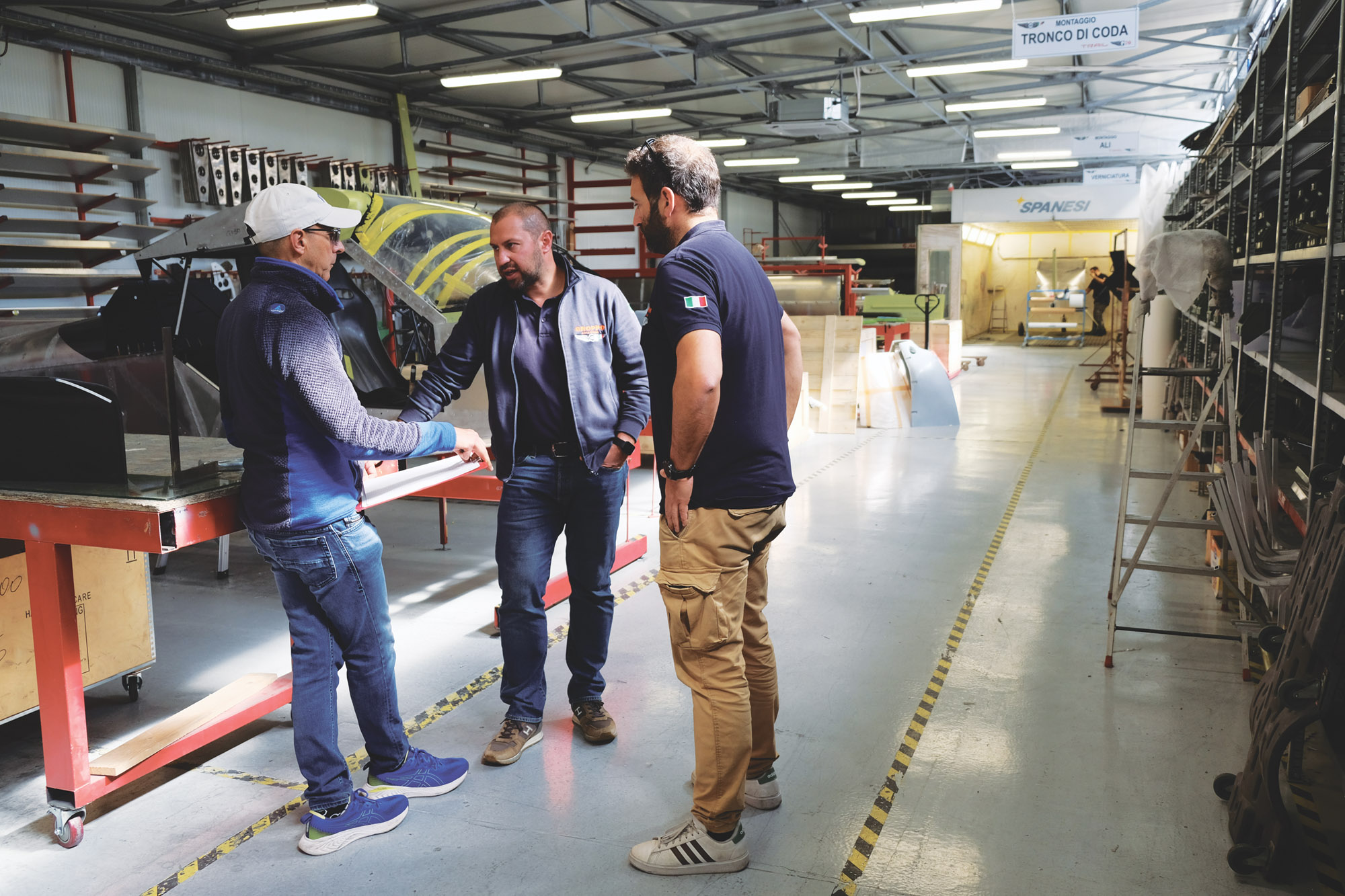
Groppo CEO Federico Groppo—son of the founder—and aeronautical engineer and test pilot Simone Quaglietta gave a warm welcome—and an espresso—before showing me around the facility. The company occupies two hangars; the first includes upstairs offices and R&D space, while the ground level houses both the assembly/maintenance shop and a full metal fabrication area.
The second, larger hangar is where kits are packed for shipment and completed aircraft are assembled for delivery. As we entered, I saw two large boxes on the right, each containing Trail kits ready to ship. A long row of neatly organized, labeled green bins held all the parts and components in a clean, functional workspace where the staff worked with quiet focus. At the end of the line is a professional-grade paint booth.

Federico walked me through the company’s processes, showing me the builder manual, the kit-prep phases, and their move toward a factory builder-assist program. The attention to detail is impressive—driven by a clear passion for aviation. Nearly 70% of Trail aircraft are sold as kits, and Groppo Aviazione is well known for its support of homebuilders.
The Airplane
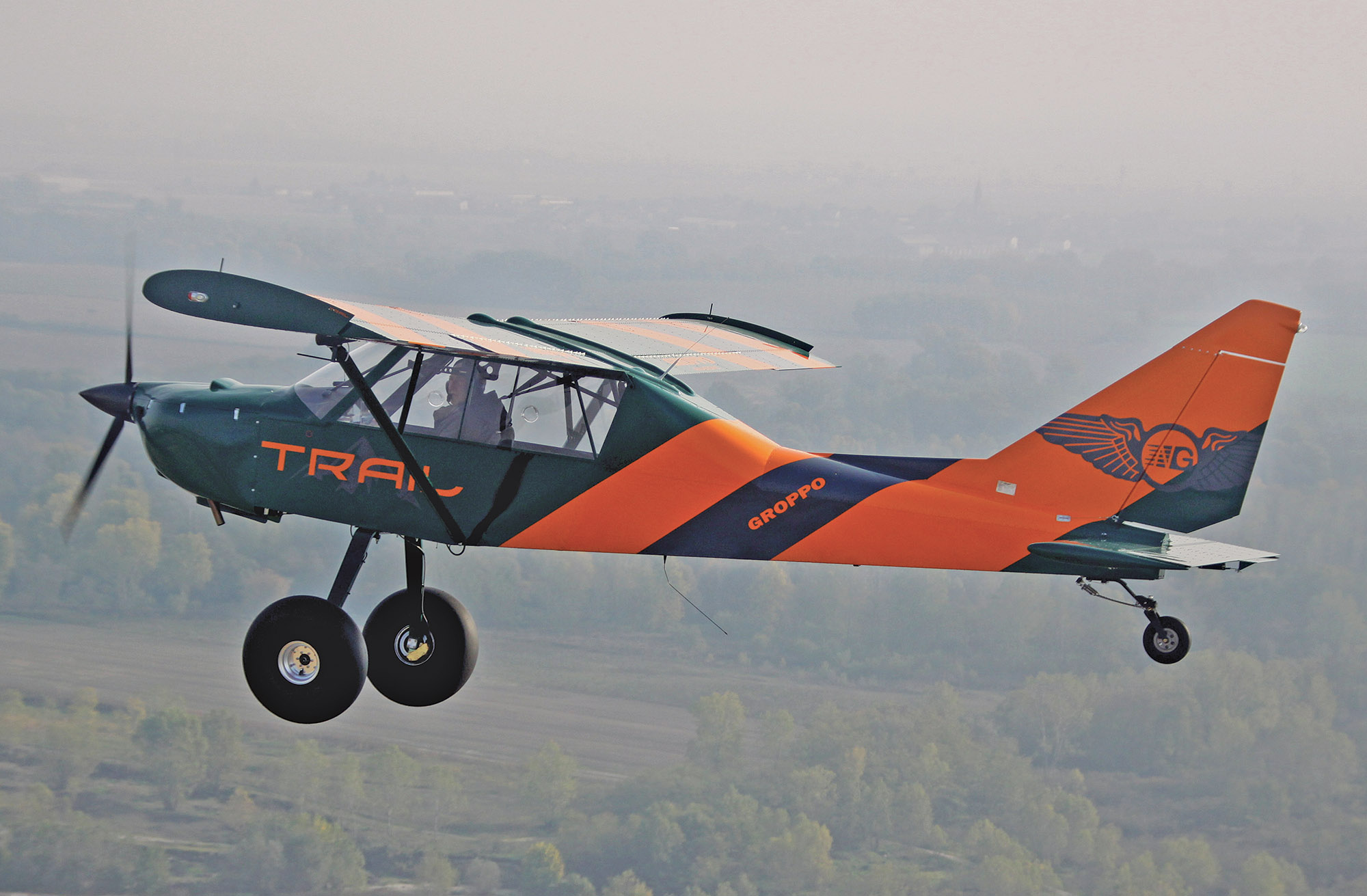
Today’s Trail is the final evolution of a design that first flew in 2005. More than 200 have been sold. It’s an all-metal, semi-monocoque, high-wing, tandem-seat, tailwheel monoplane.
The cabin is a 4130 chromoly square-section welded cage providing excellent crash protection, Mooney-style. The wings use traditional dual-cell construction with 2024-T3 spars and 6061-T6 ribs, skins, flaps, and ailerons. The STOL-optimized fiberglass wingtips and a folding wing system allow one-person folding in about 5 minutes.
Aft of the cabin the fuselage is all-metal stressed skin with a single curvature top skin and flat bottom and side panels. Stiffeners and bulkheads are riveted in place. The empennage is standard all-aluminum 6061-T6 construction throughout.
The cockpit is equipped with dual controls and four-point harnesses. Toe brakes and optional Beringer systems are available. Elevator trim and flaps can be manual or electric. Control linkages use push-pull tubes save the rudder, which connects via steel cables.
The main gear is a single-piece 2024-T3 aluminum spring, well suited for rough-field operations. I flew on 22-inch Aero Classic Smooth Tundra tires, though 26-inch Alaskan Bushwheels are optional. The steerable tailwheel uses a crossbow leaf spring and 8-inch tire; a 10-inch version is recommended with the larger mains.

The cabin door—hinged at the top—opens on the right side and offers easy access. Though it can’t be flown open, you can remove it quickly for warm-weather flying. Side vents provide airflow in flight. The instrument panel can accommodate a full suite of avionics, and a baggage compartment sits behind the rear seat. With an airframe parachute installed, 22 pounds of baggage capacity remain.
The fuel system includes two wing tanks (26 gallons total) and optionally a header tank (1.3 gallons). The gascolator and drain are firewall-mounted. Vortex generators are available and recommended for low-speed work.
The Kit
The Trail kit arrives as a complete airframe package. The welded cabin frame is sanded and powder coated black, and all other welded parts are nylon-wrapped and labeled. The factory-assembled anodized spars are ready to install, complete with folding hardware, flaps, and tips.
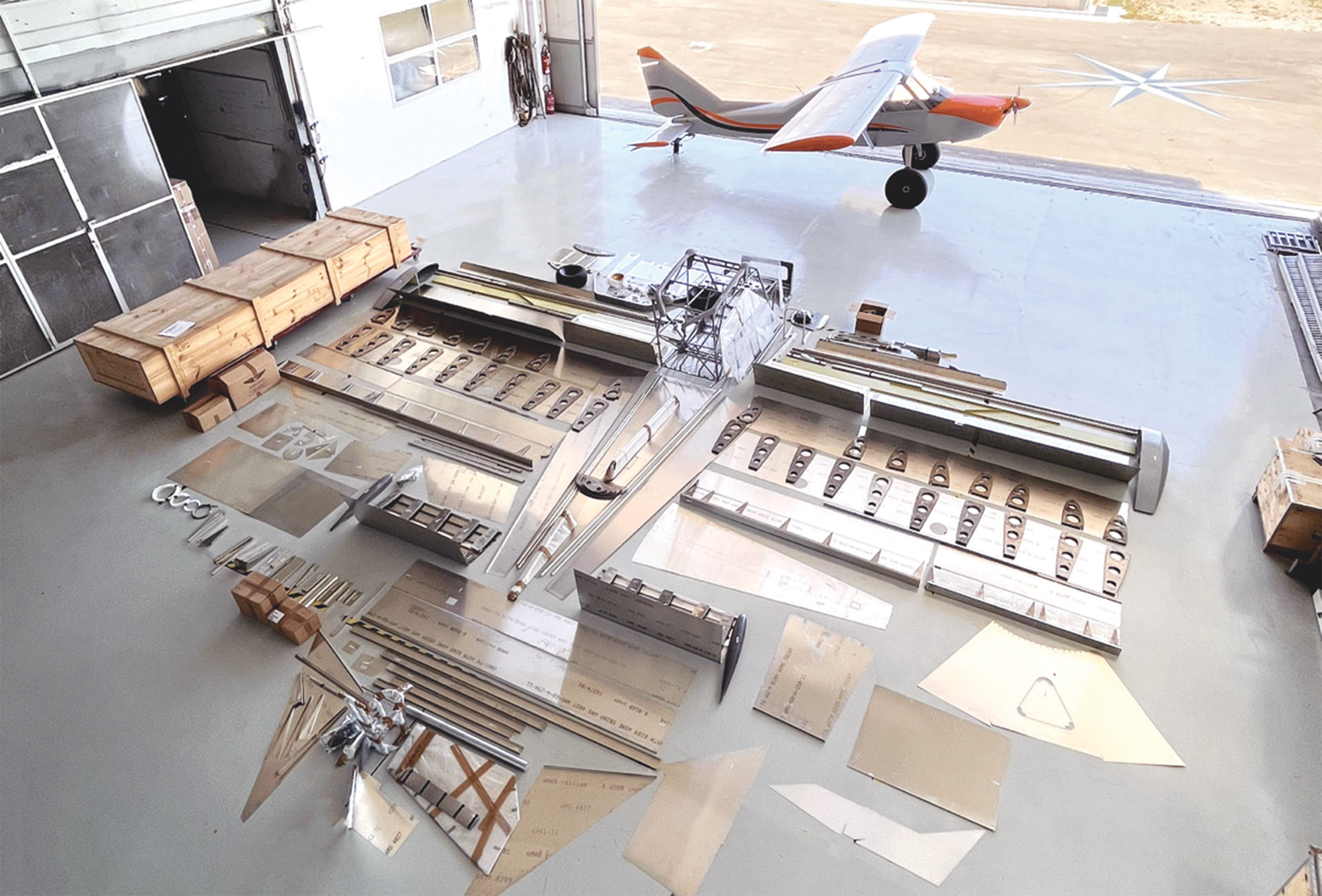
Every skin, rib, and part is CNC-cut, bent, prepunched, and labeled. The kit includes all metric hardware—grade 8.8 bolts, pull rivets, and more—and the nylon fuel tanks are pressure-tested. The windscreen is preformed plexiglass; the Lexan side windows are precut.
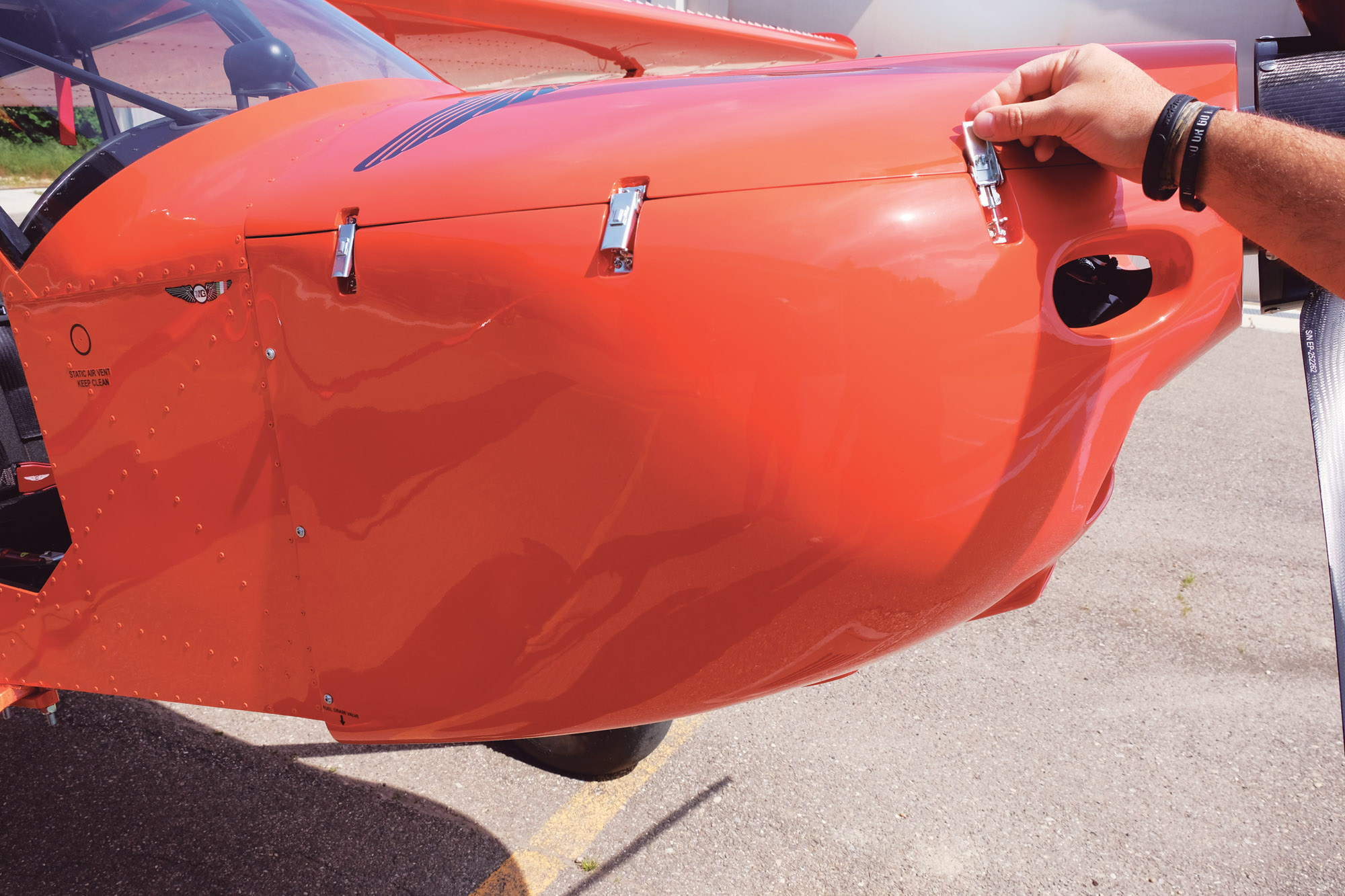
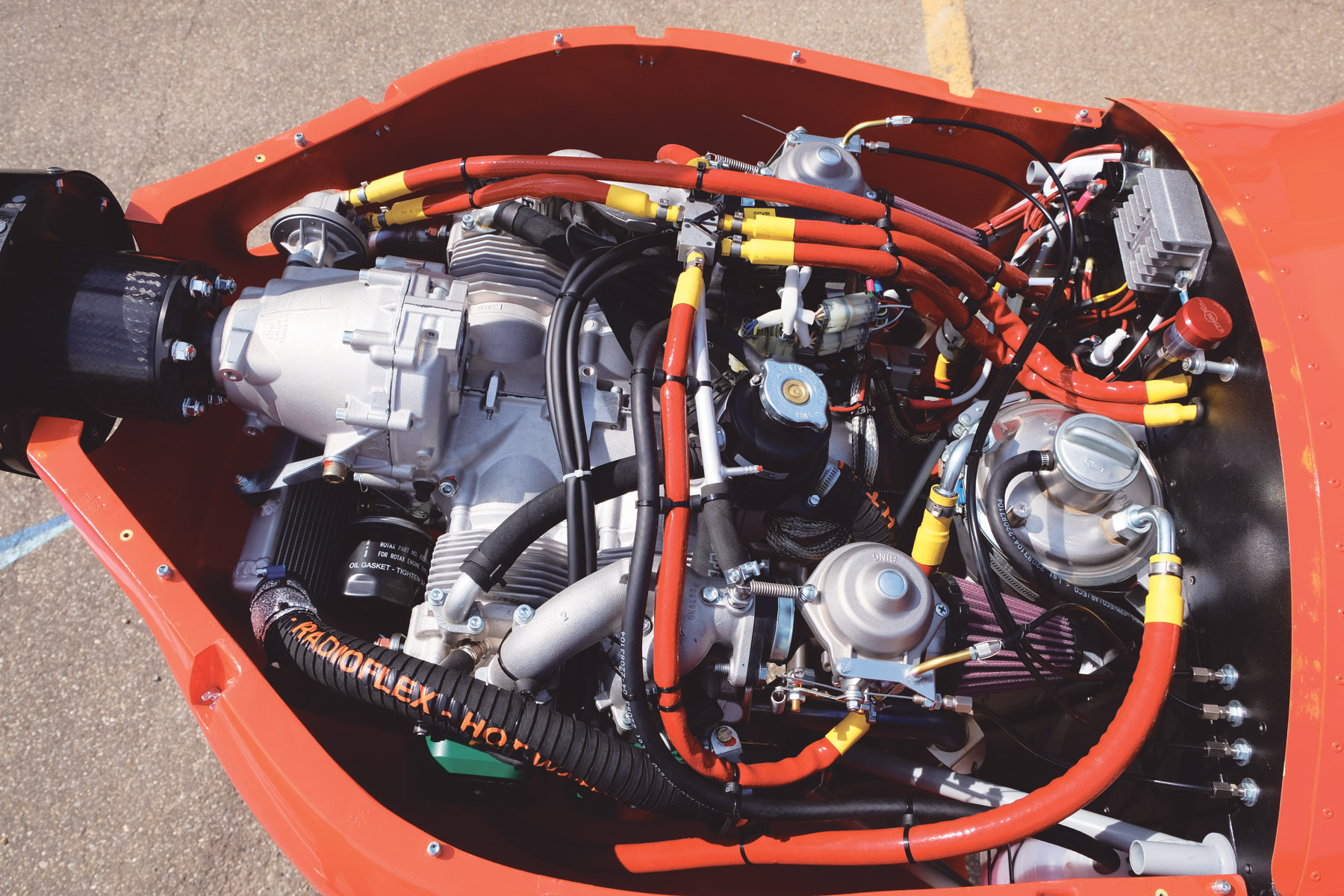
Once the airframe is complete, the builder adds the firewall-forward (FWF) kit, which matches one of three engines: the Rotax 912 ULS, 912 iS (both 100 hp), or the 914 UL (115 hp). The FWF kit includes mounts, cowlings, radiators, hoses, exhaust, oil tank, fasteners, and more. The 912 iS and 914 UL require a header tank, and even builders using the 912 ULS may appreciate the simplicity it adds.
The standard kit meets the majority build (51%) rule for the Experimental/Amateur-Built category with a build time around 800 hours. FAA approval of the quickbuild version is still pending.
The Flight
Conditions were ideal: VFR, unlimited visibility, 79° F, 63% humidity, 1017 mb pressure, and a field elevation of 460 feet. With 12 gallons of fuel and Simone and me aboard, the airplane weighed 1157 pounds—well under the 1323-pound MTOW. Finally, the center of gravity was at 33% mean aerodynamic chord (MAC); its allowable range is 24–35%.

The bright orange aircraft was nearly new, with just two hours logged. It had a Rotax 912 ULS, a 57-inch three-blade E-Props fixed-pitch prop, and 22-inch wheels. If it looks familiar, it’s because it had been displayed at Aero 2024.
Climbing in is Cub-like: Use the side step, cross the stick, and swing your left leg in first. The cockpit is roomy and comfortable, with excellent visibility—even for a taildragger. This airplane had electric flaps, though I prefer the manual lever located overhead on the left; it’s a better match for bush work.
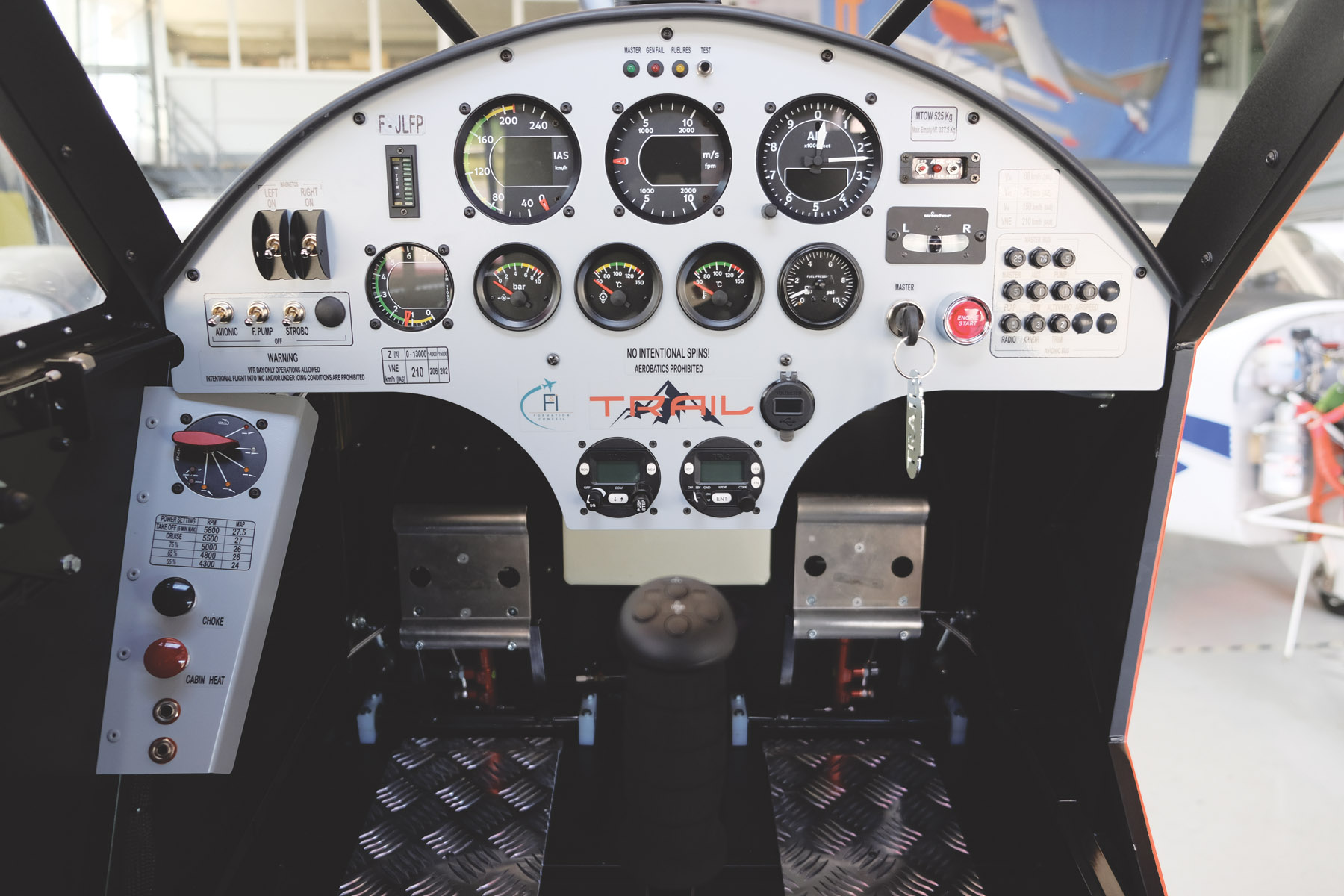
The panel was custom-built for a French customer. Personally, I prefer the slip ball front and center, but for tailwheel pilots the seat of the pants remains the primary yaw instrument. Instruments included ASI, VSI, altimeter, and tach from Kanardia, a Slovenian manufacturer known for blending analog design with modern tech. Switches and breakers were logically arranged, with a Ray Allen G205 stick grip.
The 912 started easily, and after a brief warmup we taxied to the soft grass. Ground handling was straightforward once I got used to the progressive differential brakes. The tailwheel’s built-in friction helps directional control. I noticed a bit of resistance in sharp turns—likely due to the combination of 22-inch tires, low tire pressure of 17 psi, high grass, and our combined weight.
Run-up complete, I set 15° of flap, removed the chute safety pin, double-checked the wing pins, and added power. The airplane accelerated quickly, lifted off at about 40 mph, and climbed briskly at 60 mph and 5500 rpm—reaching 2500 feet in under 3 minutes, which is approximately 850 feet per minute.
Cruising at 5000 rpm yielded 100 mph. The controls were well balanced, with stable, predictable harmony. Pitch trim worked smoothly.
Clean stalls occurred at 40 mph with minimal altitude loss. Full-flap stalls came at 38 mph, again with minimal sink and good rudder authority. Recovery took a bit of nose-down stick due to our aft CG, but response remained safe and manageable.
Static and dynamic stability were both positive, with slow phugoid oscillations. Dihedral provided good directional stability. Bumping the power up to 5500 rpm, cruise speed rose to 112 mph clean and 118 mph with –5° flaps.
Returning to the field, I used one notch of flaps at 55 mph and full flaps on final at 50 mph. Flare was progressive, visibility excellent, and the landing was soft and predictable. Rollout was about 600 feet. A quick brake-and-power turn brought us back to the hangar.

Pricing and Options
The standard Trail kit costs $28,500. Firewall-forward kits cost $4738 for the Rotax 912 or $4911 when supporting a Rotax 914. Those prices are based on May 2024 exchange rates (EUR/USD), excluding shipping and taxes.
Options include powder coated frames, different wheels, Beringer brakes, parachute system, electric flaps and trim, vortex generators, lighting, upholstery, baggage pods, skis, floats, tow hook, and more.

Conclusion
The Groppo Trail is a light, rugged, and well-engineered airplane—a great blend of bush plane performance and kit builder accessibility. The company is serious, experienced, and clearly passionate about aviation. The airplane is equally comfortable on a mountain slope or a backcountry picnic strip, ready for whatever kind of flying you love most.