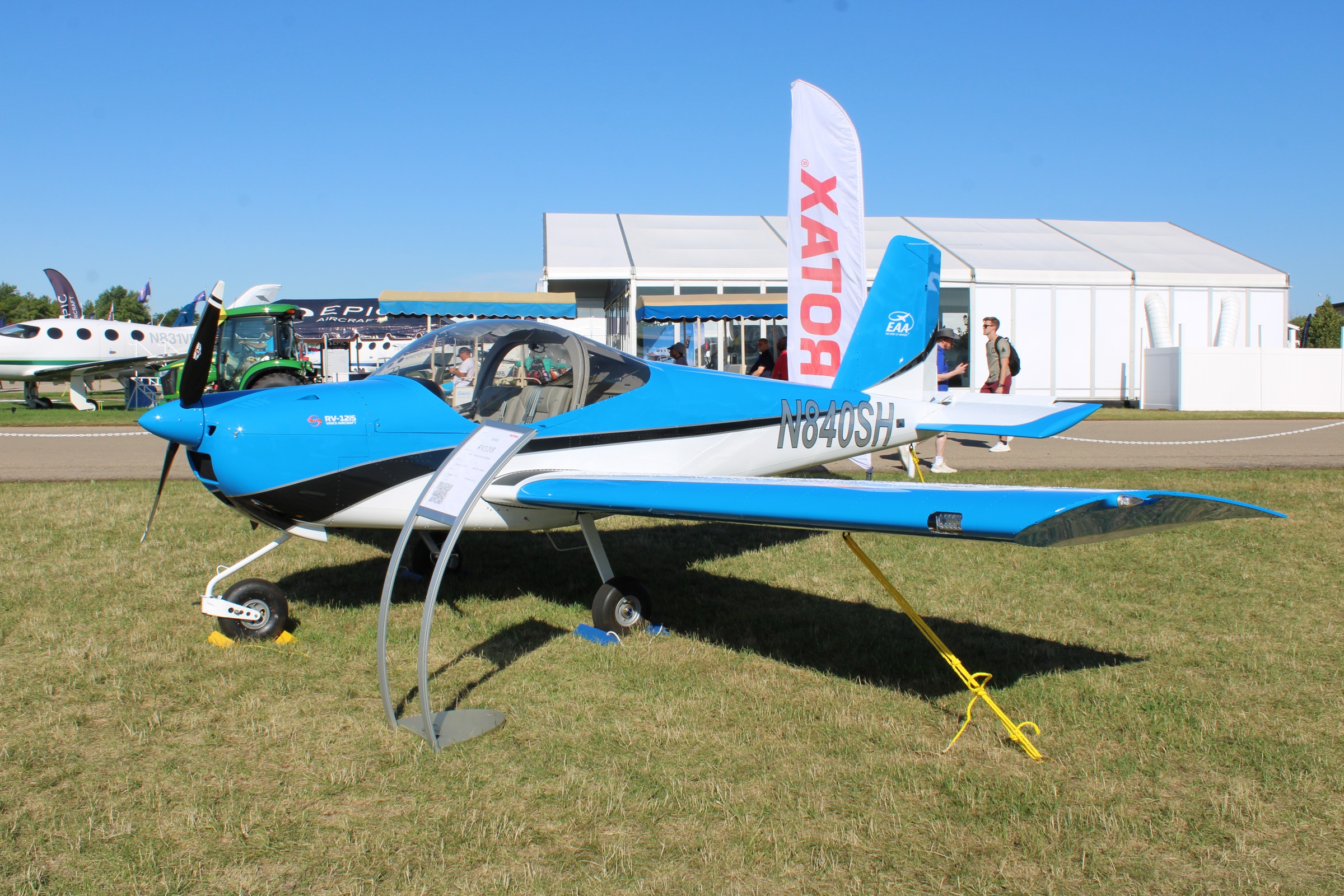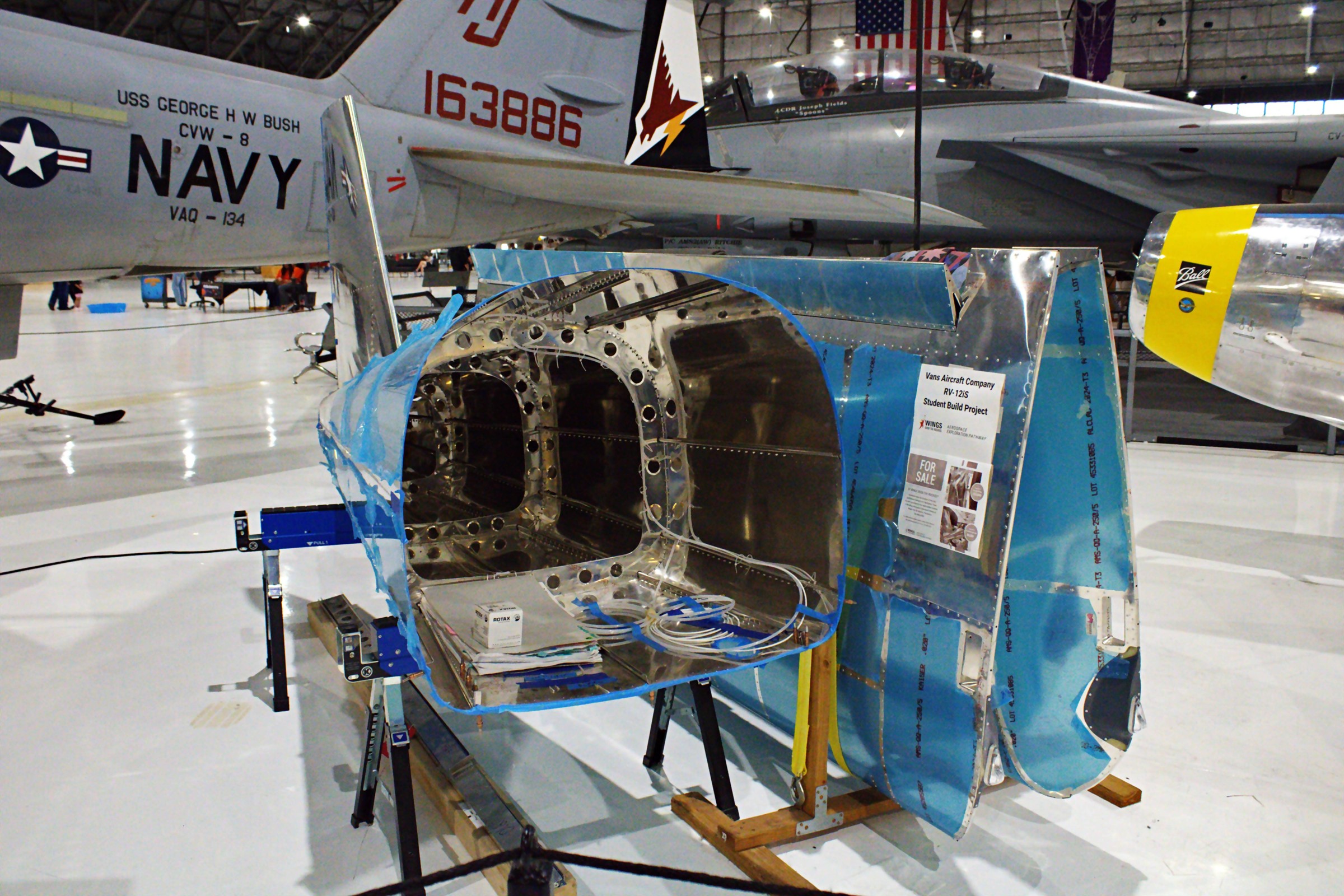
Students at New Hampshire’s Manchester School of Technology have rolled out their second Van’s RV-12iS, and the Aviation Museum of N.H. is looking for a fourth school to join the program. Proposals are due November 5.
On the morning of October 10, a two-seat, all-metal Van’s RV-12iS taxied under a water arch from the Manchester Airport Fire Department at Manchester-Boston Regional Airport. The airplane, N833TF, was built by students at the Manchester School of Technology, a public career and technical high school, and it is the second airplane the school’s students have completed.
Governor Kelly Ayotte, U.S. Senator Maggie Hassan and Manchester Mayor Jay Ruais spoke at the ribbon-cutting on the East Ramp beside the Aviation Museum of N.H., and each pointed to the value of hands-on STEM education. Former MST student Katrina Maglio, who helped build the airplane and now works for Signature Aviation at the airport, was among the guests.
Three School Years in the Shop
Construction began in 2023. Over the next three school years, close to 50 students worked on it in MST’s aviation manufacturing class under instructor Jeff Sullivan, with volunteer mentors, many of whom are in the shop three times a week. Mentors include retired Lockheed and Boeing engineers and commercial pilots.
“The plane’s going to tell us when it’s ready. We’re not going to rush anything, this is the real deal, we’re going to do things right,” Sullivan told the school district earlier this year.
Volunteer mentor Lianne Deranian, a retired engineer who works in the shop alongside her husband, put the mentors’ motivation simply: “I’ve always liked working with kids, my husband and I are both engineers so we have a problem solving background, we’re both retired now and wanted to do something that made a difference.”
The wings and final components went on in a hangar at the airport. An FAA inspection was scheduled for later in October, followed by several hours of ground testing and the flight-test fly-off before the airplane is fully airworthy. Students do not fly the airplane; licensed pilots handle the test flying.
A Program That Pays for Itself
The Manchester program began in 2019 as a partnership among the Manchester School District, the Aviation Museum of N.H. and Tango Flight, a Texas-based educational nonprofit that started placing RV-12 builds in high schools in 2016. At the time, it was only the fourth such program in the country and the only one in the Northeast.
Tango Flight provides the accredited curriculum, teacher and mentor training, and liability insurance, and it owns the airplanes while they are built. When an airplane is finished, Tango Flight sells it on the open market, and the proceeds pay for the school’s next kit. The district expects N833TF to bring $130,000 to $140,000, and Sullivan says there is a waiting list of buyers.
The model has worked. MST’s first RV-12iS received its airworthiness certificate in August 2022 and has since flown to STEM events and an educational conference in Orlando and was displayed at AirVenture in July 2023. Students have already started on airplane number three.
The program has also spread. Lebanon High School began building in 2024 and Farmington High School in 2025, and about 50 students across the three schools are building airplanes now. Of the roughly 100 students who have gone through the program, the museum says about half have gone on to aerospace education, aviation jobs or the military. One Manchester graduate, Samantha DiMino, is now an avionics technician in the U.S. Air Force.
Looking for School Number Four
The Aviation Museum of N.H. is now seeking a fourth school to begin building in the 2027–28 school year. Public, private, charter and parochial schools enrolling high-school-age students are eligible if they are in New Hampshire or in Essex or Middlesex County, Massachusetts. Proposals are due Thursday, November 5, 2026.
The museum commits to raising $320,000 in start-up money, so the program comes at no direct cost to local taxpayers. After the first airplane sells, it is designed to fund itself.
“To the Aviation Museum, this self-sustaining program is part of our workforce development outreach,” said Jeff Rapsis, the museum’s executive director. “We raise the funds to start it — so for school districts, it’s a $320,000 gift.”
Mentors matter as much as money. “Our volunteers often bring decades of experience to the workshop, and form a crucial part of the plane-building program,” Rapsis said. Readers in New England with building or maintenance experience can contact the museum about mentoring at any of the three current schools.