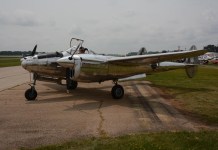
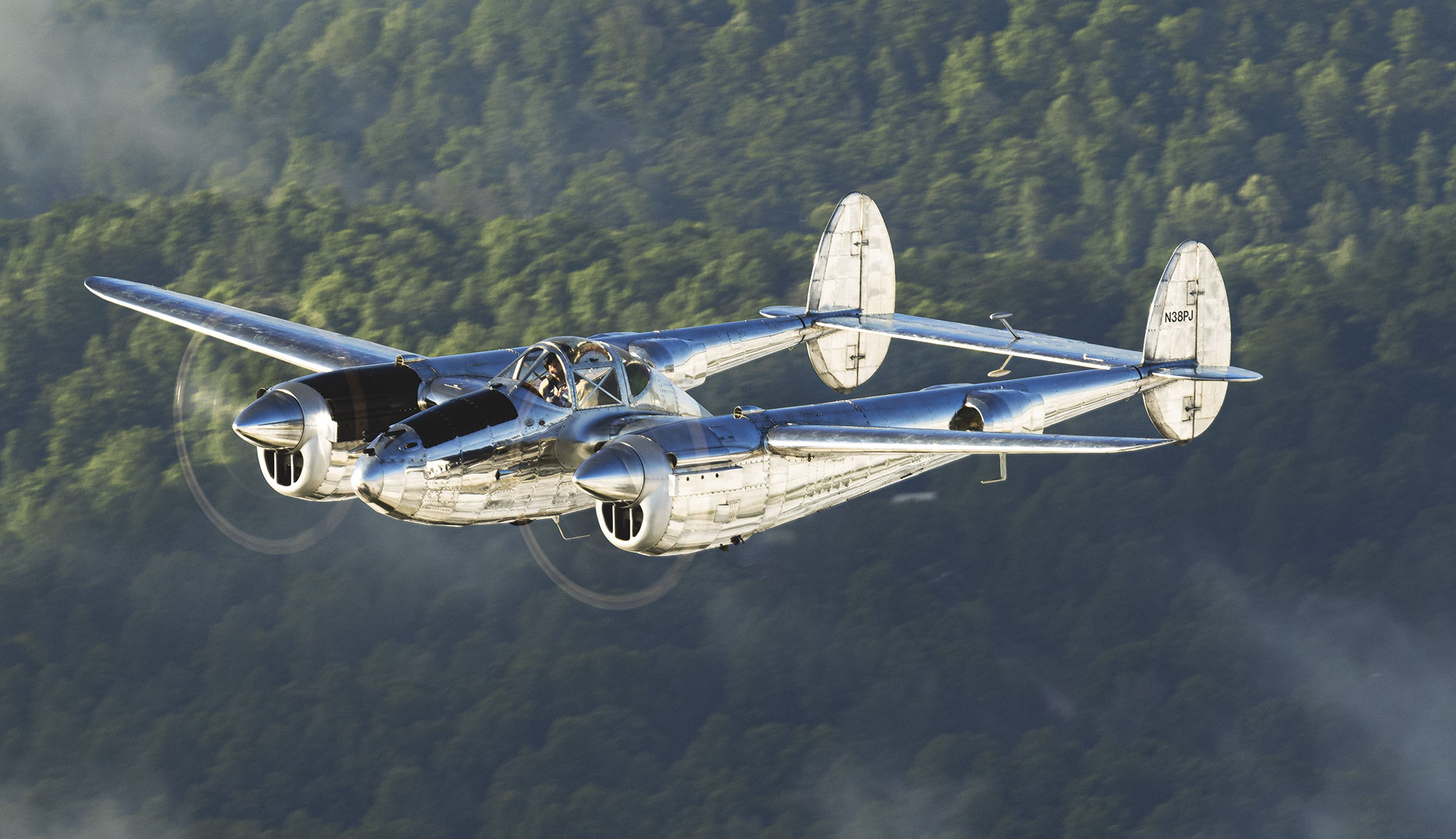
Everyone has a list of their favorite aircraft and the P-38 makes many such lists. Obviously unique, the P-38 stands out technically and visibly; the twin booms, tricycle gear, and the pilot sitting in the central pod, as well as its impressive size, make it eye-catching and sometimes much more. Awe, admiration, and dreams are easily within the P-38’s power, something James “Jim” O’Hara could attest to for he designed and handcrafted this amazing, one-off, scratch-built ⅔-scale P-38 labor of love.
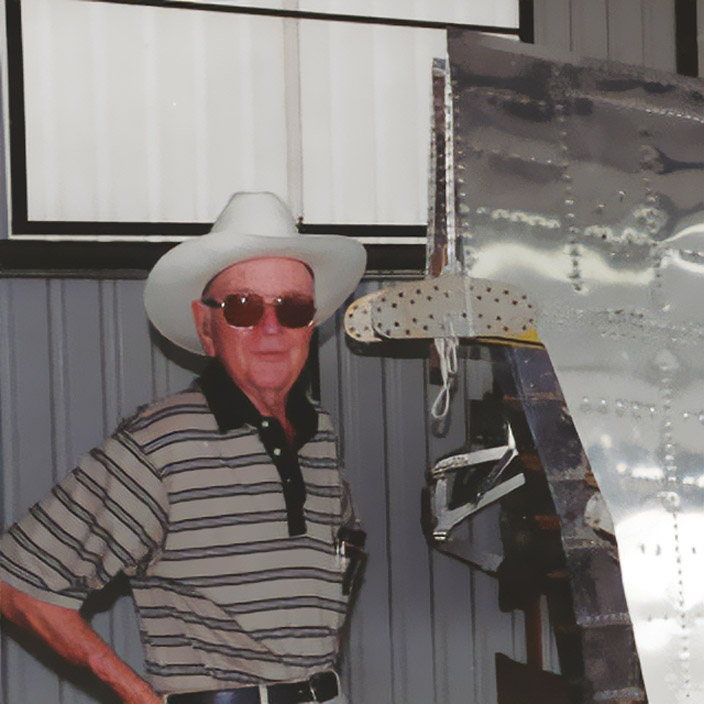
Jim was a professor of aeronautical engineering at Tulane University and also worked for NASA. Born in 1928, he was too young to fly in the war, but growing up he was enamored with many of the aircraft of the conflict. Among them the Lockheed P-38 stood out, and he built his first balsa wood model of one at age 14. Little did he know the twin boom wonder would shadow him the rest of his life.
Jim was born colorblind and didn’t think he could ever actually fly. It wasn’t until he was in his 60s that he discovered he could obtain a restricted medical certificate and he could indeed fly. He took advantage of this newly learned information and promptly learned to fly. He wound up purchasing a Navion, and later a Meyers 200, which plays a pivotal role in this story.
A brilliant engineer and a talented craftsman with a stubborn streak from the O’Hara side of his family, Jim decided to tackle what the folks at Lockheed told him couldn’t be done. They thought it impossible for a single civilian to replicate the complexity of the P-38, even scaled down. Undeterred, he began sketching and running calculations of every aspect of the aircraft. Jim’s nephew William Presler reflected on their conversations. “Uncle Jim said if he got to a problem he couldn’t figure out, he’d quit.” Well, he never did find such an insurmountable problem, so he never quit. He estimated it would take him 10 years to design it and another 15 to build it in his simple workshop that was half of a two-car garage.
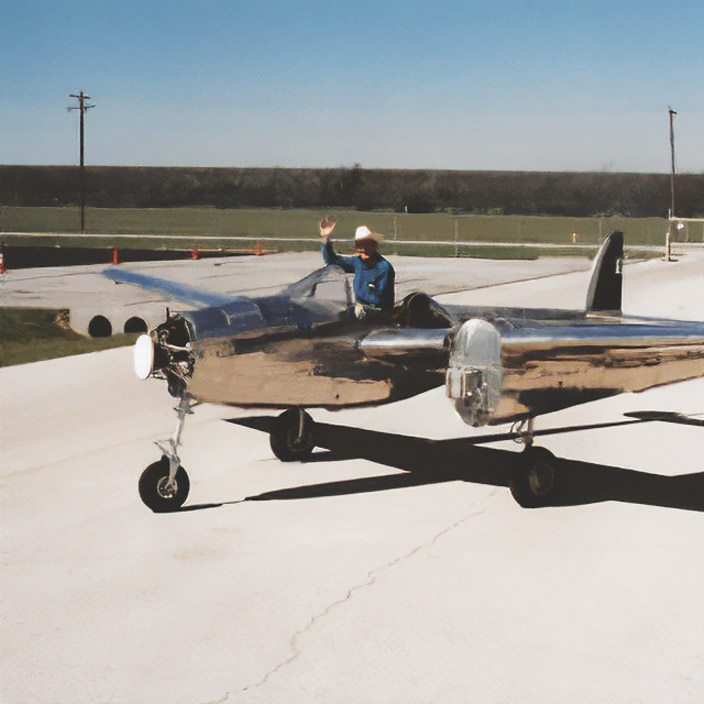
The 2/3 scale came from the dimensions required to fit both Jim and his wife Mitzi into the central gondola, rather than any other scalable factor. According to William, Jim was about 5 feet 7 inches, and Mitzi was 5 feet even. As the design progressed, Jim created multiple full-sized wooden mockups to confirm his calculations. First he would draw it as an engineering plan, run the calculations, build the mockup, and then do stress testing before any actual construction. Once construction began, Jim created jigs and produced the parts in his very basic shop. As these parts were created, they were moved out to a rented hanger in San Angelo, Texas, where he lived in his retirement. Construction was the joint effort of Jim and Mitzi. Mitzi was there for every step as the TTP-38 was born. That was their original designation for it, the TTP-38, which was derived from “Two-Thirds P-38.”
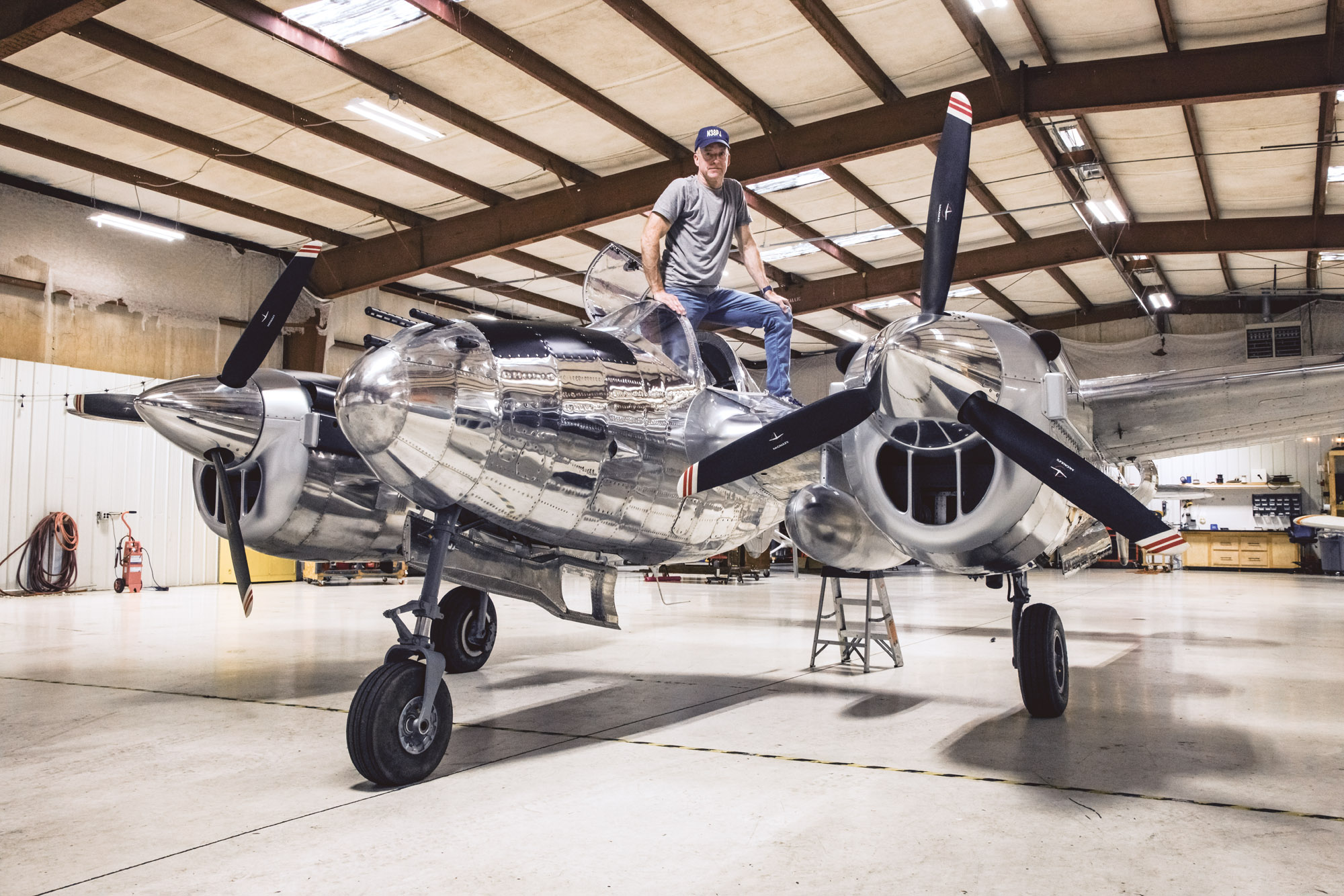
Engine choice took a while with a number of candidates up for consideration. After contemplating an automotive conversion, or the inline four-cylinder Tigre of Bücker fame, Jim ultimately decided on Continental TSIO-360-RBs mated with McCauley three-blade propellers. As first installed he used one normal right-hand rotation model out of a Seneca and a left-hand rotation model on the other side. He set the engines to rotate inward, the same as modern twin-engine aircraft are arranged.
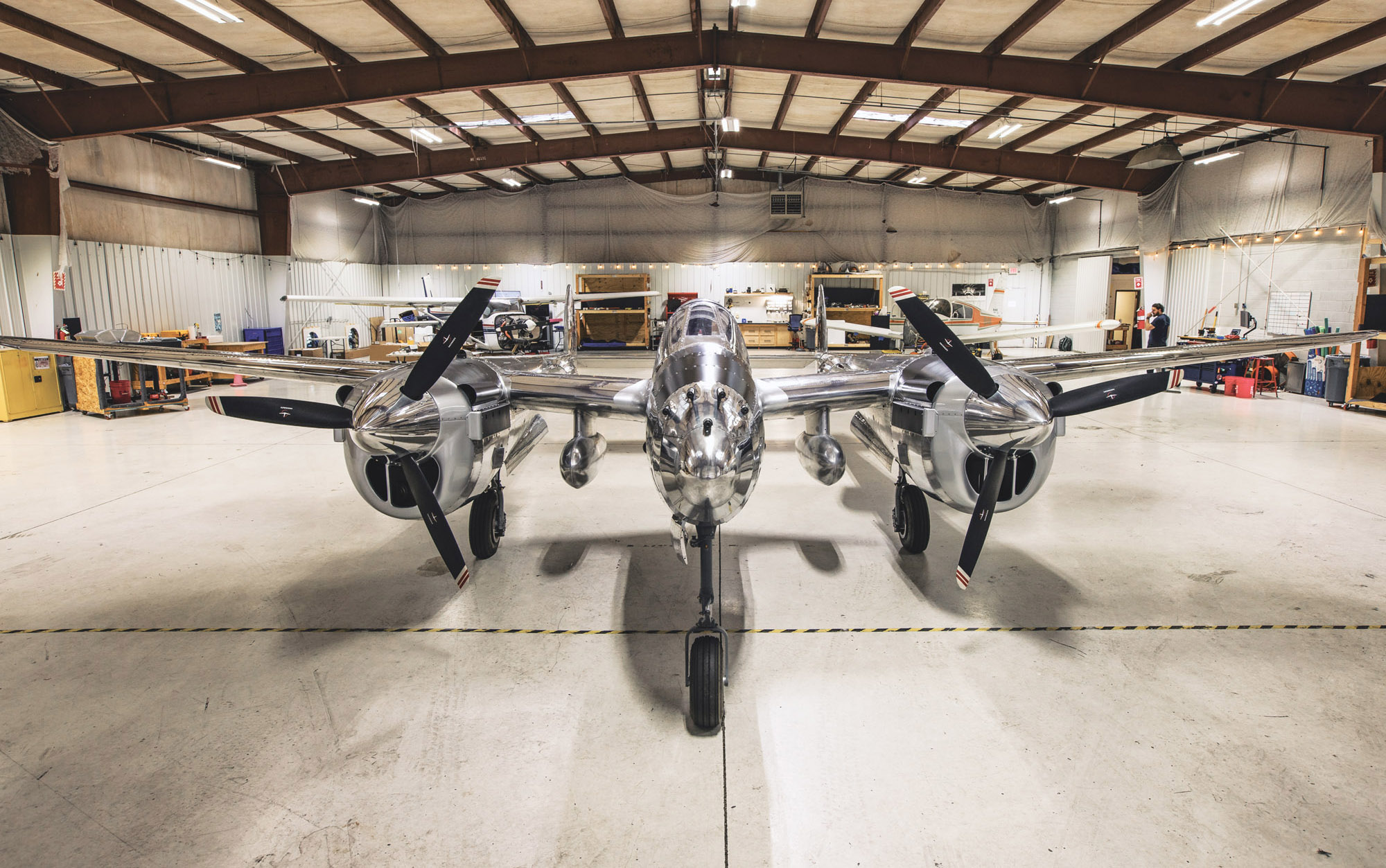
While most parts were designed and built specific to Jim’s plane, like the engines many were borrowed from other aircraft. The landing gear was from a Cessna 310 modified so it folded backward like an actual P-38. Cessna tip tanks were tweaked to make them look like original drop tanks. These tanks are fully functional and double the fuel capacity of the TTP-38. The TTP-38 has similar inboard and outboard flaps to the original and are straightforward and easy to operate.
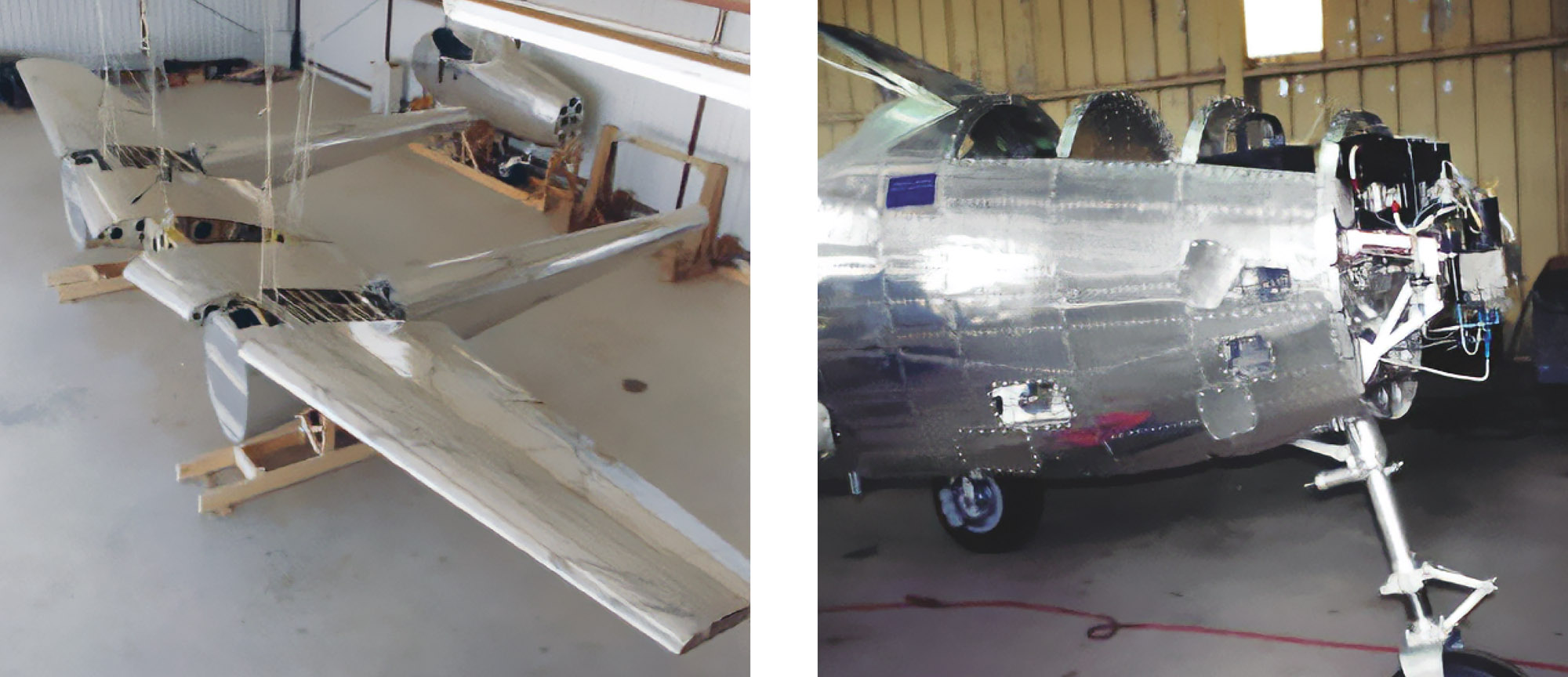
Just as when in the presence of the TTP-38, even when reviewing the highlights of its construction the scale of Jim O’Hara’s achievement forces occasional pauses to absorb the effort that went into its being. The attention to detail is nothing short of astounding. Every piece was engineered, drafted to industry standards, and handcrafted. Jim kept meticulous journals, documenting every plan, calculation, stress analysis, and construction step. These detailed journals were invaluable to understanding the construction behind the project, as well as projections of the stresses and anticipated performance figures.
Even with such a long-term project, eventually it was time to put the design to the test. The first flight was hired to a test pilot, which he terminated because of an aft center of gravity causing unstable pitching motions. Understandably rattled, the test pilot refused additional testing, and Jim wound up getting a multi-engine rating to conduct his own test program. With the CG recalculated and ballast readjusted in the tail booms, Jim flew the smooth and trouble-free second flight. With the basic design proven, Mitzi was tucked into the small seat behind Jim where she recorded all of the technical data such as airspeeds, rpm, and control positions. Their build truly was a team effort.
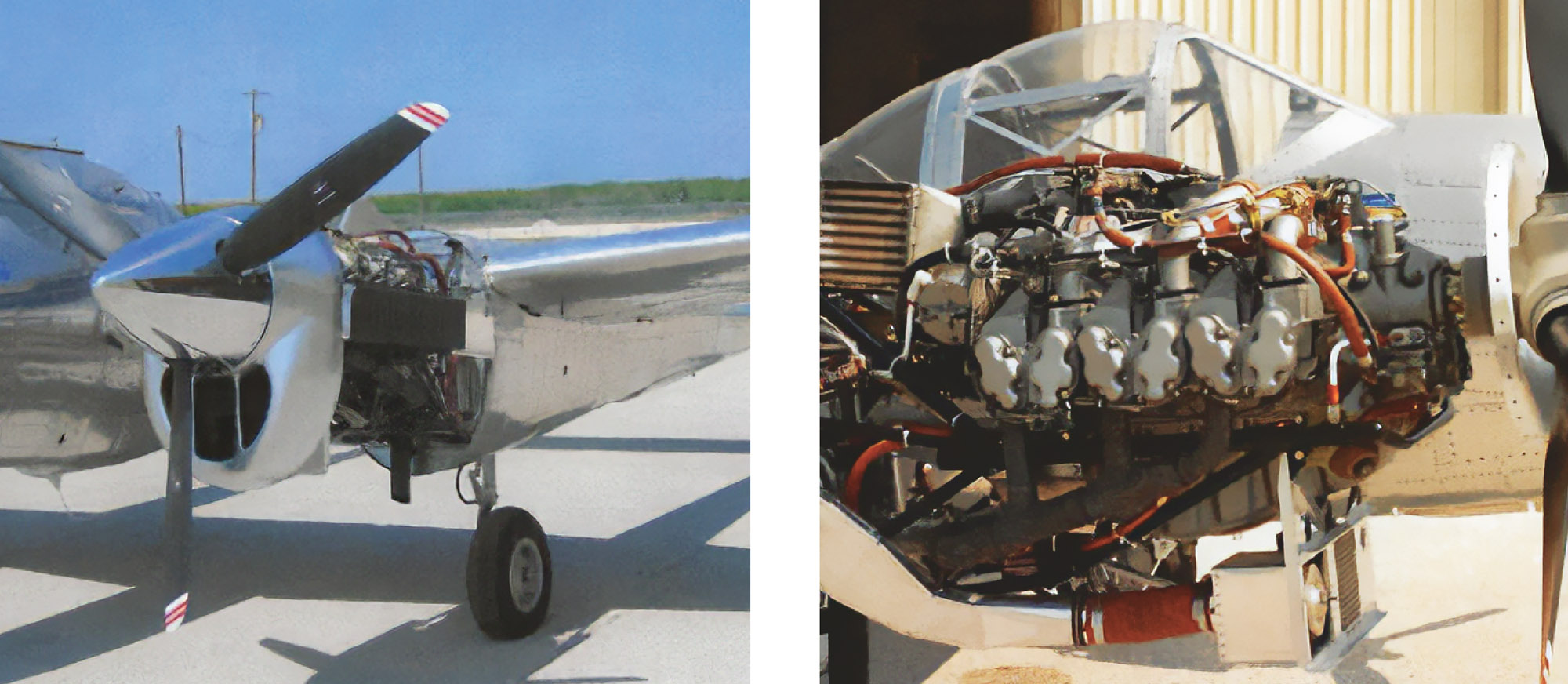
Jim was not satisfied with the performance; it just wasn’t what he had anticipated. As flight testing continued, he decided to swap the engines left to right, making them rotate outward as the original P-38’s Allisons were configured. Jim started the engine swap, but unfortunately, age had caught up to him, and he was no longer physically able to complete the swap and re-cowling. He told his friends at the airport that he was racing against the clock to get this plane ready for his nephew, but while the spirit was willing, the flesh weakened. The plane had been sitting for five years when Jim passed away at age 94 and it was bequeathed in his will to his nephew, William Presler.
Back in 2000, William was having dinner with his Uncle Jim and Aunt Mitzi and was talking about buying an aircraft of his own. It turned out Uncle Jim was considering selling his Meyers 200, and that wound up being William’s first aircraft. When he went down to pick it up, he saw the P-38 project for the first time and was blown away by the scope and magnitude of it. Inspired by his uncle, he went on to create and develop a number of businesses, including most recently Volar (Spanish meaning “To Fly”) Avionics and Restorations. The Meyers was his first airplane, but he went on to fly a number of others ranging from Cubs to an Avanti, all of which stood him in good stead when he inherited the TTP-38, which since has been dubbed the Volar P-38.
Once he had a chance to thoroughly check it out, William enlisted his friend and serial aircraft builder Steve Michael to help him get the plane airworthy. After sitting for years, it took a fair amount of work to inspect everything, flush the fuel tanks, check the seals, and make sure it was safe to return to the skies. Adding complexity was refitting the cowls after the engine swap, plus the engine swap required new test flights. Once every inspection and checklist was completed, finally it was time for William’s first flight in the Volar P-38. What was supposed to be a high-speed taxi test turned into rotation and a smooth trouble-free flight. “Jim was on my mind a lot during that first flight,” said William. “I was aware of what a tremendous honor and responsibility I had. I was only the third person to fly it, and the first since the engine swap. I was taking his dream where he wanted it to go.”
Going Public
The Volar P-38 made its public debut at AirVenture 2024, winning a Bronze Lindy in the Plans Built Champions category. Of course the “plans” were the original Lockheed drawings. Since then, it has been progressively evolving. There was a slight delay getting the Volar P-38 home from AirVenture due to an engine ignition harness issue. Champion Aerospace was instrumental in getting things sorted out, and William headed south to his home in Tennessee. At a fuel stop he stumbled upon an airshow in progress, the air boss slotting his arrival between various WW-II fighters. The airshow performers were really quite excited to see it. “A whole bunch of them came over to check out the Volar P-38. They’re the folks flying the incredible stuff at airshows, and here they were checking out Jim’s plane! And it wasn’t just the pilots, but children and spectators were thrilled to see it, too.” That put things into a whole different perspective for William, and over the winter he attended the International Council of Air Shows (ICAS) gathering, where airshow talent markets their performances and aircraft to prospective airshows. Unsurprisingly, there was much interest and he has four airshows on the schedule for 2025. Two are static displays, while the other two have an aerial component planned.
Alongside his plans to attend airshows, William and his crew at Volar created a 24-foot trailer to accompany the Volar P-38 at airshows. It houses a hands-on and visual experience about the P-38 and the construction of this unique replica. Garmin, Champion, and SureFlight have joined as sponsors.
William realized after ICAS that flying and displaying such a rare aircraft will require a dedicated flight crew base. It isn’t enough to just have the pilot trying to manage everything when there are so many moving parts. “It’s not a simple plane like a 172, or even a Baron. It is a ‘one-off design,’ with some systems remaining unproven in terms of how they will do over time, exposure to temperatures, and cycles.” Given that, it is reasonable and prudent to establish a set of protocols to inspect, test, evaluate, and monitor all of the aircraft’s systems to ensure safe and long-term flying.
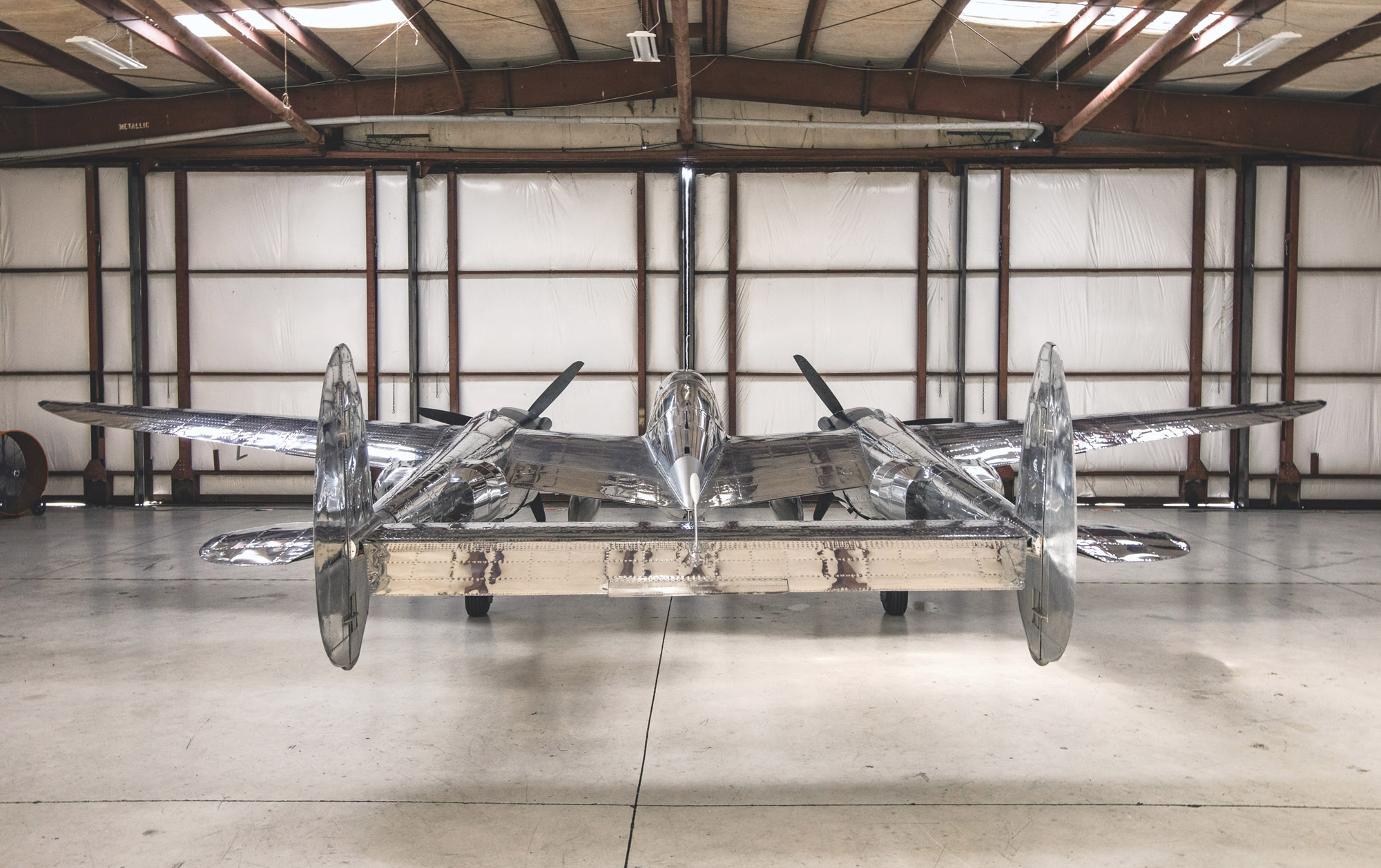
As William continues to explore the Volar P-38 and modify it for himself, he’s added the “ultimate selfie stick.” It’s a 360° video camera screwed into the mock cannon barrel on the nose of the central gondola. The mount extends out 4 feet to the camera mount leading to amazing in-flight videos. Such footage is great documentation and for evaluating the aircraft systems as they are refined. In one video William could see the nosegear door wasn’t opening all the way thanks to a gremlin Uncle Jim hadn’t gotten around to fixing. This was observed mostly when trying to explore slow-speed, gear-down flight or when going around from an approach. As the wheels retracted after takeoff, then lowered for approach or slow flight, and then were retracted again, the nosegear door would hang up and not fully open. The nosegear would then rub on the hung gear doors. Given that the nosegear door is about 6 feet long, that is a lot of metal hanging in the breeze. Finding this in the video was invaluable and led to further modifications, testing, and ultimately a successful resolution. Without the video, it would have taken longer to sort out.
Resolving the gear door issue gave a significant increase in speed. The Volar P-38 originally cruised around 140 knots, somewhat slow given its powerplants. The overall performance did improve significantly with swapping the engines; however, it still wasn’t up to the calculated numbers. With the gear doors cleaned up, William is now seeing around 160 knots true airspeed in cruise. How does that translate to range and traveling? Well, the mean aerodynamic chord, weight, balance, and other fundamentals are matched to the original Lockheed Lightning. However, the significantly lower power of the general aviation air-cooled engines is much less than the original Allison V-1710s, giving it performance numbers within a comfortable range for most general aviation pilots. The twin Continental TSIO-360-RBs put out 220 hp each and burn 13-14 gallons per hour each in cruise. So far they seem to prefer flying rich of peak rather than lean of peak. That may be something to work on; in the meantime the airplane carries fuel in four wing tanks: a 14-gallon and 10-gallon tank in each wing and two mock-drop tanks, each carrying 20 gallons. This gives approximately 80 gallons of useful fuel, allowing two-hour legs with a comfortable safety margin and a 300-mile range with reserves.
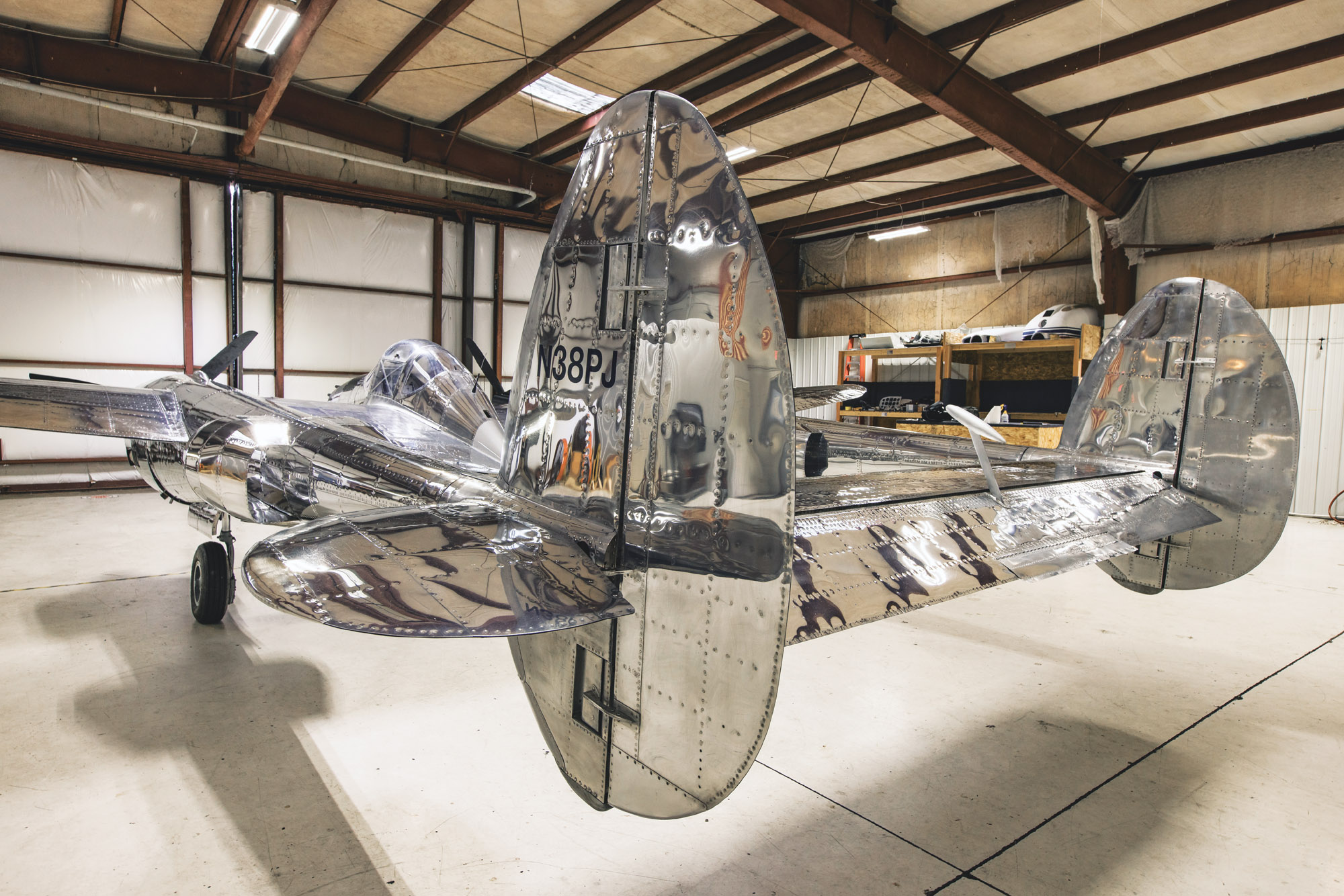
William has put approximately 25 hours on the TTP-38 in the last year between work and tweaking. He’s been exploring its performance envelope and single-engine numbers gradually in stepwise fashion. The low-speed portion of the envelope has been as expected, based upon Uncle Jim’s calculations. “I was flying it like it was a Baron because it looks fast, but Uncle Jim’s calculations predicted that it would stall dirty around 55 knots. As I got more comfortable with it, I started touching down around 65 knots rather than the 75 or 80 I was using originally. It handled really well even down around 60 knots without any buffet or issues. Flying it at the slower numbers, it performs really well and is validating everything Jim predicted.”
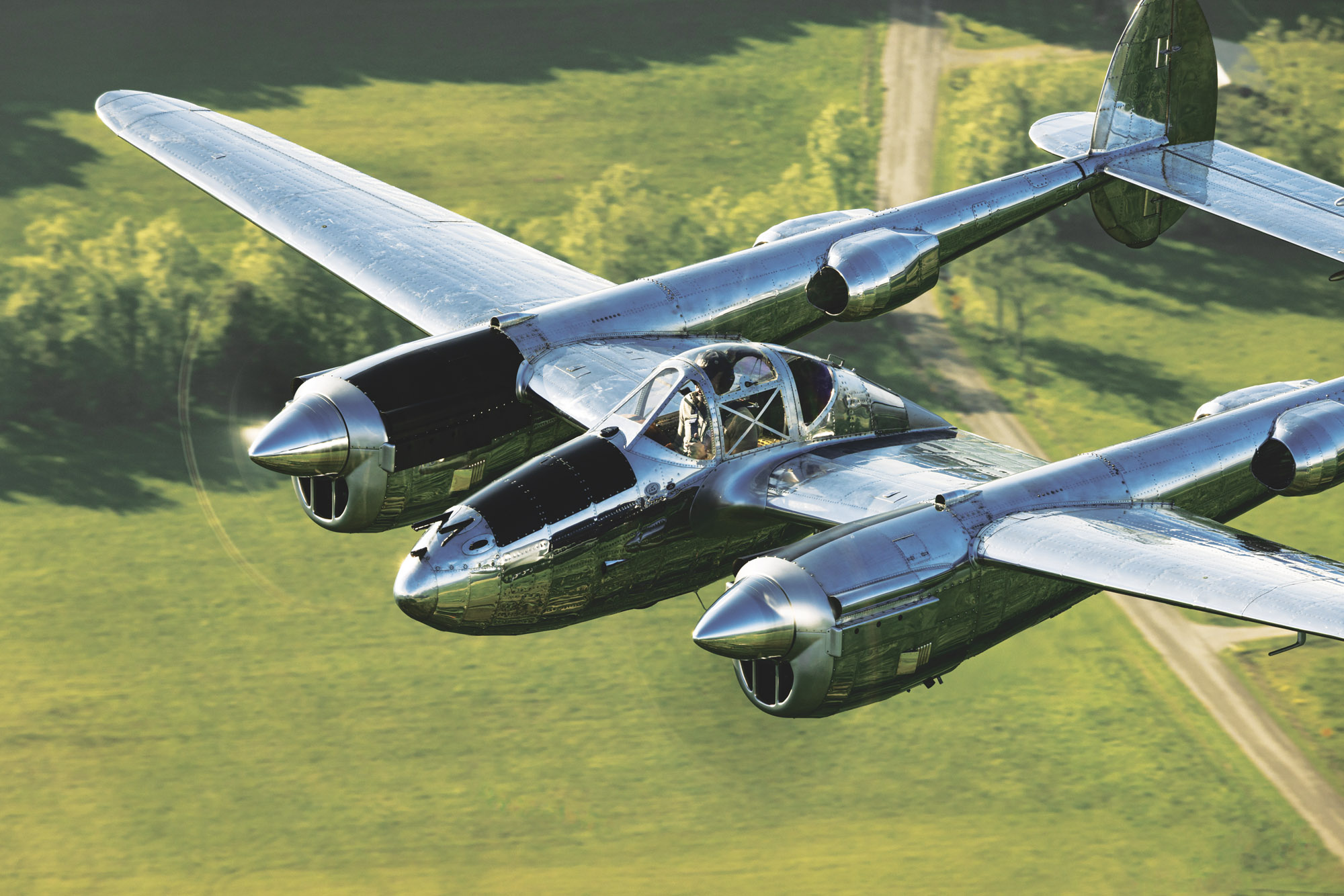
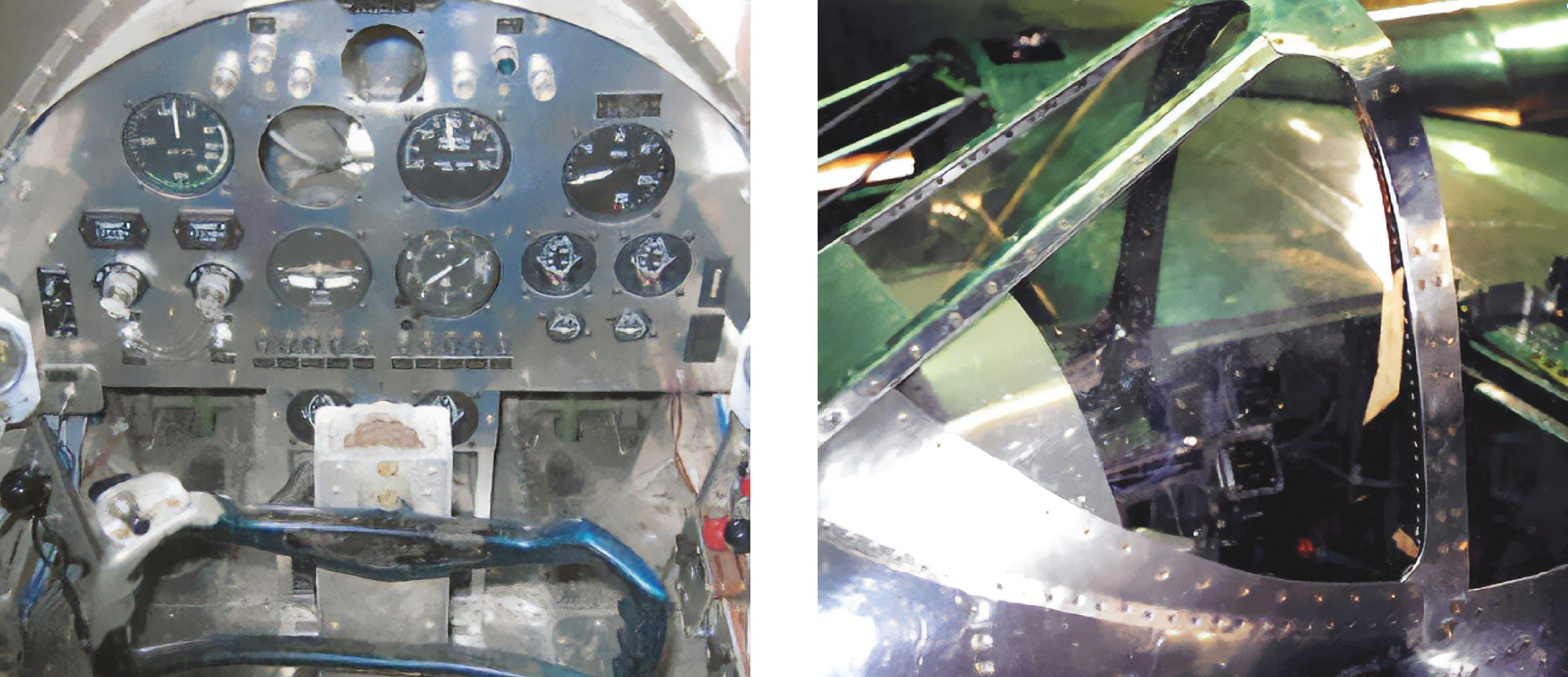
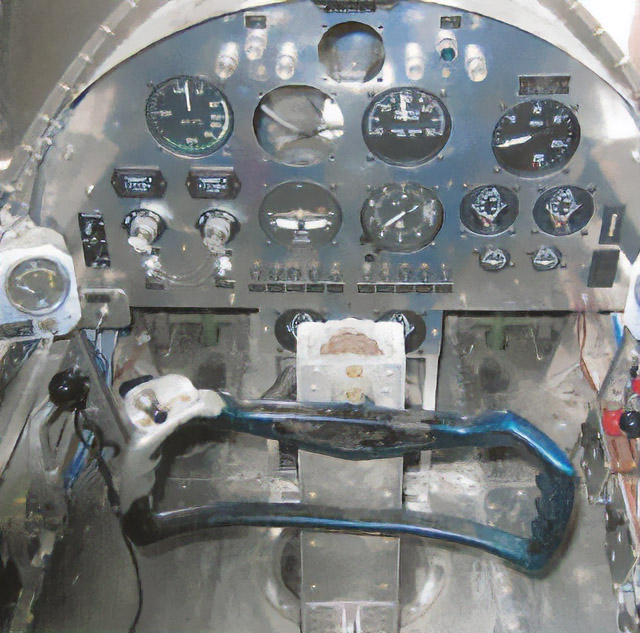
Further refinement over the last year includes a 12-gallon smoke system featuring a central single tank feeding both engines. That should make it stand out on the airshow circuit! William also changed the battery system. The hydraulic pump is in the right rear boom, with the original Gill 12-volt battery in the left boom. Both of these are where the original General Electric superchargers would have been. The long battery cable running from the boom to each engine created a lot of electrical resistance and at times made starting difficult. This design was replaced with a pair of EarthX 12-volt batteries in parallel. The addition of some ballast was required as well, because they are significantly lighter than the original Gill battery. Combined, they generate 800 cold cranking amps. Presto! All starting issues have been resolved. Upgrades were made to the instrument panel, which now includes a “four pack” of Garmin GI 275s. Two are set up as engine monitors and two as electric flight instruments. While the technology is far advanced compared to that of the 1940s, the goal was to keep round dials and the same retro look as the original, something the military-style toggle switches definitely help. Now with the Volar P-38 among the public, due to the control surfaces and wingtips tapering to fairly sharp edges, pool noodles serve as safety bumpers to people and plane. Of course, keeping the bare aluminum gleaming is a full-time job, but it certainly does look beautiful when freshly polished! The work never ends.
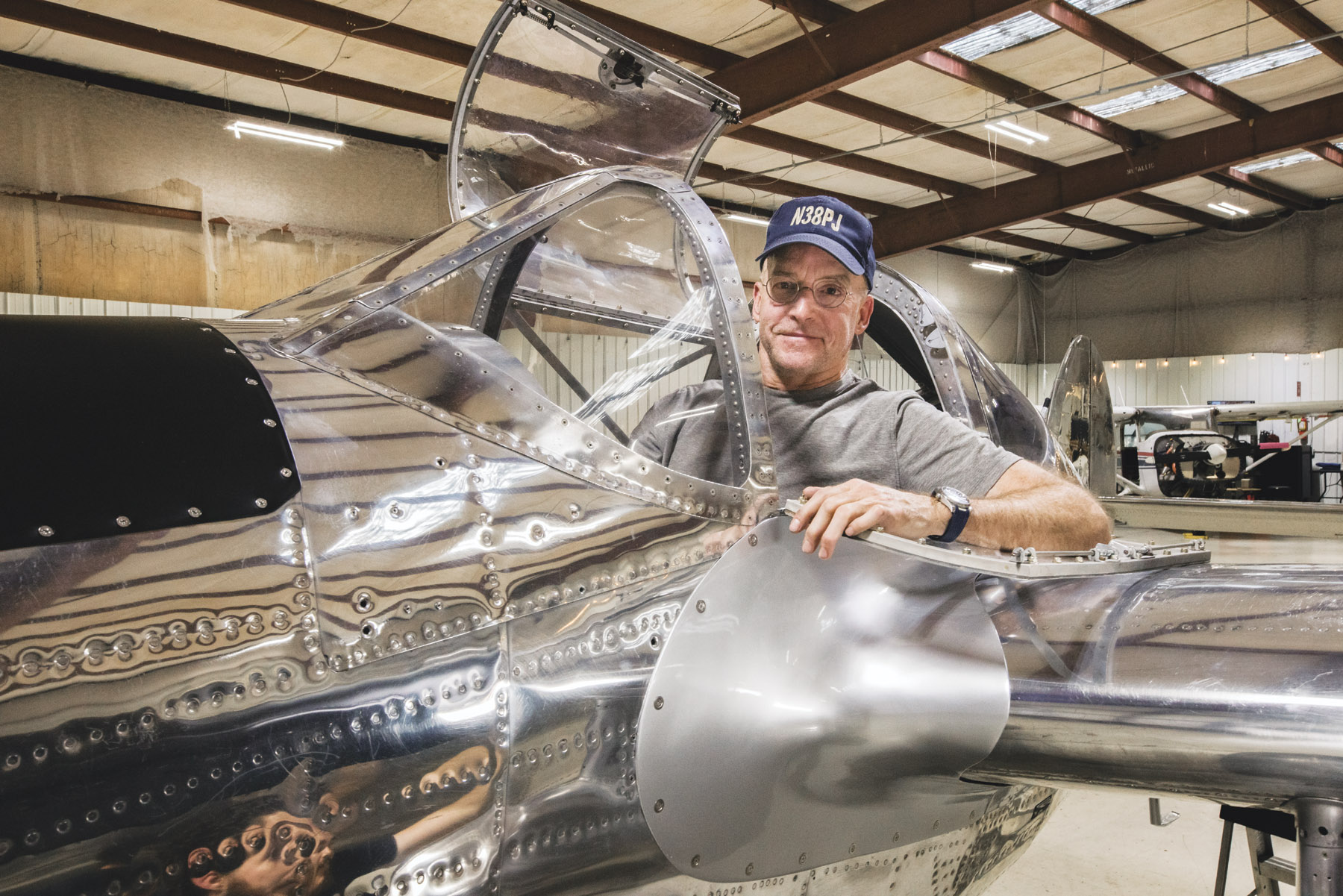
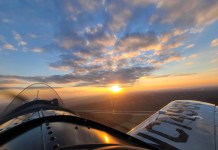
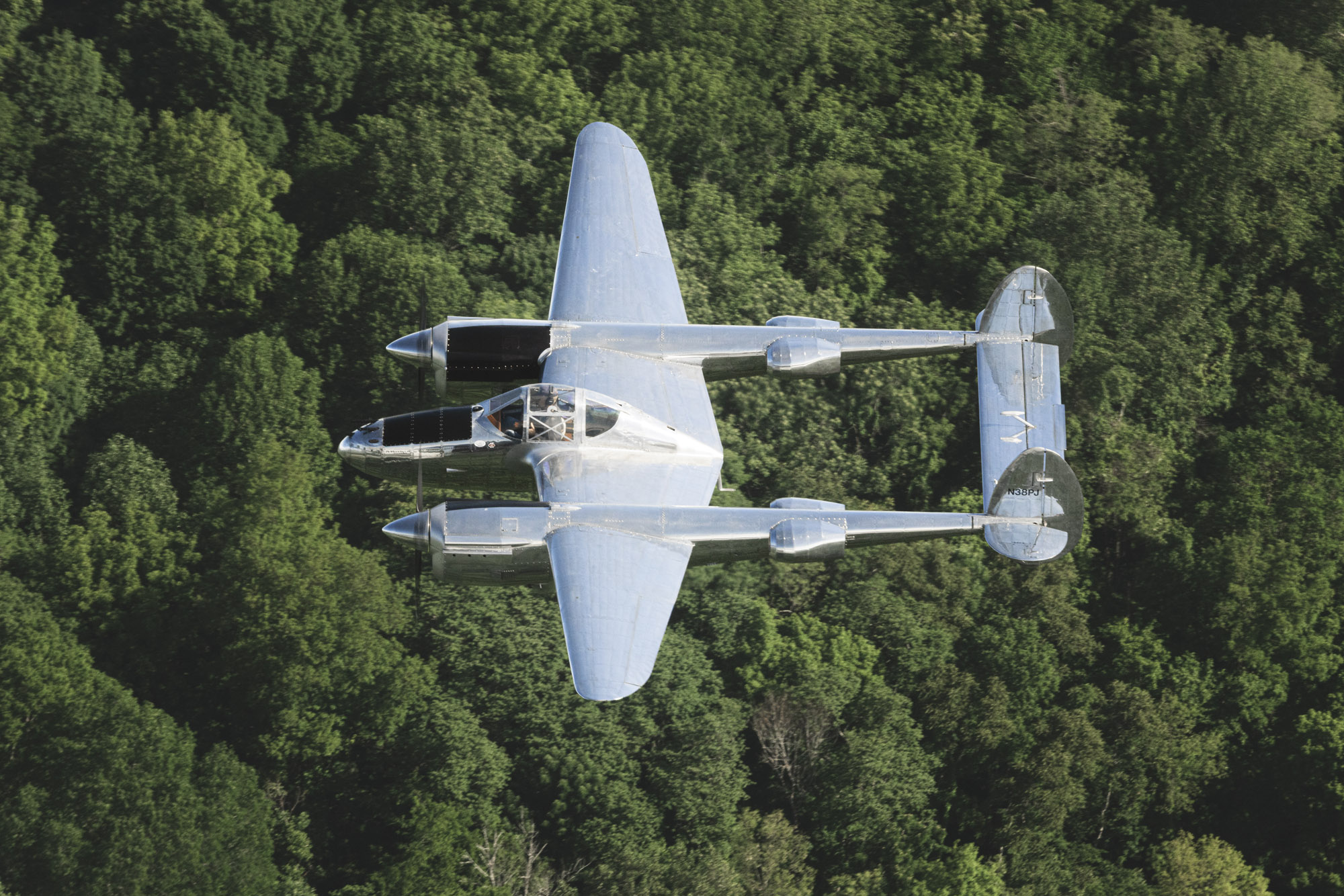
During WW-II, P-38 pilots suffered from the cold. With the cockpit location not behind an engine, the heating system has a serious challenge ducting warm air over to the pilot. The Volar P-38 is true to its inspiration, as the central gondola has no heating at all. This made the air-to-air photo shoot for this article pretty chilly!
As William gets more time exploring the flight envelope, he is excited about the future. “I can’t wait to get this out to airshows and share Jim and Mitzi’s cherished creation of a lifetime. It’s difficult to imagine the effort that went into designing and building such a complex, one-of-a-kind homebuilt aircraft. This was 10 solid years of designing and analyzing, followed by another 15 years of full-time building. Thousands of hours logged between Jim and Mitzi, to take a dream, and an idea, fueled by a dedicated passion, and turn it into a reality.” Stepping back and admiring the polished aluminum curve of the Volar P-38, one can get lost in it. It’s truly a beautiful dream, and through William it will live on to be enjoyed by thousands of spectators.