
![[Credit: Sonex]](https://www.kitplanes.com/wp-content/uploads/2026/07/unnamed-6.jpg?resize=1024,682)
The rejuvenated Sonex has given its two-seat high-wing a new name. The airplane that has carried the working title “Sonex Highwing” through three years of development is now the Sonex Phoenix, the company announced as it brought the design to AirVenture.
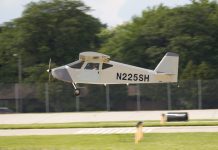
The name is the news, but it arrives alongside real progress on the airframe. Sonex says wing load testing is underway, a 30-step, multi-day sequence meant to confirm the wing’s design, structural integrity, and performance before full kits ship. The prototype, N225SH, first flew on June 30, 2025, with Sonex Advisory Board member Joe Norris at the controls; the company reports that handling and performance have matched expectations, and tail kits are already shipping to early customers.
The Phoenix keeps the Sonex formula: a cantilever high wing over an all-metal 6061-T6 aluminum structure, two seats side by side, and a price of admission aimed at builders rather than buyers. Estimated specifications list a 26-foot-2-inch span, 117.9 square feet of wing, and a 1,500-pound gross weight against roughly 820 pounds empty, leaving a useful load of about 680 pounds. Fuel capacity is 30 gallons. Sonex quotes a clean stall of 50 mph, a 159-mph design cruise, and a 200-mph never-exceed speed. As with the rest of the Sonex line, the Phoenix is engine-agnostic across the 100-to-130-hp class, with the AeroVee, Jabiru 3300, UL Power, and Rotax 9-series all listed as options. A shorter-span aerobatic wing is offered as well.
![The Sonex High Wing now renamed the Phoenix, in flight as prototype N225SH. The two-seat, all- metal design first flew June 30, 2025, and is now in wing load testing. [Credit: Sonex]](https://www.kitplanes.com/wp-content/uploads/2026/07/01_Sonex_Phoenix_inflight_2025.jpeg_preview.jpg?resize=1024,683)
Sonex is also using the show to move builders off the fence. The company has temporarily cut the full-kit deposit to 30 percent, a limited offer it says expires soon; positions are assigned in order of deposit receipt, and early $500 deposit holders are honored through the end of August. Details and the deposit link are on the Sonex Phoenix page at sonexaircraft.com.
For a company built on affordable, simple, all-metal homebuilts, the Phoenix is a logical addition rather than a departure—a high-wing option for Sonex builders who wanted one, now with a name to match the airplane.






I want more information about the Sonex Renames High Wing the Phoenix.
Thank you
Gaetan
Gaetan, thank you for your interest in the Sonex Phoenix (Highwing) report.
Stay tuned to Kitplanes print and digital editions for much more information in the weeks and months ahead.
CORRECTION – The Phoenix is NOT “a strut-braced high wing”. It is a cantilevered wing.
Kelly, You are absolutely right, and I am having that corrected in the newsletter. Thanks for the help.
Comments are closed.