A Cub in the Stratosphere
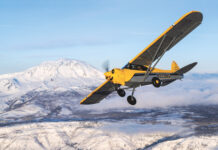
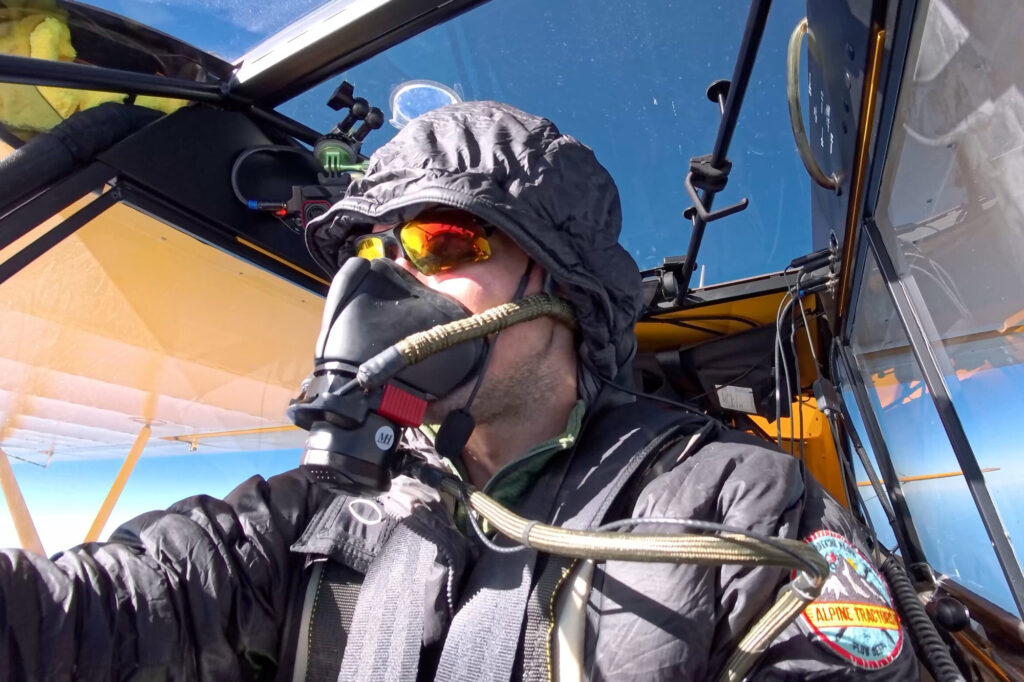
On October 28, 2025, the familiar backcountry shape of a Carbon Cub UL took on an utterly unfamiliar context, climbing skyward from the California coast on bush wheels and right out of the familiar domain of Super Cubs, past the oxygen-optional line and up into the flight levels in the company of airliners. Sixty-two minutes after takeoff, Jon Kotwicki leveled off at 37,609 feet—higher than most airline traffic, in a homebuilt bush plane, with ATC listening in bemused disbelief as the Cub checked in on the frequency.
Jon’s summation of the flight:
“The Cub flew really easy. We were outside the normal realm of operating parameters, so we were proceeding with caution. It was pretty dang cool to be in a tube-and-fabric bush plane that high, and it was surreal hearing airline pilots over ATC wondering what a Cub was doing up there.”
It represented a feat of both engineering and pilotage—a calculated reach for a record set in the postwar years, executed in partnership with CubCrafters, Rotax, and a team of developers and test engineers who coordinated everything from physiological support and camera gear to regulatory compliance. And the context was perfectly timed as the flight was flown as the MOSAIC rubric took effect.
Why this matters now
The climb record was both audacious and disciplined, but what strikes me is the moment into which it landed. In the closing months of 2025, the FAA released its final MOSAIC rule. It’s hard to overstate just how much MOSAIC changes the experimental landscape. For the first time in the modern era, sport pilots get a rule predicated on actual aircraft capability—i.e. performance, not just weight or configuration. Pilots will have access to thousands of legacy certified and EAB airplanes, including some pretty serious traveling machines and more than a few experimental aircraft designs that would’ve been nowhere near qualifying for LSA status just a year ago.
The evolution is a validation of experimental aviation’s collective record over the past fifty years. Safety in the amateur-built world has climbed right alongside capability. You can only imagine the FAA’s perspective—the same agency that once promulgated scrutiny for every aspect of a design is now trusting the builder pilot to train, fly and maybe even break records above the flight levels.
The New Landscape
Let’s clarify a few realities. MOSAIC removes the old 1,320‑pound LSA weight cap and replaces it with performance-based limits, allowing sport pilots to fly single‑engine, up‑to‑four‑seat airplanes with a clean stall speed of 59 knots CAS or less, and allowing new light-sport category designs with a flaps‑down stall speed up to 61 knots CAS, among other criteria.
Kit manufacturers and designers are running models, tweaking stall speeds, brainstorming how to offer more utility for sport pilots. The installation of now available safety equipment, e.g. airbags, advanced avionics, even full-airframe parachutes—is no longer penalized by a weight limit. There’s new room for innovation, with the gaps between SLSA and EAB narrowing by the month as innovators innovate.
In the meantime, as MOSAIC turns more eyes toward complex amateur-built airplanes and opens Sport Pilot privileges to a broader set of aircraft, the responsibility for safety—demonstrated and documented—grows with it.
Performance and Opportunity
Here’s where that record Cub climb fits in the new order. The Carbon Cub UL climbed more than seven miles up. As Jon Kotwicki put it:
“We didn’t know how high we could go, and we were honestly surprised we reached that altitude with 29-inch Alaska bush wheels installed and all the camera gear onboard. The UL is truly an amazing backcountry aircraft. We could have gone directly from over 37,000’ to landing and taking off from any unimproved dirt strip anywhere in California. That’s what makes this machine so versatile.”
That’s a story of envelope-pushing that is both modern and responsible—built on factory testing, technical collaboration, and a refusal to fudge the basics of risk management. An achievement like this is reminiscent of the earliest days of aviation. It reassures those tasked with regulating our freedom to experiment, because it proves that ambition can pair with responsibility and preparation.
Safety is the real record to celebrate
In the background, the real story of 2024 in the experimental world isn’t altitude or speed—it’s the lowest fatal accident count in the category’s history. Just 29 in EABs across a country full of first flights, new pilots, and relentlessly creative builders. The old “not to exceed” FAA bars—once a tantalizing challenge—are now comfortably below the mark, thanks to relentless community effort. Safety pilots, builder checklists, transition training, and test plans have matured from “best practices” to bottom-line expectations.
None of this happened by accident. Peer mentoring, builder forums, and organizations like EAA kept nudging the needle. Every well-run first flight and every candid postmortem brought the community one step further away from the “Wild West” reputation we all inherited and sometimes deserved. That’s the record that really matters—thousands of builders going home at the end of the day, each one a living testament that this thing we do can be done right and done safely.
Pushing the envelope in the MOSAIC era
It’s worth asking, then: What should “pushing the envelope” mean for us—now that we have broader privileges and greater scrutiny? Jon and his team went after a record with all the right habits: transparent reporting, cautious test cards, and plenty of margin built in. That’s what makes the Carbon Cub climb more than a one-off. It’s proof that you can challenge the outer limits without disrespecting the laws—of aerodynamics or the FAA.
It’s not lost on anyone who’s managed a project like this in today’s hyper-visible YouTube age: public mistakes are PR issues as much as they are learning opportunities. The responsibility is real collective. If you want the room to experiment, you have to show your homework and consistently produce better results.
The YouTube era: Public successes, public risks
The world is watching, in numbers never seen before. Oshkosh 2025 cracked 700,000 attendees, every event going live within hours, and every big feat—good or bad—travels around the world by dinner. The record Cub climb was fielded by ATC, celebrated by engineers, and parsed by online cynics, all within minutes.
If you toggle on any of the major homebuilt forums (or just, say, your email inbox as Kitplanes editor), you know the tension: we want to experience old-style heroics. We want technical and regulatory progress, but we also want to keep the freedom we’ve steadily won. I look at what organizations like CubCrafters did with this project—because it made a good case study. As a community, we’re more defined by what we choose to celebrate, discipline or dramatize.
Edges And Ethics: A Homebuilder’s Dialogue
Bringing this all back to homebuilding, MOSAIC is going to force some new conversations, and quickly. Will kit designers tweak models to skate just inside the rules, or will we see a new era of conservative, margin-building designs? Diligent instructors, honest test pilots, and responsible manufacturers will find themselves setting the real boundaries—tests of aircraft, and of character.
Kitplanes, as an aviation publication, is in the thick of it. We get to choose what airplanes and flights we highlight, the questions we ask, and whether we lean toward highlighting the spectacular or the sustainable. Training, accident analysis, and test regimen pieces are steadily more popular than you might guess. They represent the “boring record”—the real one—for which aviation community at large and the regulators are quietly grateful.
Human factors in the new normal
That Cub at FL370 is a novelty of course—a flag planted at the boundary of human and machine limits.
What’s really changed—the innovation of this age—is the culture shift in flight test and operational discipline. That’s how “envelope-pushing” and “safety” finally merged, and it’s why we get to keep building further.
The next altitude
Looking forward, the MOSAIC rule is not an endpoint. a signal the system trusts us and expects us not to squander that trust. The Carbon Cub’s headline climb was but the latest in a slow, steady record of achievement in aviation.
“We could have gone directly from over 37,000’ to landing and taking off from any unimproved dirt strip anywhere in California,” Jon Kotwicki said in the after-action report. “That’s what makes this machine so versatile.”
It’s also what makes this moment for the sport aviation community so electric: the opportunity to not only explore more envelope, but to raise the level of care, discipline, and stewardship with each new altitude gained.
If you’re a builder, a kit designer, or someone who loves the satisfaction of a well-constructed homebuilt airplane, this is your winter to reflect and recommit. MOSAIC delivers new latitude—let’s keep earning it, one flight at a time.