
Cubcrafters stands alone as the only aircraft manufacturer in America producing FAA Part 23 certificated, Light Sport Aircraft (LSA), and Experimental Amateur-Built (E-AB) models within the same facility—a distinction that places the Yakima, Washington-based company in a category entirely its own. No other producer of Cub-type aircraft offers such breadth across certification categories, making CubCrafters the unrivaled leader in versatile sport aviation platforms.
Founded in 1980 by Jim Richmond, the company began as a repair and restoration shop for Piper Cubs before evolving into a manufacturer of groundbreaking new designs. Richmond, an engineer and skilled A&P mechanic, saw possibilities in modernizing the iconic Piper Super Cub using contemporary materials and manufacturing techniques. Under current President and CEO Patrick Horgan—who assumed leadership after Richmond’s passing in November 2021—CubCrafters has manufactured approximately 1,500 new aircraft while developing seven distinct models and holding 64 STCs for various Super Cub improvements.
A Record-Breaking Achievement
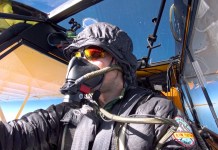
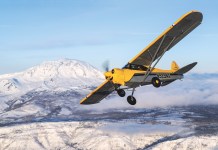
The company’s engineering prowess was dramatically demonstrated on October 28, 2025, when a CubCrafters Carbon Cub UL reached a stunning altitude of 37,609 feet over the California coast, shattering the previous altitude record for Cub-type aircraft that had stood since 1951. Piloted by Jon Kotwicki and powered by the turbocharged Rotax 916 iS engine, the aircraft climbed from San Luis Obispo Airport in just 62 minutes under clear conditions, with outside air temperatures plunging to minus 51 degrees Fahrenheit at peak altitude.
“This achievement exemplified everything we stand for—innovation, craftsmanship, and the courage to push limits,” noted Brad Damm, CubCrafters Vice President. The flight was conducted as a collaborative effort with Cal Poly’s Aerospace Engineering program, Aerocrafted, Rotax, and Mountain High Equipment & Supply. Perhaps most remarkably, the Carbon Cub UL remained in standard bush plane configuration, complete with 29-inch Alaska bush wheels and camera equipment.
The accomplishment exceeded not only the 1951 mark of 30,203 feet set by Caro Bayley in a Piper Super Cub but also the official Fédération Aéronautique Internationale ultralight record of 35,062 feet held since 1996 by a Rutan Long EZ. Airline pilots monitoring the same frequencies were reportedly astonished to hear a Cub operating at their cruising altitudes.

The Complete CubCrafters Fleet
CubCrafters’ current lineup encompasses aircraft serving virtually every mission profile within the backcountry aviation sphere, from entry-level Light Sport platforms to the company’s flagship high-performance machines.
Carbon Cub Family
The Carbon Cub line represents CubCrafters’ reimagining of the Super Cub using 21st-century materials and computer-aided design. The result is an aircraft with 50 percent fewer parts and weighing more than 300 pounds less than a similarly equipped vintage Super Cub.
Carbon Cub SS
Serves as the factory-built Light Sport option, featuring the CC340 engine producing 180 horsepower, a maximum gross weight of 1,320 pounds, and breathtaking performance including climb rates exceeding 2,100 feet per minute at sea level. Base pricing begins at $254,900.
Carbon Cub UL
Represents the newest addition to the family, designed specifically to meet Light Sport and now MOSAIC standards in the United States and Ultralight requirements internationally. Powered by the 160-horsepower turbocharged Rotax 916iS with multi-fuel capability (accepting both MOGAS and AVGAS), the UL achieves an empty weight of approximately 860 pounds while maintaining the 1,320-pound gross weight limit. CubCrafters also sells the UL as a E-AB with a gross weight of 1,865 pounds. The UL variant begins at $293,500 and is now available as both an LSA and through the Builder Assist program. CubCrafters V.P. Brad Damm said that the UL might also be sold as a kit as early as 2027.
Carbon Cub EX-2 and EX-3
Constitute the complete aircraft kit options. The EX-2, powered by the CC340 engine with fixed-pitch propeller, may be certified at gross weights up to 1,865 pounds, while the EX-3 features the fuel-injected CC363i engine with constant-speed propeller and certification potential to 2,000 pounds. Kit pricing begins at $115,800 for the three primary sub-kits (wing, fuselage, and finish at $38,600 each), with the CC363i firewall-forward package adding approximately $51,745. Typical assembly time ranges from 800 to 1,000 hours.
Carbon Cub FX-2 and FX-3
Represent the Builder Assist versions, offering the same performance as their EX counterparts but completed through CubCrafters’ innovative factory program. The FX-2 base price is $296,000, while the FX-3 starts at $337,000.
XCub and NXCub
The XCub emerged in 2016 as CubCrafters’ flagship Part 23 certificated design following a secretive six-year development program. Representing a complete reimagining of the Cub concept using modern engineering, the XCub offers class-leading speed of 145 mph in cruise, a 2,300-pound gross weight, useful loads approaching 1,100 pounds, and range exceeding 800 miles on 49 gallons of fuel.
Engine options include the Lycoming O-360 producing 180 horsepower or the CC393i generating 215 horsepower. Standard equipment encompasses G-Series slotted flaps and ailerons with push-rod controls, constant-speed Hartzell Trailblazer composite propeller, and the first-ever glass panel avionics package with autopilot certified for a Cub-type aircraft. The certificated XCub begins at $419,800 for the 180-horsepower version.
The NXCub—the nosewheel-equipped variant—represents CubCrafters’ solution for pilots seeking backcountry capability without the challenges of tailwheel operations. Featuring a robust trailing-link nosewheel assembly and powered exclusively by the 215-horsepower CC393i, the NXCub delivers cruise speeds of 150 mph while maintaining the impressive short-field performance of its tailwheel sibling. Certificated NXCub pricing begins at $472,100.
In a landmark announcement at EAA AirVenture in July 2025, CubCrafters revealed that both the XCub and NXCub would finally be available as Experimental Amateur-Built kits. “Offering the XCub and NXCub in kit form is a milestone for both our company and the homebuilding community,” stated Patrick Horgan. “These kits represent more than just a set of parts—they are 15 years of refinement, field experience, evolution built in from the start.”
The new kits feature interchangeable tailwheel and tricycle gear configurations, engine options matching the certificated versions, panel configurations ranging from basic VFR to IFR-capable glass cockpits, and comprehensive builder support including digital manuals with video guidance. Airframe kit pricing is estimated at approximately $200,000, with fly-away costs expected to approach double that figure when fully equipped.
Brad Damm confirmed the company’s philosophy regarding kit offerings: CubCrafters typically introduces its most popular certificated aircraft as kit-built products once market demand and design maturity warrant the expansion.
Top Cub
The CC18-180 Top Cub, certificated on December 16, 2004, marked CubCrafters’ first FAA Part 23 type certificate and remains in the lineup as a proven workhorse. Powered by the Lycoming O-360-C4P producing 180 horsepower, the Top Cub offers a 2,300-pound gross weight and useful load exceeding 1,000 pounds—more than any Super Cub variant. Performance includes a cruise speed of 127 mph, 570-mile range, and takeoff distances as short as 270 feet.
The Builder Assist Program
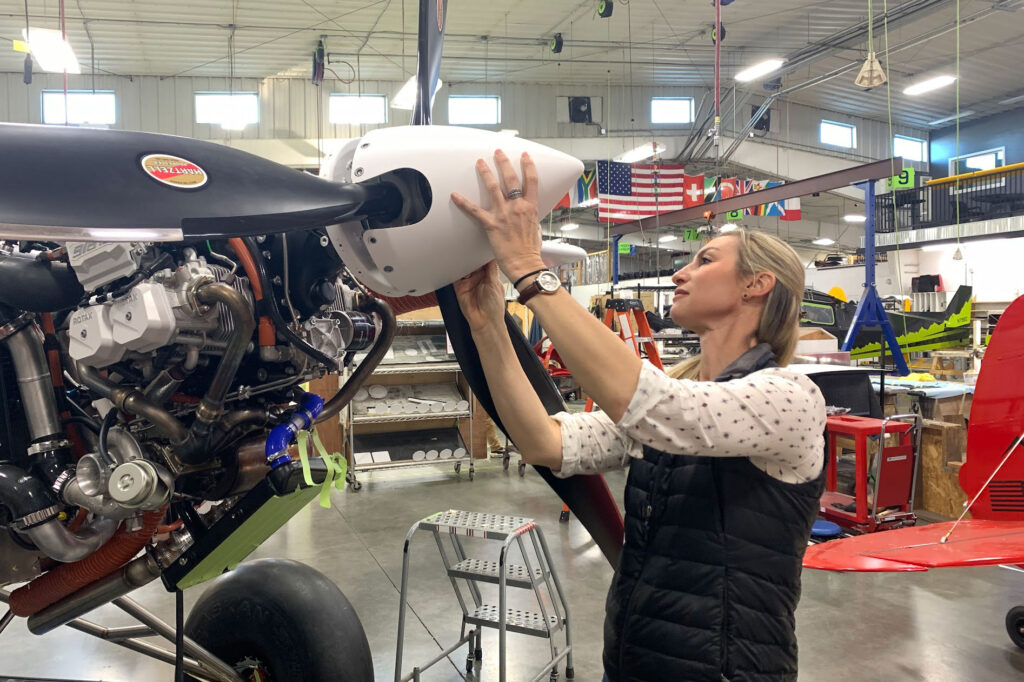
CubCrafters’ Builder Assist program represents perhaps the company’s most innovative contribution to the homebuilt aviation community. Unlike conventional builder-assist arrangements where customers assemble manufacturer-fabricated parts, CubCrafters inverts the process entirely: builders fabricate the parts themselves using factory equipment, then CubCrafters’ technicians assemble those parts into a finished aircraft.
The program exploits a nuanced understanding of FAA regulations governing Experimental Amateur-Built aircraft. The FAA measures the “major portion” requirement not as a time-based measurement but as a task-based measurement, with the Carbon Cub requiring completion of 88 or more of 174 specified tasks to qualify as builder-constructed. By having customers fabricate components rather than assemble them, CubCrafters ensures regulatory compliance while dramatically reducing the time investment.
The process unfolds across two factory sessions totaling seven working days:
First Session—Five Days
Builders work alongside CubCrafters technicians using CNC mills, routers, and specialized equipment to fabricate components including carbon fiber fabric, wing and fuselage fabric, chromoly steel tubing assemblies, flaps, ailerons, control cables, and numerous other elements. One builder documented performing over 100 required tasks, including 880 rivets for flaps and ailerons alone.
Interim Period
Builders return home while CubCrafters performs quality inspection of fabricated parts, then uses those components to construct a factory-perfect aircraft over approximately nine weeks.
Second Session—Two Days
Builders return for final assembly including mounting of ailerons, flaps, tail feathers, and cowling, followed by DAR inspection, airworthiness certification, and factory test flights by CubCrafters pilots.
No technical experience is required—factory personnel guide builders through each process. The completed aircraft carries a full CubCrafters factory warranty, highly unusual for Experimental category aircraft. Program Manager Makenzie Richardson maintains comprehensive documentation including photographs of each step, ensuring smooth FAA inspection and certification.
Builder Rick Bosshardt, documenting his FX-3 experience for STOL Aircraft Magazine, described being “humbled by the experience” while learning from the 160-plus technicians at the Yakima facility. “To say that I learned a huge amount about my Carbon Cub through this process is an understatement,” he wrote.
MOSAIC and the Future
The October 22, 2025 implementation of MOSAIC (Modernization of Special Airworthiness Certification) regulations has particularly favorable implications for CubCrafters’ overall aircraft lineup. Every model in the CubCrafters fleet meets the new MOSAIC clean stall-speed requirement (VS1 below 59 knots), meaning Sport Pilots can now legally fly any CubCrafters aircraft under appropriate conditions.
This regulatory evolution opens the entire CubCrafters product line to a significantly expanded pilot population, which could potentially drive increased demand across all certification categories. Combined with the July 2025 XCub/NXCub kit announcements and continuing Carbon Cub UL production ramp-up, CubCrafters appears positioned to maintain its market leadership in backcountry aircraft.

Unmatched in Breadth
The competitive landscape for modern Cub-type aircraft includes American Legend Aircraft, Aviat Aircraft (manufacturer of the Husky), Backcountry Super Cubs, and other specialty producers. American Legend offers both certificated Cubs and kits, while Aviat produces the FAR Part 23 certificated Husky in various configurations. However, neither competitor matches CubCrafters’ simultaneous production of Part 23 certificated, Light Sport, and Experimental aircraft within a single manufacturing facility.
CubCrafters currently offers variants, Carbon Cub UL, FX, SS, EX, X, NX, and Top Cub, plus the legacy Super Cub modification program—available in more than a dozen configurations spanning every relevant certification category. This comprehensive approach reflects Jim Richmond’s original vision of transforming a Yakima startup into a market-leading manufacturer while preserving the essence of backcountry Cub flying.
With strong order backlogs extending into early 2027+++, expanding manufacturing capacity through new CNC equipment and facilities, and government fleet contracts including customized XCubs for the USDA, CubCrafters continues executing the strategic vision that has defined the company for four decades. The Carbon Cub UL’s record-setting climb to 37,609 feet serves as dramatic proof that CubCrafters’ engineering capabilities extend far beyond conventional expectations—quite literally to the edge of the stratosphere
![[Credit: CubCrafters]](https://www.kitplanes.com/wp-content/uploads/2026/09/DSC04228.jpg?w=218&h=150&crop=1 "CubCrafters’ New Turboprop MOSAIC LSA")
![[Credit: Van's Aircraft]](https://www.kitplanes.com/wp-content/uploads/2026/07/IMG_5238.jpg?w=218&h=150&crop=1 "Part 22 Gets Real: Van’s Delivers the First MOSAIC-Certified Airplane")
![[Credit: Flight Desgn GmbH]](https://www.kitplanes.com/wp-content/uploads/2026/07/1_mosaic_flightdesign.jpg_preview.jpg?w=218&h=150&crop=1 "FAA Accepts ASTM Standards, Clearing the Last Hurdle for MOSAIC")
![[Credit: FAA]](https://www.kitplanes.com/wp-content/uploads/2026/06/FAA-Mosaic-1.jpg?w=218&h=150&crop=1 "MOSAIC Isn’t a Question of Can You—But Why You’d Build")