
Rick and Dave sat down at the airport veranda bench with lunch. “I have exciting news. I just located and bought a Christen Eagle,” said Dave.
Where did you find it?” asked Rick. “Didn’t Christensen start shipping kits in the late seventies?”
“Yes, this one is an early model. It’s been sitting for years in—of all places—a barn. Every time I drive past a barn, I think there might be an airplane inside.
“You’re not wrong; I think the same thing, and there actually are airplanes languishing in barns. Anyway, how long has it been in storage?
“Thirty years.”
“That will be a project indeed. What does it need?”
“Not a lot. I’m sending the engine out for checks, but actually the fabric looks pristine.”
Dave got the project into his garage and began work. He was glad he didn’t have to recover the airplane; the paint job was amazing and still gleamed. The storage conditions had been excellent.
After a month of checks and refurbishment, Dave was ready to test fly the old airplane. He decided to stay in the pattern to make sure everything was working. Rick was watching from the ground.
As Dave turned to crosswind, the airplane began to severely buffet. He looked out over the left wing to see fabric ballooning off the upper wing. In shock, he reduced speed and announced an emergency. Lucky to be able to line back up with the runway, and no other traffic in this early morning, he landed before any more fabric lifted off the wing.
Rick had seen the problem as it developed through his binoculars. He ran over to the airplane as Dave taxied up to the hangar. “My Lord, what in the world caused that?” he said.
Dave jumped out of the cockpit and took a look at the wing, where the fabric was separated from the wing structure and now lay loose and wrinkled on an entire section. “Look, all the lacing is gone. Why?”
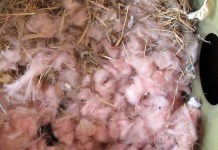
“The fabric is going to have to come off this section anyway, let’s look under there,” said Rick. They cut a slit and looked in. They saw a balled-up bunch of lacing and other bits of leaves and twigs. Next to it all was a dessicated mouse glued to a rib.
“Oh. You didn’t inspect the fabric with a suction cup, did you?”
“A what?”
“A suction cup. That’s how to test to see if the lacing is intact inside a tube and fabric airplane.”
“No one told me that.”
“Well, now you know. You survived a pretty serious situation. Imagine if you’d started doing aerobatics.”
Dave shook his head.
Restorations can look great on the outside and be a mess inside. The mouse and rat’s nest finding is routine in older aircraft that have been stored in garage corners, barns, and hangars. Lacing cord tastes wonderful to vermin, and it makes for great nesting material. When you’re debating whether to tear the fabric off an older aircraft, part of your decision should rest on a very thorough internal inspection in addition to the traditional fabric testing methods. Use suction cups, mirrors, and a video scope to look at every inch. You may also find other things such as spar cracks, wasp nests, and corrosion.
In restorations, there’s an argument for replacing fabric if you can’t get adequate history on the airplane. Making the inspections with scopes and mirrors may work, but seeing every inch of the structure when the fabric is off will catch hidden surprises. Don’t let them catch you in the air.