
For years, hybrid-electric has hovered at the edge of the homebuilt conversation, intriguing but just out of reach. That line moved this summer. A French developer, VoltAero, is opening its hybrid power unit to the amateur-built market, and the specs finally look like something a builder can evaluate with a tape measure and a weight-and-balance sheet rather than a white paper.
VoltAero today unveiled its HPU210 aircraft powertrain, which brings the company’s patented hybrid-electric propulsion technology to propeller-driven airplanes in the homebuilt, kit-built and very light aircraft categories.
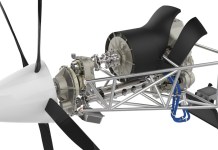
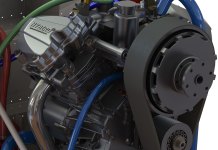
The VoltAero HPU 210 is a firewall-forward package that blends a supercharged Kawasaki H2SX-derived engine with a 60-kilowatt electric motor. The gas engine carries the cruise workload; the electric side fills in for peak demand—takeoff, initial climb, and any time a short field or hot-and-high day needs extra margin. The company says the architecture has more than 185 hours on a Cessna 337 testbed, with roughly 25,000 kilometers flown in varied conditions. For builders used to legacy fours and sixes, the headline numbers stand out: up to roughly 350 horsepower combined output, single-throttle control logic, multi-fuel compatibility including E85, and a projected 1,500-hour TBO for the thermal engine.

The kit is positioned as a turnkey unit—thermal engine, electric motor, gearbox, and control electronics bundled. That simplifies procurement and removes some of the integration headaches that have sunk past experiments. It also reframes installation planning: wiring, cooling loops, and battery placement become first-order tasks alongside engine mount design and cowling airflow. The payoff is a claimed cruise burn near ten gallons per hour and a climb “boost” mode that shortens runway needs and improves obstacle clearance.
The right questions remain. Battery specifics—mass, footprint, energy capacity, thermal management—will drive installation feasibility in two-seat sport designs versus larger airframes. Packaging will be straightforward for some kits and more complex for others. Weight creep is the enemy here; empty-weight budget and CG sensitivity will decide where this system lands first. Early candidates will likely be clean-sheet or modern kits with generous cowl volume, robust electrical architecture, and designers willing to iterate on mounts, ducts, and inlets based on flight test.
Kitplanes reached out to Volt.aero for prospective pricing information on the HPU210 firewall-forward system; however, the company had not responded at press time.
The broader context favors experimentation. Industrial and defense investment is pouring into hybrid architectures, with major programs demonstrating full-power runs and mapping realistic duty cycles. That energy tends to spill downhill—in parts availability, engineering practices, and validated components that can be repurposed in the experimental world. For a builder, that means more credible suppliers and fewer science projects.
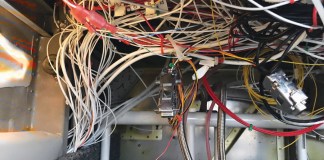
As always, prudence applies. A firewall-forward kit isn’t a shortcut around good systems engineering. Builders should ask for full installation manuals, wiring schematics, cooling flow diagrams, failure-mode documentation, and clear maintenance intervals. They should plan for robust ground testing, then expand envelopes methodically. Hybrid brings the promise of quieter patterns, shorter rolls, and lower fuel bills. It also adds complexity, and with it, the need for meticulous planning, clean execution, and disciplined test flying.
If the next six to twelve months deliver real numbers—installed weight, battery data, performance in representative airframes—then hybrid will stop being a future tense in the homebuilt world. It will be another propulsion option, with pros, cons, and a place in the matrix for the right mission. That’s progress worth watching from up close.


To Mr. Randall Brink,
Your article is very interesting – in that it illustrates another “partial step” toward “electric powered aircraft – both GA and commercial.
The “Holy Grail” of aviation, i.e., the final piece of the puzzle for switching from the present – to total electric power for GA and commercial – is the total elimination of the need for any fuel burning (of any kind of “fuel”) in any kind or type of internal combustion engine.
But there is a problem – and that problem is the existance of an incorrect and unsubtainable position that “unlimited range and time of travel – is impossible.
We now have small sized, battery sourced, electric motor powered aircraft – but which are still tethered to their “recharge cables” – required for “recharging” thier batteries via earth based electric power sources.
It is obvious that what is required – is a “stand-alone” electric power supply; that “once started”, continuously develops it’s maximum output power level – until it is turned off.
And it will need an on-board “start-up” power source – so that the motor(s) can be instantly restarted, either on the ground, or in the air.
“Impossible” – “A pipe dream? – as stated by all of the “…I know better because I know Classic Physics or Electrical Engineering types…”.
Absolutely not: — because that required electric power supply’s origin exists – and has existed for the over 125+ years.
It is a specific electric circuit named the “tank circuit” – that when operated under a specific operating condition named “electric resonance” – which was invented and US Patented, along with the discovery of “electric resonance”, both in 1894 – by Nikola Tesla.
The two were then combined into the “resonating radio receiver circuit” found in the billions of AM and / or FM radios manufactured after Tesla invented and US Patented the Radio in 1900.
We’ve been using the specific circuit, under it’s specific operating conditon — for over 125+ years.
That exact circuit i.e., the responating tank circuit, operating exactly the same way – having only been “altered”, not changed: — developed it’s continuous 103% output power level to input power level ratio, while powering a resistive test load – at:
— 103% @ 12 VDC – on:
— May 1st. 1982.
Next, the same circuit, again used exactly the same way, this time with a wall powered input value of 120 VAC / 60 Hz: developed it’s continuous output power level to input power level ratio, while powering a 120 VAC / 60 Hz AC motor – at:
— 293% @ 120 VAC – on:
— Sept. 10th. 1984.
The tests were conducted and completed by Northwest Laboratories of Seattle WA Inc. / at their facility / with their equipment / tested …their way”…”.
Had the licensed Electrical Engineer followed the specific connection instructions given him, as noted in red pencil on page 2 of the affidavit; which can be made available upon request; the output to input power ratio would have been well over 400% – as it had been the 6 months previous.
Next: US Patent 5,46,395 / A Power Supply Including Two Tank Cicuits – with regenerative feedback / Sept. 8th. 1992 was awarded.
Now: the small – 2.5 cu. ft. / lightweight – 40 lb. / inexpensive to produce – less than $3000 per unit in parts / power supply has been designed to continuously develop up to and including:
— 480 VDC / up to 500 Amps per unit – which equals:
— 240,000 Watts / 240 kW / or .24 MW – how ever one cares to identify it.
There is a specific design at 400 VDC / 500 Amp / 200 kW versionthat will be available for any vehicular use.
A number of Eonex- B motorgliders have been converted to electric power using batteries as the power source, using the Zero Electric Motorglider and it’s battery and control systems, started with Gabrial De Vault.
Also – the European aircraft company named “Bristell” – has it’s “Energic” electric powered / battery sourced / “trainer” in the US for evaluation.
The power supply is named the “POD MOD”, short for “P”ower “O”n “D”emand “MOD”ule; and is being developed in Europe – because of the following:
— every US Goverment Agency contacted during the entire development time period,
— every US University contacted; and
— every US based commercial entity contacted – uniformly refused to even consider the project.
— when sent the informatoin – Paul Dye, as Editor of “Kitplanes” at the time; returned the comment:
— “… when you have it commercialized and available – send me the information…” (paraphrase).
The above is why Europe is goiing to get it first – as it is now privately funded for developed for mass production – there.
I’m sending tis to you – because, when you examine the situation with the POD MOD and the Hybrid technology you just wrote about — they are basically at the same point.
The difference being that the hibrid hasn’t, and will not be hit with the sel-righteous bias from the “…I know better…” types.
I agree, sadly the US companies will not even talk to you due to our litigious bent and companies grandiose lust of money. They want to run without walking first. Another misconception is range or time in air, I believe a study of what percentage of actual air time was done, it indicated higher than 80% was less than one hour. New battery chemistries are being developed, charging time is reducing rapidly, and energy density is improving. Sadly experimental building and development seems to be a dying skill in the US, but naysayers and uninformed opinions are expanding.
I am hoping that air-to-air resupply, will become a huge part of commercial and general aviation.
Planes that takeoff, perhaps helped by a launcher and a launcher aircraft, and then are refueled or recharged after takeoff, with the tanker/recharger aircraft proviidng refuel/recharge and also high lift and power, then releasing the first (cruiser or pax or cargo) aircrafft to cruise and descend, and that first aircraft wouild need less fuel, less power, less weight smaller wings less drag etc, and thus might have L/D >20 and engines optimized for cruise.
THis could be done for GA (Ampaire) and commercial trafffic etc. Its been heavily studied. Key of course is the rendezvous, safety, Turbulence, bow waves ertc
Imagine if aircraft could dock or mate – could do medevacs, change of crew; mated aircraft could provide thrust power, instruments. high speed UAVs could launch in seconds to connect to and rescue stricken aircraft, that are say engine out gliding, in trouble,
Average aircraft could get power & lift say over mountains or against headwinds; electric aircraft or light aircraft could fly cross country, recharged by air multiple tiimes, perhaps lifted during each charging; perhaps if needed, assisted by high T/W UAV or turbofanto cross Rockies in a storm. Recharging aircraft could be operated by hundreds of small regional airports, perhaps charging with solar and wind to save them costs,
It is actually very strange that we have no way for aircraft to connect/mate recharge, buddy charge, tow: basically we still have to push a stricken plane with our wing, like WW2 pilots. why is that in this age of flight controls, AI, precision nav?
I guess big problem is our air data instruments ar miserable. Tells you the flow(maybe) a few inches ahead of the plane. We barely are getting AoA information, despite its phenomenal importance to safety and performance We basically are blind to the airflow, right to this day nearly no pilots even military, even tankers who really need this, can actually see the airflow ahead or around them. . Everybody (?) guesses at the windfield they are about to fly through.
Despite decades of lidar, radar, acoustic and other work on airflow Doppler imaging, by NASA LaRC, Goddard, Collins Aerospace etc.
Sorry for air data rant; it will come, especially if pilots and companies see utility in commercial and GA inflight refuel/recharge/resupply/rescue., and especially if UAVs can do the grunt work of these. thx
Comments are closed.