Garmin’s AXIS displays put IFR GPS, nav/com and audio panel inside the screen and ship now. Dynon is moving the same functions behind the panel, with its IFR navigator still in development.
For as long as glass panels have been common in homebuilts, an IFR-capable panel has meant at least two kinds of equipment: the EFIS displays, plus a stack of boxes in the middle for the IFR GPS navigator, the nav/com radio and the audio panel. This summer, two of the most popular EFIS makers in homebuilt panels both announced plans to make that stack unnecessary. They are taking different routes to get there.
Garmin AXIS: Shipping Now
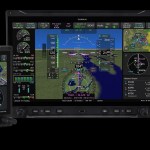
Garmin announced AXIS on July 8, positioning it as the next generation beyond the G3X Touch. The key idea is that the display itself can contain a TSO-certified IFR WAAS GPS, a VHF com, a VOR/ILS nav receiver and a four-place audio panel.
“So, obviously, you see that in just about every GA airplane but with Axis there’s no need for it,” said Scott McCurley, Garmin’s manager of aviation marketing, referring to the traditional radio stack.
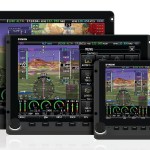
The 11.6-inch landscape display is available now in three versions. Garmin’s experimental list prices are $4,980 for the base GDU 116BX with VFR GPS; $18,400 for the GDU 116C, which adds the IFR GPS, com and audio panel; and $23,400 for the GDU 116NC, which adds the nav receiver. Eight-inch portrait and landscape displays, base models listed at $4,140, are due in early 2027. IFR versions require a GA 35S WAAS antenna. Experimental aircraft can use up to six AXIS displays, compared with four in certified installations.
The com puts out 10 watts, supports 8.33 kHz spacing and can monitor the standby frequency, and the built-in intercom handles switching between the internal radio and one external com. AXIS displays can serve as PFD, MFD or engine display and work with Garmin autopilots and many of the same navigators, radios and sensors as G3X Touch.
For builders already flying G3X Touch, the upgrade path is the bigger news. AXIS uses the same panel cutouts and mounting points, with an 8-inch AXIS replacing a 7-inch G3X Touch and an 11.6-inch AXIS replacing a 10-inch unit, and in experimental installations most existing sensors and LRUs carry over. Garmin says the G3X Touch remains in production.
Dynon SkyView HDX: Behind the Panel
One day before Garmin’s launch, Dynon announced that it is developing integrated IFR GPS navigation for SkyView HDX. Rather than building radios into the screen, Dynon will add a remote-mounted module and antenna behind the panel, leaving the existing displays and panel layout unchanged. The navigator is planned to support RNAV approaches to LPV minimums, SIDs and STARs, and to couple with the Dynon autopilot for hands-off LPV approaches. It is being developed for simultaneous release in experimental and Dynon Certified installations.
Dynon has not announced a price or a date. “We are not publishing a predicted release date at this time,” the company says, and the system “is not currently approved for IFR flight, and will not be until our product and certification programs are successfully completed.”
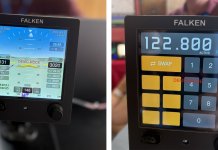
Two pieces of the behind-the-panel approach are available now. The SV-AUDIO-6BTR remote audio panel, $2,295, handles two to six seats, up to two coms and two navs, Bluetooth streaming and digital noise reduction, and is controlled from the HDX touchscreen. SkyView HDX software version 17.6, released August 6 for experimental and light-sport aircraft, added support for it along with dual com radios. Dynon has also said a stand-alone HDX engine monitor for experimental and LSA aircraft is coming with a future software update.
Planning Around It
The two designs lead to different panels. AXIS consolidates functions into fewer, larger boxes on the panel. Dynon keeps the displays and moves the boxes out of sight. In either case, think through redundancy before you cut metal. When navigation and communication live inside a display, or depend on it for control, the backup plan for a display failure matters more than it did when those radios were separate.
The timing matters as well. Garmin’s IFR capability can be bought today. Dynon’s IFR navigator is not yet available, and buying an avionics feature in development means accepting a date that has not been set. Builders flying SkyView HDX can add the remote audio panel and a second com now and leave room behind the panel for the navigator module later.
MOSAIC adds one more reason to watch. With IFR operations opening up to more light-sport aircraft, Dynon describes its navigator as a space-saving IFR option for those panels, and Garmin has included LSA in AXIS’s target market. More options for compact IFR panels are likely to follow.