![[Credit: JetStream Rider]](https://www.kitplanes.com/wp-content/uploads/2026/04/AdobeStock_345999332-1024x682.jpg)
The homebuilt and experimental aircraft market enters 2026 with more choices in avionics and lighting than ever before. Glass cockpit technology that once demanded certified-aircraft prices has migrated to the experimental space with remarkable success, while LED lighting has all but eliminated the maintenance headaches and electrical loads associated with incandescent bulbs and high-voltage strobe systems. For builders finishing projects or upgrading existing aircraft, the options can seem overwhelming, but understanding the landscape makes the selection process considerably more straightforward.
It’s good to start with a basic question: What do you want your airplane to do? A day-VFR sport flier who operates from uncontrolled fields has vastly different needs than a cross-country traveler who regularly files IFR and penetrates complex airspace. Budget matters, naturally, but so does the installation complexity, ongoing support, and the learning curve associated with unfamiliar technology. The good news is that competition among manufacturers has driven both capability and quality higher while simultaneously pushing many prices down. The experimental market continues to benefit from manufacturers using it as a proving ground before tackling the certification process for production aircraft installations.
THE GLASS PANEL REVOLUTION
Garmin and Dynon remain the dominant players in experimental glass cockpit systems, and for good reason—both offer mature, well-supported products with extensive dealer networks and installation expertise. The Garmin G3X Touch system, available in 7-inch and 10.6-inch displays, represents the company’s purpose-built experimental offering. With synthetic vision standard, intuitive touchscreen operation, and integration with Garmin’s extensive line of radios, transponders, and autopilots, the G3X Touch delivers a certified-aircraft experience at experimental-aircraft pricing. The 7-inch GDU 450 display runs approximately $3,900, while the larger 10.6-inch GDU 460 commands about $4,850. These are display-only prices. A complete system with ADAHRS, magnetometer, GPS, and engine monitoring quickly approaches $15,000 to $25,000 depending on configuration. Garmin’s reputation for long-term support and regular software updates adds value that extends well beyond the initial purchase.
The G3X ecosystem deserves deeper examination because of its comprehensive integration capabilities. Garmin’s GEA 24 engine monitoring unit accommodates virtually any engine configuration, from traditional Lycoming and Continental installations to automotive conversions and Rotax powerplants. The GMU 11 magnetometer provides reliable heading information even in electrically noisy environments. Garmin’s GTR 200 and GTR 205 panel-mount radios integrate seamlessly, providing VHF communication with tight coupling to the navigation displays. Garmin’s experimental autopilot components, while expensive at $6,000 to $8,000 for servos and controller, transforms cross-country flying with envelope protection and exceptional tracking capability. These components work together through ARINC 429 and RS-232 protocols that have become industry standards.
Dynon Avionics answers with the SkyView HDX series, which has earned a loyal following for its capable feature set and competitive pricing. The HDX line includes 7-inch, 10-inch, and 12-inch displays. Dynon Avionics’ Michael Schofield told Kitplanes that the 7-inch unit is priced at $3,286, the 10-inch ais $4,625, and the 12-inch is $5,490. Like the Garmin system, complete installations with required modules run considerably higher, but many builders report that an apples-to-apples comparison between equivalent Garmin and Dynon systems narrows the price gap to where personal preference and user interface familiarity become deciding factors. The SkyView HDX excels in engine monitoring, a feature set that many consider unmatched in the industry. Dual redundant device networks, touchscreen operation, synthetic vision, and comprehensive autopilot integration make the HDX series a formidable competitor at every level.
Dynon’s approach emphasizes customization and flexibility. The SkyView system accommodates multiple display configurations—builders can install two 10-inch displays for full redundancy, or mix screen sizes to optimize panel real estate. The EMS-D10 engine monitoring system provides 18 channels of engine data with user-configurable alarm limits and extensive data logging. Dynon’s SV-ADSB-472 traffic and weather receiver delivers dual-band ADS-B In capability for approximately $914. The autopilot servos and controller cost $920 per axis depending on aircraft requirements, slightly less than comparable Garmin equipment. Dynon’s recent introduction of the HDX Autopilot Control Panel provides dedicated mode control separate from the main displays—a feature appreciated by pilots transitioning from traditional autopilot installations.
![The Dynon SkyView HDX 10 features improved displays, brighter, higher-resolution HD touchscreen displays, unrivaled control ergonomics, and an upgraded touch interface. [Credit: Dynon Avionics]](https://www.kitplanes.com/wp-content/uploads/2026/04/Screenshot-2026-04-23-at-11.09.06-AM-1024x728.png)
Both manufacturers offer package deals that include the primary flight display, engine monitoring, GPS, radios, transponders, and autopilot servos. Savvy builders spend time with both systems, either at fly-ins, dealers, or through online simulators, to determine which user interface feels more natural. A wrong choice may not involve varying capability, as both systems are thoroughly proven, but the pilot interface is a system you’ll live with for the life of the airplane.
GRT Avionics sits in a sweet spot between the “big two” and the budget outliers, with a product line built from the ground up for experimental and homebuilt aircraft and a business model that lets you buy only the software and hardware options you actually need. The current flagship is the Horizon 10.1 EFIS priced at $4,995, with optional touchscreen ($350), angle of attack ($350), and dualAHRS redundancy ($625) layered on as needed rather than baked into a single allornothing price. For many builders that want full IFR capability, synthetic vision, and serious redundancy without committing to a full Garmin or Dynonlevel package, the Horizon 10.1 becomes the “I can get there from here” box—especially when paired with GRT’s own engine monitoring and autopilot servos.
Below the Horizon sits the Sport 10.1 EFIS at $3,850, which brings a 10.1inch primary flight display, moving map, and engine pages driven by any of GRT’s EIS engine monitors, again with options à la carte: touchscreen and angle of attack at $350 each, synthetic vision and vertical autopilot command at $525 each. For tighter panels and tighter budgets, the 7inch Sport EX and Horizon EX families cover everything from a barebones Sport EX EFIS at $2,095 up through Advanced and Basic packages in the $2,775–$3,850 band, plus the Mini EFIS (Generation II) line ($1,815 bare EFIS to $2,995 for the Advanced package) aimed at backup/secondary displays or very compact panels. Across the line, GRT leans on its longstanding, unaided AHRS technology—able to operate without GPS or airspeed input—and on an “open interface” philosophy that plays nicely with a wide range of radios, transponders, ADSB boxes, and the company’s own headsupdisplay options.
GRT’s ecosystem extends well beyond the screens. Their EIS engine monitor packages cover just about every powerplant you’re likely to see in a homebuilt: Lycoming and Continental four and sixcylinders, Jabiru, Rotax 912/914, ULPower fours and sixes, Corvair, Viking, VW conversions, and even the M14P radial, with “Basic,” “Advanced,” and “Advanced Remote” bundles running roughly $1,300 to $2,525 depending on engine and feature level. Standalone EIS units (EIS 2002/2004/4000/6000/9000) and a broad probe catalog (CHT/EGT, pressure senders, fuelflow transducers, current sensors, OAT) make it possible to build a GRTcentric engine monitoring suite piece by piece. On the connectivity side, the SafeFly 2020 ADSBcompliant GPS module ($650) provides a FAR 91.227compliant position source for compatible 1090ES and UAT transponders, while the Discovery ADSB receiver ($775) feeds traffic and weather into the EFIS. Autopilot servos are offered in standard and hightorque versions (roughly $910–$1,075 each), with dedicated mounting kits for RVseries airframes at $99 per axis, making a full GRT EFIS/EIS/autopilot stack a very realistic, modular path for the typical RV, Zenith, Sonex, or similar homebuilt.
BUDGET-CONSCIOUS GLASS OPTIONS
Not every builder needs or wants a $25,000 panel. Enter the budget glass market, where uAvionix and Advanced Flight Systems offer capable alternatives. The uAvionix AV-30-E experimental version, priced at approximately $1,495, fits into a standard 3.125-inch instrument hole and provides a surprising array of functions: primary attitude, directional gyro, GPS HSI, airspeed, altitude, angle of attack, and more, all in a single unit. An AV-30 MFD can serve as primary flight instrument in an otherwise simple panel, and the recent addition of the AV-HSI adapter enables IFR approach coupling with compatible navigators. The limitation is obvious: a 3.125-inch display can’t match the information density or synthetic vision capabilities of larger systems, but for VFR sport flying or as backup instruments, the AV-30 delivers remarkable value.
Advanced Flight Systems (AFS) is a subsidiary of Dynon and occupies middle ground with its AF-5700 and AF-5800 displays. The AF-5700, featuring a 12.1-inch touchscreen, replaces the discontinued AF5500. The AF-5700 lists at approximately $4,900 for the display unit. The 12.1-inch AF-5800 commands a higher price but provides an expanded display and is competitive with Garmin and Dynon offerings. AFS systems have earned respect for intuitive operation and excellent customer support, though the company’s market presence doesn’t match the two industry leaders. Free mapping database updates for U.S. coverage help control long-term costs.
The AF-5700 and AF-5800 offer features that sometimes surpass the industry leaders. The systems provide internal AHRS and GPS receivers as standard equipment—no external boxes required for basic operation. The engine monitoring system (EMS) accommodates complex powerplant installations. AFS offers an internal battery backup system that maintains critical flight instruments for 30 minutes if electrical power fails. The user interface, while different from Garmin and Dynon approaches, emphasizes direct button access to frequently used functions rather than relying entirely on touchscreen navigation. Some pilots find this more intuitive for in-flight operations, particularly in turbulence when touchscreen accuracy suffers.
KANARDIA AND TL ELEKTRONIC
European manufacturers have developed capable avionics systems that deserve attention from North American builders, particularly those constructing ultralight, LSA, and sport aircraft where weight and power consumption matter. Kanardia’s Nesis series and TL Elektronic’s Integra line offer feature-rich alternatives at competitive prices.
Kanardia, based in Slovenia, produces the Nesis family of integrated avionics systems optimized for light aircraft. The Nesis IV, available in 7-inch, 8.4-inch, and 10.1-inch display sizes, combines EFIS, EMS, GPS navigation, and autopilot functions in a single lightweight unit. The 8.4-inch version weighs approximately 1,110 grams—remarkably light for a complete avionics system. Pricing through European dealers runs approximately $5,400 for the 7-inch system, making it cost-competitive with established U.S. brands.
The Nesis IV features integrated AHRS providing attitude, heading, and slip/skid information without external sensors. The GPS receiver supports worldwide navigation databases and moving map displays with 3D terrain visualization. Engine monitoring accommodates Rotax 912/914 installations as standard, with adaptability for other powerplants through external sensors. The system includes built-in WiFi for database updates and flight data downloads—a feature that eliminates the SD card juggling common with older systems. Voice annunciation alerts pilots to limit exceedances and warnings in multiple languages.
What makes Kanardia particularly interesting for the experimental market is the company’s focus on complete integration. The Nesis system includes a three-axis autopilot with altitude hold, heading hold, navigation tracking, and approach coupling—functions that often require expensive add-ons with other manufacturers. The autopilot interfaces directly with the EFIS through internal networking, eliminating external wiring complexity. Kanardia provides servo options for both cable-operated and pushrod control systems, accommodating most homebuilt designs. The complete autopilot package adds approximately $3,800 to the system cost.
U.S. availability remains limited compared to Garmin and Dynon products, but Aircraft Spruce Europe stocks Nesis components and several U.S. dealers have begun carrying the line. Technical support operates through email and online forums, with response times generally matching U.S. manufacturers. The Nesis user community, while smaller than Garmin or Dynon groups, provides active support through dedicated forums and Facebook groups. English-language documentation is comprehensive, though occasionally showing translation artifacts.
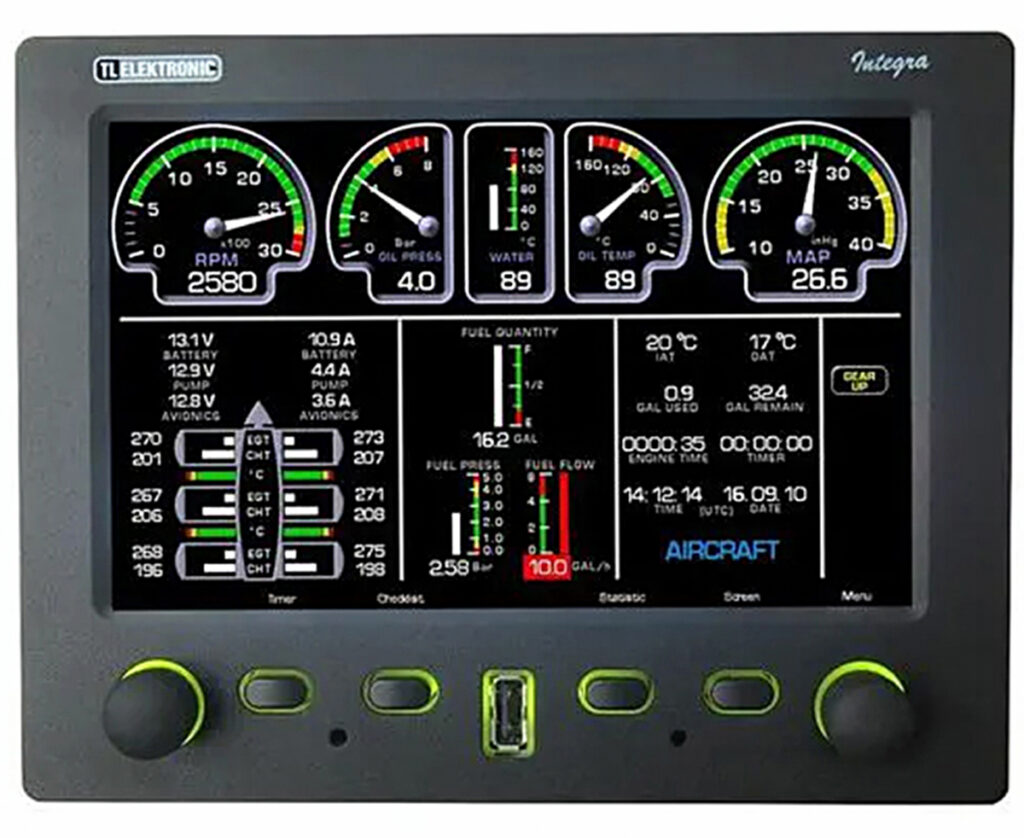
TL Elektronic, a Czech company, offers the Integra series of combined EFIS/EMS systems targeted at light sport and experimental aircraft. The TL-6524 EFIS and TL-6724 EMS can be purchased separately or combined in the TL-6624 integrated unit. The TL-6624, featuring a 7-inch display, lists at approximately $6,700 and provides complete flight and engine monitoring in a package weighing 3 lbs.
The Integra line distinguishes itself through comprehensive engine integration, particularly with Rotax powerplants. TL Elektronic developed the system in cooperation with BRP-Rotax, ensuring tight integration with Rotax engine parameters and control systems. The EMS monitors all critical engine functions—RPM, CHT, EGT, oil pressure and temperature, fuel flow and pressure, coolant temperature, voltmeter, and ammeter. For Rotax installations with automatic choke and constant-speed propellers, the Integra provides electronic control interfaces that integrate with the EFIS displays. This level of integration simplifies panel design and reduces clutter.
TL Elektronic systems feature worldwide 3D terrain maps with moving map display, HSI and CDI navigation displays compatible with external GPS navigators, and voice warning systems. The display includes both modern synthetic vision and traditional analog instrument presentations—pilots can switch between views in flight or configure split-screen displays showing both formats simultaneously. The system supports three-axis autopilot integration, though TL Elektronic doesn’t manufacture servos directly. Instead, the Integra interfaces with popular autopilot brands through standard serial protocols.
U.S. market presence for TL Elektronic remains modest, with Aircraft Spruce Europe serving as the primary distributor. Several European LSA manufacturers install Integra systems as factory equipment, providing a track record of reliability and support. The systems have found favor among builders of European ultralight replicas and those constructing aircraft with Rotax engines. English-language support and documentation exist, though the company’s primary market remains central Europe.
THE ROLE OF DISTRIBUTORS: AIRCRAFT SPRUCE AND SPORTY’S
Major aviation distributors play a critical role in the avionics marketplace, providing access to multiple brands, technical support, and competitive pricing. Aircraft Spruce and Sporty’s Pilot Shop represent different approaches to serving the experimental market, each with strengths that benefit builders.
Aircraft Spruce, with locations in California and Illinois (and Aircraft Spruce Europe in Germany), maintains the most comprehensive inventory of experimental avionics in North America. The company stocks complete systems from Garmin, Dynon, Advanced Flight Systems, and uAvionix, along with thousands of individual components, sensors, and installation materials. Aircraft Spruce’s catalog serves as a de facto reference guide for available products—if it’s not in the Aircraft Spruce catalog, it likely represents a minor player in the market.
What makes Aircraft Spruce particularly valuable for builders is the technical support infrastructure. Staff members possess hands-on experience with most products in inventory and can provide guidance on system selection, compatibility, and installation challenges. The company maintains detailed product information on its website, including installation manuals, wiring diagrams, and specification sheets. Aircraft Spruce regularly updates pricing and availability information, helping builders track costs through long build projects.
Aircraft Spruce’s European operation provides access to European manufacturers that lack direct U.S. distribution. Builders interested in Kanardia, TL Elektronic, LX Navigation, or other European brands can order through Aircraft Spruce Europe with reasonable shipping times and familiar purchasing processes. Currency exchange rates affect final costs, but the company provides pricing in both euros and dollars to facilitate budgeting decisions.
Sporty’s Pilot Shop takes a more curated approach, focusing on products the company recommends based on customer feedback and market acceptance. Sporty’s stocks Garmin, Dynon, and uAvionix products, along with extensive supplies of installation materials, antennas, and accessories. The company’s printed and online catalogs provide detailed product comparisons and application guides that help builders understand differences between similar products.
Sporty’s strength lies in customer education. The company produces extensive video content demonstrating product installation and operation. Sporty’s Academy operates a fleet of training aircraft with various avionics installations, providing staff with practical experience that translates to informed customer support. The company’s liberal return policy—30 days for most products—reduces risk for builders uncertain about product selection. While the catalog doesn’t match Aircraft Spruce’s breadth, Sporty’s focused selection helps builders avoid choice paralysis.
Both distributors offer installation harnesses from major manufacturers, eliminating much of the custom wiring complexity. Pre-terminated harnesses cost more than bulk wire—typically $200 to $800 depending on system complexity—but save substantial labor and reduce error risk. The harnesses include correctly sized conductors, proper shielding, labeled connections, and manufacturer-supplied connectors. For builders lacking electrical expertise, these harnesses represent money well spent.
THE TRANSPONDER AND ADS-B EQUATION
ADS-B Out compliance remains mandatory for aircraft operating in controlled airspace, and the experimental market benefits from several elegant solutions. The uAvionix tailBeacon, now TSO-approved and priced around $1,999, combines ADS-B Out, WAAS GPS, barometric pressure altitude sensing, and LED tail position lighting in a single unit that replaces the existing position light. Installation can take as little as 15 minutes—though realistic installations usually require more time for proper wire routing and configuration. The tailBeacon works with any existing Mode C or Mode S transponder, using uAvionix’s patented power transcoder technology to communicate over the aircraft’s electrical system. For aircraft unable to accommodate the tail-mounted unit, the skyBeacon wingtip version offers similar functionality at approximately $1,849.
uAvionix offers the echoESX EXP, a remotely mounted Mode S ADS-B transponder with integrated SBAS GPS receiver, priced at $2,499. This unit appeals to builders who prefer remote-mounted transponders or who need space-based ADS-B compliance—particularly relevant for Canadian operations. The echoESX integrates with uAvionix’s AV-30-E and AV-20-E control head displays, creating a clean panel installation.
Traditional panel-mount transponders remain popular, particularly among builders who prefer dedicated control heads and established brands. Trig Avionics offers the TT22 compact transponder, a Class 1 unit suitable for aircraft operating above 15,000 feet or faster than 175 knots. The TT22 features 250 watts nominal output power, integrated altitude encoder, and 1090ES ADS-B Out capability when paired with a suitable WAAS GPS. Pricing runs approximately $2,800 to $3,200 depending on configuration. The TT31, designed as a plug-and-play replacement for legacy Bendix King KT76A and KT78A transponders, offers similar capability with simplified installation for aircraft upgrading from older units.
Garmin’s GTX 345 remains the premium choice, combining Mode S transponder, ADS-B Out, and dual-band ADS-B In (978 MHz and 1090 MHz) for complete traffic and weather reception. The experimental version runs approximately $5,750 to $6,900, but delivers integrated Bluetooth, wireless database updates, and seamless integration with Garmin avionics suites.
European transponder options deserve mention for builders seeking weight savings or specific installation constraints. Microair Avionics, based in Queensland, Australia with European distribution, manufactures the T2000 series of compact transponders. The T2000SFL weighs less than 1.5 lbs. and measures just 80mm wide—among the smallest TSO-certified transponders available. Power consumption runs approximately 3 watts during transmission, half that of many competitors. The unit provides Mode A/C operation with external altitude encoder input. Pricing through Aircraft Spruce Europe runs approximately $2,100, competitive with larger transponders from established brands.
The Microair T2000’s compact size makes it ideal for aircraft with limited panel space or installations where weight matters critically. Several European ultralight manufacturers install the unit as factory equipment. The transponder communicates with altitude encoders via standard gray code, ensuring compatibility with most installations. Antenna requirements match industry standards—a 1090 MHz quarter-wave blade antenna mounted on the aircraft belly provides adequate signal strength.
Microair also produces the M760 panel-mount VHF radio, one of the smallest certified aviation radios available. Weighing 470 grams and measuring 80mm wide (matching the T2000 transponder), the M760 provides 760 channels with 8.33 kHz and 25 kHz spacing. The radio lacks modern conveniences like built-in VOR or GPS interfaces, but provides reliable voice communication at a price point around €1,750 ($1,900 USD). For builders constructing minimal VFR panels, the combination of Microair radio and transponder creates a clean, lightweight solution.
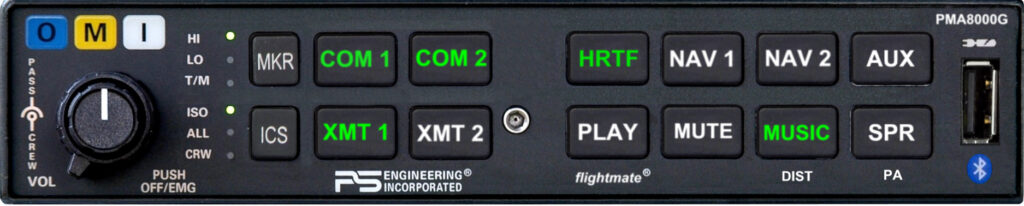
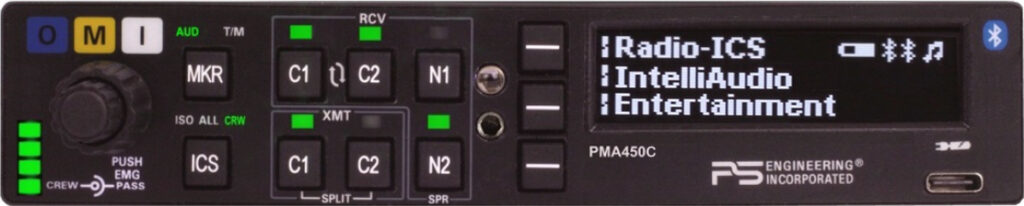
![The PS Engineering PAR200B remote mounted 760/2280-channel VHF transceiver. [Images Credit: PS Engineering]](https://www.kitplanes.com/wp-content/uploads/2026/04/PAR200B_Photo-1024x210.jpg)
LED LIGHTING: THE PRACTICAL REVOLUTION
LED lighting represents one of the most straightforward upgrades available to builders and aircraft owners. The technology has matured to the point where LED installations are the default choice for new builds, and retrofit applications are limited primarily by mounting considerations rather than performance concerns.
AeroLEDs dominates the experimental and certified lighting market with comprehensive product lines covering landing, taxi, position, strobe, and anti-collision lighting. The company’s SunSpot series addresses landing and taxi light requirements with multiple form factors matching standard PAR 36, PAR 46, and PAR 64 mounting configurations. The SunSpot 36-4000 series, available in 75-watt and 100-watt versions, drops into existing PAR 36 housings with minimal modification. The 75-watt landing light produces more than 200,000 peak candela in a 15-degree by 15-degree beam—visible up to 30 miles. Pricing runs approximately $350 to $450 depending on voltage (14V or 28V) and whether the optional built-in pulse/wig-wag mode is specified. The pulse capability, integrated into the “-H” models, provides enhanced visibility without external controllers, though it adds roughly $50 to the purchase price.
Larger aircraft or those requiring maximum illumination gravitate toward the SunSpot 46-4000 series, which delivers 230,000 peak candela (14V) or 325,000 peak candela (28V) in landing configuration. These 175-watt units consume more power but provide true daylight-visible recognition at substantial distances. Pricing ranges from $450 to $550. The massive SunSpot 64-4000, producing 400,000 candela from 225 watts, appeals to turbine aircraft operators and those requiring maximum landing light performance, though the $600-plus price and 48-ounce weight limit applications primarily to larger experimental aircraft.
Installation simplicity distinguishes LED landing lights from their incandescent predecessors. Direct drop-in replacement using existing PAR housings and wiring means builders can upgrade without significant modification. The 30,000-plus hour rated lifespan essentially eliminates landing light replacement as a maintenance item—a welcome change from the short-lived incandescent and HID bulbs many of us spent decades cursing during preflight inspections.
AeroLEDs provides detailed installation guidance for various mounting configurations. Wing-mounted installations require attention to heat dissipation—the lights generate substantially less heat than incandescent bulbs, but still require adequate ventilation. Cowl-mounted installations benefit from cooling airflow, though builders must protect wiring from engine heat and vibration. The company recommends using aerospace-grade wire rated for at least 200°C in cowl installations. Most installations use existing wiring and switches without modification, though the pulse/wig-wag function requires separate control when installed in aircraft without existing wig-wag capability.
Position and anti-collision lighting has undergone similar transformation. AeroLEDs’ Pulsar series combines position, strobe, and in some configurations, tail position lighting in aerodynamic wing-tip mounted units. The Pulsar 650 (formerly Pulsar NS) serves as both navigation light and strobe, with FAA TSO/STC approval for builders who anticipate potential future certification or simply want the peace of mind that comes with certified components. Pricing runs approximately $400 to $500 per wingtip for the certified versions. Experimental-only versions command slightly lower prices but sacrifice nothing in performance or reliability.
The Pulsar series includes multiple configurations addressing different installation requirements. The Pulsar 600 provides forward position and anti-collision lighting in a single wingtip-mounted unit. The Pulsar 650 adds tail-facing position lights, eliminating the need for separate fuselage-mounted tail position lights. The Pulsar 660 EXP, designed specifically for experimental aircraft, features higher intensity strobes and reduced weight compared to certified versions. All Pulsar units draw approximately 0.5 to 0.7 amps during operation—a fraction of the 5 to 8 amps required by traditional strobe power supplies.
Whelen Engineering’s Orion 650 series represents the traditional certified-equipment approach, with TSO approval and incorporation of the latest LED technology. The Orion 650 units combine position lighting and anti-collision strobing with built-in LED circuitry that eliminates external power supplies. Current draw remains modest—0.30 amps at 14 VDC for position mode, 0.70 amps average for anti-collision mode. At approximately $600 per unit, the Orion 650 costs more than some experimental alternatives, but the TSO approval and Whelen’s established reputation appeal to builders who want certified-quality lighting.
Whelen’s engineering emphasizes reliability through redundancy. The Orion 650 contains multiple LED elements wired in independent circuits—failure of individual LEDs doesn’t compromise entire system function. The units include built-in lightning protection and transient voltage suppression, protecting against electrical system surges. The mounting interface uses standard industry patterns, simplifying installation or replacement. Whelen provides comprehensive installation instructions addressing various aircraft types and mounting configurations.
For builders on tight budgets or those constructing ultralights and Part 103 aircraft, smaller manufacturers offer basic LED lighting kits. CRAZEDpilot’s strobe/wig-wag/landing light kit, priced under $200, provides three operating modes (strobe, wig-wag, and constant-on landing light) in a lightweight system drawing less than 400 milliamps. While not TSO-approved and lacking the output of premium units, such systems serve admirably for day-VFR operations and light-duty applications.
FlyLEDs out of Australia has earned positive reviews for DIY LED light kits targeted at RV builders and similar aircraft. The company ships complete kits with detailed instructions, allowing builders to assemble custom lighting solutions at costs well below pre-assembled units. The trade-off involves increased installation complexity and the requirement for basic soldering skills—acceptable for many homebuilders, but potentially daunting for those preferring plug-and-play solutions.
The FlyLEDs approach appeals to builders who enjoy custom work and want maximum flexibility. The kits include LED arrays, drivers, switches, and wiring with detailed assembly instructions. Builders fabricate mounting provisions and assemble the electrical components according to their specific requirements. The company offers separate kits for landing lights, position lights, strobes, and recognition lights, allowing builders to mix and match as needed. Total cost for complete aircraft lighting runs $400 to $700 depending on configuration—half or less than equivalent pre-assembled units.
![Garmin offers a wide array of options for homebuilders seeking to create a state-of-the-art glass panel. EFIS with 7’ and 10’ displays can fit most panel layouts and budgets. [Credit: Garmin Avionics]](https://www.kitplanes.com/wp-content/uploads/2026/04/05_Garmin-image-Screenshot-2026-02-21-at-12.26.49-PM-861x1024.jpg)
INTEGRATION AND INSTALLATION CONSIDERATIONS
The proliferation of choices carries a hidden cost: integration complexity. Modern avionics systems communicate via multiple protocols—ARINC 429, RS-232, CAN bus, Ethernet—and ensuring compatibility before purchase prevents expensive mistakes. Most major manufacturers provide compatibility matrices and detailed installation manuals, but the smart builder verifies every connection before committing to specific hardware.
Understanding these protocols helps builders make informed decisions. ARINC 429, developed for commercial aviation, provides one-way high-speed data transmission between components. Garmin uses ARINC 429 extensively for communication between displays, GPS units, and radios. The protocol’s unidirectional nature requires separate transmit and receive wires for bidirectional communication, increasing wiring complexity but enhancing reliability through electrical isolation.
RS-232, the venerable serial protocol, remains common in experimental avionics despite its age. Many engine monitoring systems, GPS units, and autopilots communicate via RS-232 at various baud rates. The protocol requires three wires (transmit, receive, ground) and operates reliably at cable lengths up to 50 feet—adequate for most aircraft installations. RS-232’s simplicity and mature support make it popular for experimental applications where certification requirements don’t apply.
CAN bus, borrowed from automotive applications, provides robust multi-device networking over two-wire installations. Dynon uses CAN bus extensively for communication between SkyView displays and peripheral devices. The protocol supports multiple devices on a single bus, reducing wiring complexity in complex installations. CAN bus includes built-in error detection and automatic retransmission, enhancing reliability in electrically noisy aircraft environments.
Ethernet networking has begun appearing in high-end experimental avionics. Garmin’s G3X Touch supports Ethernet connectivity for some functions, allowing high-speed data transfer for map updates and flight plan synchronization. Dynon’s SkyView HDX includes Ethernet capability for similar purposes. The protocol’s bandwidth supports future expansion into video transmission and remote display applications, though current experimental market adoption remains limited.
Wire harness packages from avionics dealers represent money well spent for many builders. Pre-terminated harnesses with correctly sized conductors, proper shielding, and manufacturer-supplied connectors eliminate much of the uncertainty associated with custom wiring. Yes, they cost more than bulk wire and connectors, but the time saved and errors avoided usually justify the expense. Few things are more frustrating than discovering that a custom-built wire harness contains an error after the panel is installed and the cowling fitted.
Harness selection requires careful attention to aircraft-specific requirements. Van’s Aircraft, for example, publishes detailed avionics installation guides for RV models, specifying harness part numbers and routing paths for popular avionics combinations. Builders following these guides avoid many common installation problems. Other kit manufacturers provide similar guidance, though detail levels vary. Scratch-builders face more challenges, but can usually adapt harnesses designed for similar aircraft with minor modifications.
Electrical load calculations deserve careful attention, particularly with LED lighting. While LEDs draw substantially less current than incandescent bulbs—a full LED lighting suite might consume 10 to 15 amps compared to 25 to 30 amps for incandescent equivalents—avionics loads have increased. Modern EFIS systems, autopilots, radios, and GPS units collectively demand 15 to 25 amps depending on configuration. The electrical system must supply adequate current for all systems simultaneously, with reserve capacity for contingencies. Undersized alternators or inadequate battery capacity lead to voltage drops, system resets, and potentially dangerous in-flight failures.
A typical modern experimental panel might include: EFIS system (5-8 amps), radio (3 amps transmit, 0.5 amps receive), transponder (4 amps), autopilot (1-2 amps), fuel pump (3-5 amps), position lights (1 amp), landing light (3-6 amps), and miscellaneous systems (2-3 amps). Peak load with everything operating simultaneously approaches 30 amps for a well-equipped single-engine aircraft. A 60-amp alternator provides adequate capacity with reserve, while a 40-amp alternator leaves minimal margin. Battery capacity should support 30 minutes of essential systems operation without alternator input—typically requiring 25 to 35 amp-hour capacity.
Radio frequency interference remains a concern despite improvements in LED lighting design. Not all LED lights are created equal regarding RFI suppression. Quality manufacturers incorporate filtering and shielding to minimize emissions that can interfere with navigation and communication radios. Cheap LED lights from non-aviation sources may generate noise that renders radios unusable. The experimental market allows installation of non-certified equipment, but prudent builders verify that lighting systems won’t compromise avionics functionality. If a deal seems too good to be true regarding LED lighting, it probably is.
![GRT Avionics’ Sport 10.1 EFIS puts a large, primary flight display with moving maps in your panel. Software options let you purchase what you need now, and expand later. [Credit: GRT Avionics]](https://www.kitplanes.com/wp-content/uploads/2026/04/07_GRT_10-1-bezel-to-scale-1200x810-1-1024x691.jpg)
RFI testing during initial flight testing prevents unpleasant surprises. With all lighting systems operating, check radio reception at various frequencies, particularly VHF navigation and communication bands. GPS receivers should maintain satellite lock with all lights operating. ADF systems, increasingly rare in experimental aircraft, prove particularly susceptible to LED noise. Modern ADS-B transponders sometimes experience interference from poorly filtered LED installations. Identifying problems during test flying allows correction before relying on systems for serious cross-country operations.
THE VALUE OF DEMONSTRATION AND TRAINING
No buyer’s guide article can substitute for hands-on experience with actual hardware. The recommendation bears repeating: attend EAA AirVenture, Sun ‘n Fun, or regional fly-ins where manufacturers display their products and allow potential customers to operate systems in aircraft or simulators. Online forums and builder groups provide valuable real-world experience from pilots and builders who’ve lived with their choices. What seems intuitive on a website may prove frustrating in actual use, and what appears complex in a manual may become second nature after brief familiarization.
EAA AirVenture in Oshkosh provides the most comprehensive avionics shopping opportunity in North America. Every major manufacturer maintains exhibit space with working displays, demonstration aircraft, and staff who can answer technical questions. The week-long event allows builders to compare systems side-by-side, discuss installation challenges, and often negotiate show-special pricing. Many manufacturers introduce new products at AirVenture, giving attendees first access to latest technology.
Sun ‘n Fun in Lakeland, Florida, provides similar opportunities in a somewhat more compact environment. The event attracts slightly different manufacturers than Oshkosh, with stronger representation from some international companies. Regional events like Arlington Fly-In (Washington), Copperstate Fly-In (Arizona), and various EAA Chapter events offer more intimate settings for manufacturer interaction, though product selection may be limited compared to major shows.
Online resources complement in-person events. Van’s Air Force, the RV builders forum, includes extensive avionics discussions with detailed installation guides and troubleshooting advice from builders who’ve completed projects. Homebuiltairplanes.com covers broader experimental market with active forums addressing various aircraft types. The Experimental Aircraft Association provides online resources through its website, including avionics-specific content and installation workshops.
Factory training courses offered by Garmin, Dynon, and other manufacturers provide excellent value for builders planning to do their own installation and maintenance. Understanding system architecture, proper installation practices, and troubleshooting procedures saves money and prevents mistakes. Most experimental builders possess the skills to install their own avionics—the FAA regulations explicitly allow it—but knowledge must precede action. A two or three-day installation course may cost $500 to $1,000, but that investment pales compared to the cost of replacing improperly installed equipment or, worse, dealing with in-flight failures caused by installation errors.
Garmin’s installation courses, conducted at the company’s Kansas facility and at various regional locations, cover G3X Touch system architecture, wiring practices, and configuration procedures. The courses include hands-on work with actual hardware and simulator time allowing students to explore system operation without aircraft costs. Dynon offers similar training at its Washington state headquarters and through regional dealers. The courses typically include a loaner tool kit, installation manual, and ongoing email support for graduates.
Advanced Flight Systems and MGL Avionics provide online training resources including video tutorials, installation guides, and active user forums. While not equivalent to in-person instruction, these resources help builders understand system fundamentals and common installation practices. The companies maintain technical support phone lines and email addresses, typically responding within one business day to installation questions.
![The Advanced Flight Systems AFS-6600. AFS EFIS models feature high resolution, touchscreen LCD displays. A ew processor enables 60 Hz screen updates for smooth visuals. [Credit: Advanced Flight Systems]](https://www.kitplanes.com/wp-content/uploads/2026/04/02_Advanced-Flight-Systems-6600-display-1024x824.jpg)
LOOKING FORWARD
The experimental avionics and lighting market shows no signs of slowing. Garmin continues expanding its experimental line with regular software updates and new hardware options. Dynon pushes forward with enhanced capabilities and broader aircraft approvals. Smaller manufacturers like uAvionix innovate with compact, affordable solutions that would have seemed impossible a decade ago. LED lighting technology continues improving, with higher output, lower power consumption, and longer lifespans becoming standard.
The FAA’s MOSAIC rule expands the experimental and light-sport aircraft market. The FAA began phasing in the rule in October 2025 and will take full effect in July 2026. The rule allows for increases in maximum speeds, weights, and seating capacity for LSA while simplifying certification for certain aircraft types. This regulatory evolution should drive additional investment and innovation in avionics and lighting systems designed for the lighter end of the general aviation market.
MOSAIC blurs traditional boundaries between LSA, experimental amateur-built, and certified aircraft. Aircraft currently requiring full certification might qualify for simplified approval under MOSAIC rules. This expansion would increase the addressable market for experimental avionics manufacturers, potentially accelerating development of new features and driving prices down through increased volume. Conversely, MOSAIC might encourage more certified avionics manufacturers to develop experimental versions of their products, increasing competition and choice.
Electric propulsion developments will influence avionics and lighting requirements. Several manufacturers have announced electric and hybrid-electric powerplants for experimental aircraft. These installations require new approaches to engine monitoring—battery state of charge, motor temperature, power controller status, and regenerative braking operation differ fundamentally from traditional engine parameters. Avionics manufacturers have begun addressing these requirements, though standardization remains years away. Pipistrel’s Alpha Electro and other electric aircraft pioneers use custom engine monitoring solutions, but mainstream EFIS manufacturers are adding electric propulsion support to upcoming software releases.
Synthetic vision continues evolving with improved terrain databases, obstacle information, and traffic display integration. The next generation of EFIS systems may incorporate artificial intelligence for flight path optimization, weather avoidance suggestions, and predictive maintenance alerts. Voice control and augmented reality displays remain experimental but could reach production within five years. These technologies, while not yet mature, indicate directions the industry may pursue.
For builders and owners evaluating avionics and lighting purchases in 2026, the recommendation remains straightforward: define mission requirements clearly, establish a realistic budget that includes installation costs, research available options thoroughly, and verify compatibility before committing to specific hardware. The experimental market offers unprecedented choice and value, but realizing that value requires informed decision-making and careful installation. Done properly, modern avionics and LED lighting transform experimental aircraft into capable, safe platforms that rival or exceed certified aircraft costing many times more.
The charts and tables accompanying this article provide current pricing, online contact information, and feature comparisons for major manufacturers and products. Those figures represent our best information as of publication but should be verified directly with manufacturers or dealers before making purchase decisions. Aviation markets move quickly, and what’s current today may be outdated tomorrow.
As always, the experimental aircraft community benefits from shared knowledge. Builders who’ve completed installations should share their experiences—both successes and frustrations—with those following behind. That tradition of mutual support has sustained the homebuilt movement for nearly seven decades and shows no signs of weakening. The technology may change, but the fundamental satisfaction of building and flying your own airplane remains a constant. Modern avionics and lighting simply make that experience safer, more capable, and more enjoyable than ever before.
![A SubSonex personal jet in aerobatic flight. Thea design will expand with a two-place model kit in the months ahead. [Credit: Sonex Aircraft]](https://www.kitplanes.com/wp-content/uploads/2026/08/SubSonex_Acro.jpg?w=218&h=150&crop=1 "Sonex Reopens")
![The alternative to bending down as the propeller is pulled through the compression stroke is to keep the back straight and bend the knees slightly, stepping away in a crouch. [Credit: LeRoy Cook]](https://www.kitplanes.com/wp-content/uploads/2026/05/IMG_1519-scaled.jpg?w=218&h=150&crop=1 "Manual Starting Methods")
![[Credit: Dynon]](https://www.kitplanes.com/wp-content/uploads/2026/04/EMS-stand-alone_HDX.png?w=218&h=150&crop=1 "Dynon Unveils Scalable Engine Monitoring for Kitbuilders")