![[Credit: Lisa Turner]](https://www.kitplanes.com/wp-content/uploads/2026/04/Inspections-1-1024x706.jpg)
Tim sat down on the creeper seat in front of his Sportsman with a sigh. Tools were falling off the bottom tray onto the floor. The panels and the cowling were off the airplane. The maintenance manual and checklists were scattered on the floor and on a nearby bench.
Dave came around the corner, walking into the hangar. “Whoa! What’s this mess?”
Tim looked up and shook his head. “I’m lost. I think I bit off more than I can chew.”
“You attended the LSA class, right?”
“I did,” replied Tim, “but this is really confusing me. Remember, I didn’t build this airplane; I bought it from the builder and then got super excited knowing I could do the inspection if I got the LSA certificate. But honestly, two days of instruction in a group just made me more apprehensive about doing my own work.”
“If you feel that way, you should not press on. Let’s ask the local A&P to do your condition inspection. You can watch.”
“You’re right; I will. I feel better already. I was forcing it.”
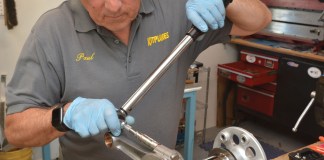
Before the MOSAIC rule changes, if you built your EAB and didn’t apply for the repairman certificate, you were not allowed to do the condition inspection; you needed to get an A&P for the sign-off (no IA required). If you bought an EAB from another builder, you were out of luck, since inspection privileges don’t transfer with the aircraft.
Under MOSAIC, if you own an EAB, you will need the repairman certificate for the EAB as the builder, or either a 16-hour LSRI certificate or 120-hour LSRM certificate to do the condition inspection. Should you run right out and attend the LSA inspection class? Here are some things to think about.
What you think you know/the Dunning-Kruger effect–a psychological effect to which we are all susceptible. You have heard this as, “You don’t know what you don’t know.” What it means is that we travel on a learning curve. At first, we can overestimate our ability in that period when we don’t know much, and then when we get really good at something we may underestimate our actual competency.
My point is that the condition inspection may seem simple, but it may not be as simple as we think it will be, and then we can find ourselves in over our heads. If you’re uneasy about performing your own inspections, it’s better to recognize it and decide to either get more training (if you love wrenching) or get someone else to do the maintenance and the inspections.
Having delivered the LSA class to hundreds of LSA owners, I can say that most of the attendees in the two-day class would benefit from more hands-on before conducting the condition inspection on their homebuilt if they didn’t build it.
If you are uncertain, consider paying an A&P to work with you on your first inspection. The important thing is not to let pride or what others think you should do influence your decision to do your own work. After all, our end goal is to get in the air safely, and with confidence
![[Credit: ChatGPT]](https://www.kitplanes.com/wp-content/uploads/2026/07/What-did-you-miss-Topaz-Gigapixel-4x-scale.jpg?w=218&h=150&crop=1 "Last Bits")
![[Credit: Eric Powell]](https://www.kitplanes.com/wp-content/uploads/2026/02/AdobeStock_1043661239-scaled.jpeg?w=218&h=150&crop=1 "Weight In The Balance")