
![Author Bill Wilson takes a break from measuring and cutting the Lexan windshield during his Onex build. [All Images Credit to Bill Wilson]](https://www.kitplanes.com/wp-content/uploads/2026/04/image-2-1024x683.jpg)
How you think about performing a task has a great deal to do with whether it will be successfully completed. A builder accepts that failure has value because of what is learned, overcoming difficulties leads to opportunities and perseverance will be rewarded by the final result. It’s the kind of thought process the leadership of Boeing used to be famous for. But these words are for you, the vulnerable first time builder who has chosen to fulfill the dream of building and flying your own plane. Why are you vulnerable? Almost half homebuilding starts are abandoned before the aircraft is fully constructed. Let’s avoid that unpleasant statistic in your case.
Here are some suggestions to keep you from reaching that point of frustration where, despite your intense desire to complete your project, you begin to look for a reasonable way out. This is about keeping the dream alive so one fine day you will gaze lovingly upon a great personal achievement. It’s for first timers because, presumably, once you’ve built the first one you know the drill. Multi-builders know what I mean.
There are plenty of valid reasons homebuilders don’t finish the job. One of them should not be lack of mental preparation. That’s why it helps to reorient your mind and think like a builder. I say builder, not fixer. Those are two different attitudes. Fixers want to get an acceptable resolution expeditiously. Builders are in it to the finite details of completion. Don’t confuse the two.
Think Challenge
You’re (most likely) a pilot so you’ve already achieved what most people never will. You like testing your abilities. You like challenges. Aircraft building will offer challenges but require the same kind of discipline and effort it took to learn to fly. You don’t have to be an engineer or an especially gifted craftsman to build a plane. Almost anyone can learn what it takes. But you’ll have to seek out the knowledge and not assume anything. This will be time consuming and introduce doubts about your abilities. Builders understand this and acknowledge that extra work will be necessary.
You learned to fly with an instructor, but he or she won’t be along for this ride. It’s great to build with a buddy, but much of your work will be done alone, a perfect place for self-doubts. You will be trading books and flying time for figuring out plans that will seem obtuse and shifting to manual tasks. Instead of simulations you get illustrations. These come in the way of internet videos or self-help instruction from kit manufacturers or third parties like Homebuilt Help. Visual guidance will benefit you immeasurably. If you are adept at hand tool use you are ahead of the game. And if you are in the know about the important safety considerations while using these devices and have a first aid kit at the workplace.
Think Learning
What are we here for if not to learn? The amateur built category for airworthiness was created to foster learning experiences. You are thinking like a builder when you consider every task associated with your build to be a learning experience.
Thinking like a builder means looking at each task as part of the whole project. Nothing exists by itself. Ever heard of FAA publication AC 43-13-1B? Even though the formal name is Acceptable Methods, Techniques, and Practices—Aircraft Inspection And Repair, many consider it the builder’s bible. It doesn’t replace your plans, but so many tasks required to repair a general aviation aircraft are also very close to what is required for construction. Download it for free from the FAA website and keep it on the job site. Read through it as you begin your project to find sections which apply to your particular build. Most kit manufacturers will specify construction hardware and techniques in the plans provided, but this advisory circular goes into much more detail, such as in listing torque values for certain fasteners or the proper way to safety wire. Why is this important? The big picture. Don’t probe in the dark about what anti-corrosion method would be right for you. AC 43-13-1B can answer many of the technical questions builders have.
Think Organization
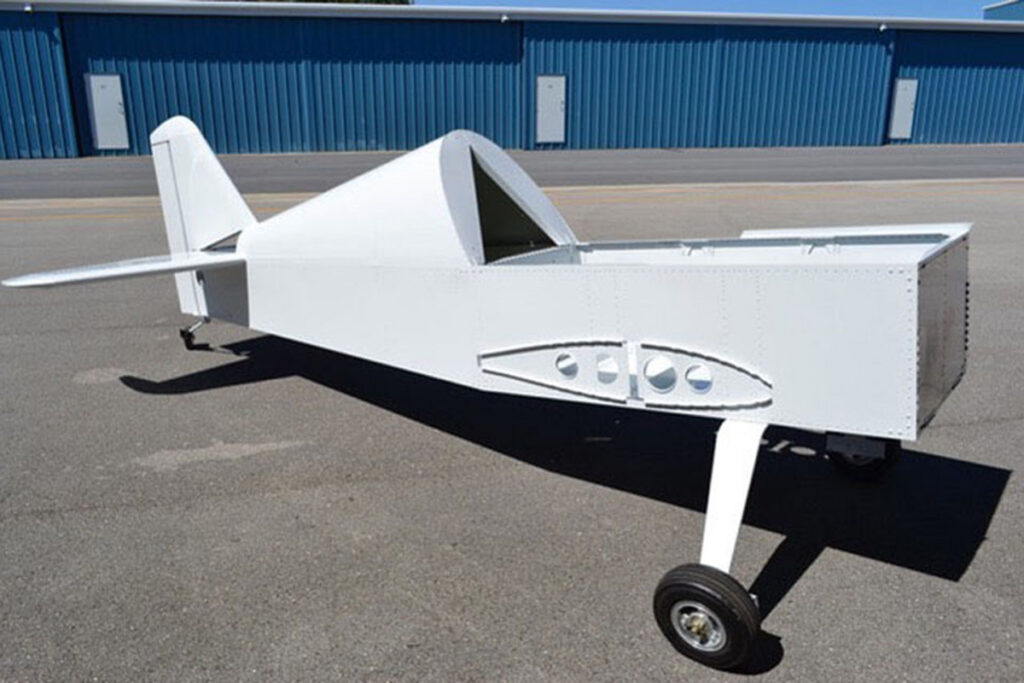
Nothing stops progress so much as disorganization. Now that the job has begun let’s be sure we don’t unintentionally kill a good effort before it starts. Begin with basic organization of thoughts, tasks, tools, building materials, workspaces, storage, labeling, plans handling and physical movement areas. You will be dealing with literally thousands of small parts in the building effort and be adding to them as you work. Be sure you put them where you can find them when necessary. “I wonder where I put that?” is a time killer. Some parts will be heavy. Think about access to each part of the project so you can reach difficult areas. Well organized workspace means efficient building and a happy builder.
Put your project together at home if you have the space and family support. Garage, basement, living room or outside shed, it’s the adjacency that helps. Daily touch on the project is wonderful for continuity. Distant projects are tough, but certainly possible, because travel time eats into your productive work. My round trip was 56 miles a day for four years. My second build required the same miles, but a shorter time.
Think Precision
Close enough is not good enough. True, you’re not building a Swiss watch, but Swiss watches don’t fly. By the time you get the kit delivered, or pick up your set of plans, some pretty smart people have modeled and tested your plane’s design. Build it to the plans to the best of your ability. If the task is beyond your current ability, get some expert help. Don’t accept “almost there” as the end game. Builders think about precision. Nobody wants to wonder if the workmanship is satisfactory. Least of all you. It is certainly possible to modify a plan, but it needs professional sign off, or at least a record of successful use in similar cases proven to pose no undue hazard. Precision is its own reward. Sometimes it must be achieved by repeated efforts to get the desired results. You’ll think “How many times do I have to deal with this fit to get it right?” You know the answer. The attitude comes into focus as you make parts that require a tight fit. You might have to make that part a dozen times before you get the fit you need. You can’t question the necessity to repeat the process almost to frustration. You’ve got to do it. The fit won’t be obtained any other way. If you don’t have the skills to perform the task you’ll have to develop them, or find a way to bring them to the job through another method.
Think Creativity
Wait. How does this fit with following plans? Creativity comes in your approach to solving problems. It comes in aggregating the work effort so that time is not wasted. That’s why the big picture is so important in planning. An efficient builder will look at ways to group tasks so that a series of them can be completed in sequence. If you are making ailerons, make them at the same time. Get all similar parts organized to quickly move from one to the next. This prevents frustration and facilitates efficiency. It also helps the consistency of the build, a very desirable outcome.
It is tempting to cobble something together that will meet most of the need, but don’t do it. Finish the job. Find the solution. It might be making a reasonable modification to the parts you are using or taking an entirely different direction because of unintended consequences. Perhaps you’ll have to re-think your desired approach. Simply do it. That’s the builder’s job.
Aircraft construction goes much further than simply the fun of working with your hands, although that is clearly part of the appeal. You can do that at no risk by making furniture, fixing up cars or remodeling the house. Aircraft builders, conversely, fly what they build to the total disbelief of much of the public, including, by the way, many of our aviation compatriots. How often have you heard “I would be afraid to fly anything I built.”

Think Sharing
Some builders are hesitant to join an aircraft type forum because they fear their lack of experience may embarrass them. We were all there once. We all began somewhere, each of us from a different position in life. We are all gaining vital experience with our work. You are actually not in this all alone, although it many times will feel that way. Almost any aircraft building project you choose will have multiple examples of it flying. These other builders are some of your best sources of vital information, and you will find that most, if not all of them are more than willing to share it. Sure, the on-line boards can be dominated by a few people at times, but reach out with a legitimate request and filter through the responses. Don’t worry about how dumb it might sound to you. If you ask a legitimate building question, you’ll very likely get some very useful answers. Often it will be the very step you need to complete a task and be generously given. The same is true of contacting the official source of your plans or kit. Everybody wants you to succeed. Your failure is theirs, too. Builders, especially new ones, need a lot of help along the way and these helpers are the same folks who will greet you with open arms at your first fly-in rally after you get your airworthiness certificate.
Think Perseverance
There will be days when motivation is hard to find. These often happen when you’re entering a new phase of building where you might not be confident enough of your skills to be comfortable taking on a task. Instead of eagerly looking forward to the day’s activities because you know what you’re doing and are happy to get to work, you find yourself bogged down in uncertainty. Such times require circumspection, but guard against prolonged project delay. It’s better to pause a bit, do some research, talk to other builders, consult the on-line forums for your aircraft type and even make trial and error efforts rather than get stuck for too long. This is the way to find the breakthrough that will bring back the enthusiasm and get you on track again.
Keep your work in sequence. Complete the task at hand before you move on to the next. Test it to prove it’s validity. Why? It is amazingly easy to be distracted by other required tasks before you get the one underway fully accomplished. The risk in not sticking with what you are doing is lost attention to detail. It’s easy to let an interruption jeopardize your efforts.
Builders know that there are no unimportant tasks. Equal weight is given to each operation. And even after the plane is built and flying you’re not done. Builders know that experience with their aircraft will show areas that will require further attention. But they are ready for that. In fact they are looking for ways to improve what they already have accomplished.
That is part of the satisfaction of thinking like a builder.
Think Resolve
This is the quiet mantra you must internalize. Throw out the myths propagated by kit manufacturers and experienced builders of your project as to the time required to complete the plane. They’ve had plenty of time to streamline the tasks involved. Your building site will not look like Piper’s production line in Vero Beach. There really isn’t a predictable estimate for project completion because each effort is a one off, and no one can anticipate how quickly you will handle the challenges along the way. In most cases first builds require years. You’ll be discomforted every time you have to extend your completion estimate, but it’s your project, your plane, and “It’ll be done when it’s done, and not a minute before.” That’s what you believe when you think like a builder.
![[Credit: Andrew Robinson]](https://www.kitplanes.com/wp-content/uploads/2026/10/737_VGs2.jpg?w=218&h=150&crop=1 "Vortex Generators")
![[Credit: Van's Aircraft]](https://www.kitplanes.com/wp-content/uploads/2026/10/Vans_RV14A.jpg?w=218&h=150&crop=1 "Something New On The Horizon")
![A sleek Glasair II. [Credit: Glasair]](https://www.kitplanes.com/wp-content/uploads/2026/08/Glasair-II_2863.jpg?w=218&h=150&crop=1 "Class of ’86: How 1986 Transformed the Modern Kit Building Industry")
![The best builders learn to combine both mindsets. They build like engineers but think like future mechanics. [Credit: Bill Wilson]](https://www.kitplanes.com/wp-content/uploads/2026/07/IMG_0037.jpg?w=218&h=150&crop=1 "Building vs. Fixing")
![Careful planning and determination will get you to your goal of building and flying your own airplane. [Credit: AdobeStock]](https://www.kitplanes.com/wp-content/uploads/2026/05/Pulsar-Sunset.jpg?w=218&h=150&crop=1 "Last Bits")
![Making rare use of my drafting tools for the internal timing. [All Images Credited to Andrew Robinson]](https://www.kitplanes.com/wp-content/uploads/2026/05/P1010535.jpg?w=218&h=150&crop=1 "Conquering the Magneto, Part 2")
![[Credit: AdobeStock]](https://www.kitplanes.com/wp-content/uploads/2026/05/AdobeStock_262642207_AGCuesta.jpg?w=218&h=150&crop=1 "Winging It")
![Lowell Farrand spent years serving as an FAA DAR and is in the EAA Hall of Fame. He offers sound advise to builders. [Credit: Bill Wilson]](https://www.kitplanes.com/wp-content/uploads/2026/05/unnamed-4.jpg?w=218&h=150&crop=1 "Think Like a Builder")
![Humberd and his daughter using the 701 for some farm duty transportation. [All Images Credited to Jon Humberd]](https://www.kitplanes.com/wp-content/uploads/2026/05/1-3.jpg?w=218&h=150&crop=1 "Builder’s Spotlight")



Bill,
Great article with great timing for me. I’m in mid-build, having to apply each and every one of your observations and mantras.
Thank you!
Comments are closed.