![The original Corben Baby Ace designed by Orland “Ace” Corben in 1929. [Credit: Wikimedia Commons]](https://www.kitplanes.com/wp-content/uploads/2026/03/1920px-Ace_Baby_Ace_‘N73638_25617429253-1024x683.jpg)
When the Experimental Aircraft Association was founded in January 1953, the concept of amateur aircraft construction was not new. Orland Corben had been selling plans for his Baby Ace since 1929, Bernard Pietenpol had distributed his Air Camper blueprints in the early 1930s, and designers like Steve Wittman had been building personal racers for almost two decades. Yet something fundamental changed in the early 1950s.
The Civil Aeronautics Administration formally recognized the “experimental, amateur-built” aircraft category in October 1952, lending the imprimatur of legal sanction to amateur-built aircraft.
At almost the same time, Paul Poberezny founded the Experimental Aircraft Association in January 1953 as a focal point for the dispersed community of garage aircraft builders. The result was a convergence of regulatory permission, organizational infrastructure, and media attention that transformed homebuilding from a scattered hobbyist pursuit into a genuine movement. Three designs emerged from that convergence to define the early homebuilt era so completely that they remain in production and active use today, more than seventy years after their introduction. They are the Corben Baby Ace, the Stits SA-3A Playboy, and the Wittman W-8 Tailwind, which I believe are the “Big Three” of the early popular homebuilts.
The Baby Ace
The oldest of the three, the Corben Baby Ace, was born in 1929 when Orland Corben, a designer and aircraft manufacturer in Topeka, Kansas, sketched a simple, parasol-wing airplane intended as an affordable entry into private aviation. Corben called it a cross between the Heath Parasol and the Pietenpol design, resulting in a single-seat open cockpit machine of remarkable simplicity. The fuselage was straightforward steel-tube construction with fabric covering, the wings were made of wood with fabric covering, and the entire airplane could be built by someone with basic mechanical skills and access to a welding torch. Corben began offering plans for sale in 1929, making the Baby Ace one of the first aircraft designs marketed to builders rather than manufacturers. Throughout the 1930s, kits and plans circulated across the United States and internationally, and the Corben Sportplane Company built a handful of examples for customers who preferred a ready-to-fly aircraft. By the end of World War II, hundreds of Baby Aces had been built and flown by private owners, establishing the design as a proven, economical platform for personal flying.
What truly launched the Baby Ace into the forefront of the 1950s homebuilt renaissance, however, was its association with Paul Poberezny and the magazine Mechanix Illustrated. In 1955, with EAA barely two years old and still a modest Milwaukee-based club of a few hundred members, Poberezny and his wife Audrey collaborated with the editorial team at Mechanix Illustrated to produce a three-part article series on building a homebuilt airplane. The magazine selected the Baby Ace as the subject, and in May 1955, a Corben Baby Ace appeared on the cover of Mechanix Illustrated with a headline that spoke directly to the working man: “Build this plane for under $800 including engine!” Poberezny had modified the original Baby Ace design to meet contemporary CAA standards and created new construction plans. The result was the Baby Ace Model C, and the 30-page series of detailed, step-by-step instructions, complete with photographs and diagrams, would become the most influential homebuilt article ever published in a mass-market magazine.
The response was immediate and extraordinary. Poberezny later recalled that the postman experienced “an aching back” and he himself got “writer’s cramp” from answering the flood of letters from readers who wanted to build an airplane. EAA’s membership, which had been roughly 700 members at the end of 1954, more than doubled within a year to 1,450 members by the end of 1955. Within five years, EAA membership had exceeded 5,000, and the organization had transformed from a regional Milwaukee flying club into a national movement. The three Mechanix Illustrated articles, costing 25 cents each at the newsstand (roughly two dollars in current dollars), had cracked the door open to homebuilding for thousands of working Americans who had never imagined they could own and fly an airplane. The Baby Ace Model C became the symbol of that possibility. Although not every reader who purchased those magazines went on to build an airplane, the conceptual shift was permanent. Flying was no longer exclusively the domain of the wealthy. You could, the articles proved, build an airplane in your garage on an ordinary working man’s income.
Throughout the 1950s and 1960s, Baby Aces and their derivatives, the two-seat Junior Ace and single-seat Baby Ace were ubiquitous at EAA fly-ins. The design was forgiving to build, economical to operate, and slow enough to be benign for new pilots. While it was hardly a high performer by the standards of more ambitious homebuilders, its role as the entry point to aircraft construction was invaluable. Many pilots who went on to build faster or more complex homebuilts started with a Baby Ace, gained the confidence and practical knowledge to handle the job, and then moved on to more ambitious projects. The Baby Ace family remains in production today through Ace Aircraft Manufacturing Company in Asheville, North Carolina, which offers progressive kits and full-scale plans. Examples continue to be built by homebuilders attracted by the design’s simplicity and moderate cost.
The Stits Playboy: The Modern Sportplane
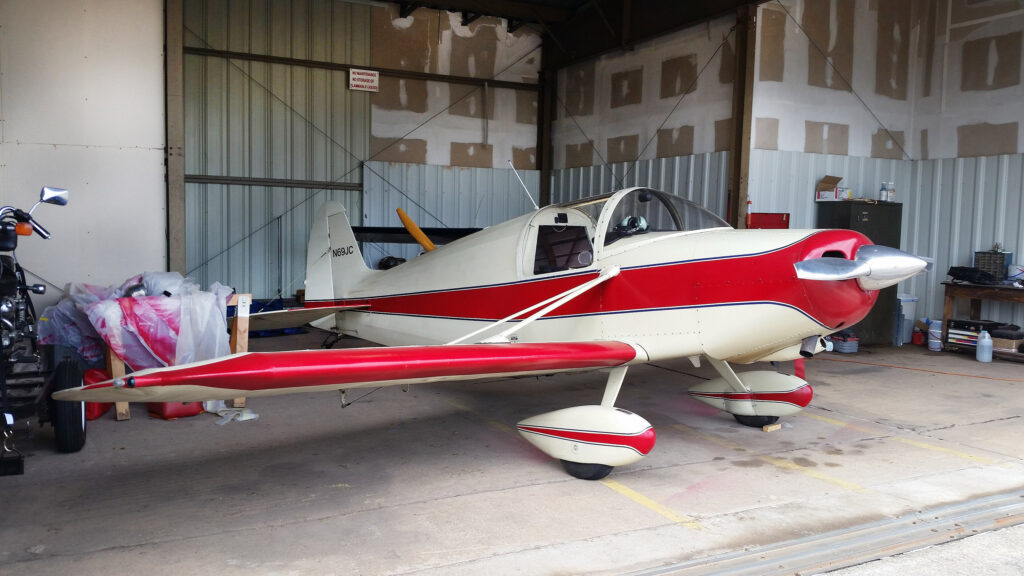
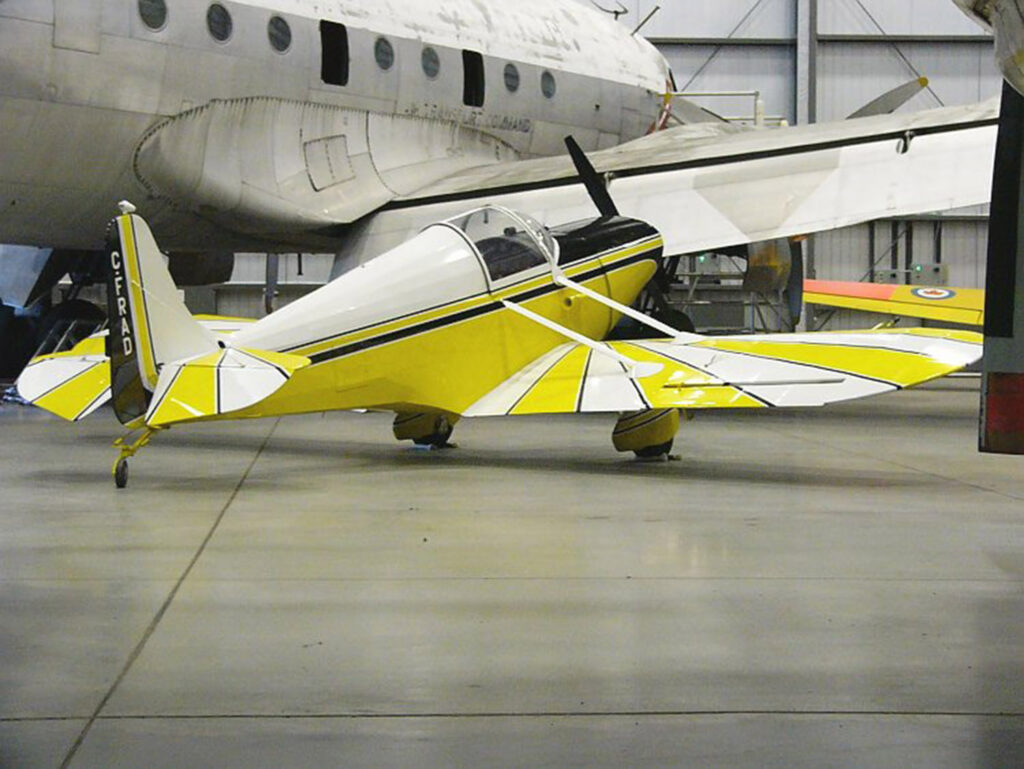
While the Baby Ace represented accessibility and the democratization of aircraft ownership, the Stits SA-3A Playboy represented something different: the first truly modern, purpose-designed postwar homebuilt aircraft. Ray Stits was not a newcomer to aviation when he conceived the Playboy in 1952. Born in 1921, Stits had served as an aircraft mechanic in the Army Air Forces during the Second World War. After the war, he built his first aircraft, the diminutive SA-2A Sky Baby, which became famous as the world’s smallest airplane. Stits appeared at air shows across the country and earned appearance fees that helped him finance his next project. In the early 1950s, while working the night shift at various Southern California aircraft facilities, Stits realized that the aircraft designs he admired were often too complex for the average homebuilder to construct and too difficult for most pilots to fly safely. He decided to design an airplane that was simple enough for an amateur to build with basic tools, yet capable enough to be genuinely fun to fly.
The result was the Stits SA-3A Playboy, a single-seat, low-wing sport plane that first flew in early 1953. The design embodied practical wisdom about what an amateur builder could accomplish. The fuselage was steel-tube construction with fabric covering, the wings were wood with fabric covering, and the taildragger landing gear was conventional. Typically powered by engines in the 65 to 90 horsepower range, the Playboy was responsive in flight, aerobatic capable, and accessible to intermediate builders. Stits began marketing plans in 1953, and within a few years, kits were also available. The design caught fire in the homebuilding community. By 1954, Stits had refined the original single-seat design and created the SA-3B Playboy, a two-seat side-by-side variant that expanded the appeal of the design to builders wanting additional capacity. According to records compiled by the Canada Aviation and Space Museum, the Playboy proved extremely popular with amateur builders, with as many as a thousand aircraft completed over the years. That figure, while difficult to verify exactly, is consistent with the prevalence of Playboys visible at EAA events throughout the late 1950s and 1960s and the large number of examples still flying today.
Ray Stits made a second major contribution to the homebuilding industry that proved equally important as the Playboy design itself. After sustaining flash-burn injuries from burning some old aircraft fabric during the mid-1950s, Stits became motivated to develop a safer alternative to the traditional combination of Grade A cotton fabric and flammable nitrate dope that had been the standard covering system for fabric-covered aircraft since the 1920s. He studied chemistry and eventually developed Poly-Fiber™, a fire-resistant fabric covering system using polyester and polyurethane that could be applied and finished by homebuilders with simple tools. The Poly-Fiber™ system, later sold to commercial ventures, became an industry standard for fabric-covered aircraft and remains in widespread use today. In many respects, Poly-Fiber™ made the Playboy and other tube-and-fabric designs more accessible and safer to build and operate.
Stits also played a crucial organizational role in the EAA. In late 1953, after corresponding with Paul Poberezny, Stits convinced EAA’s founder to establish local chapters—a step that transformed EAA from a single organization into a federation of grass-roots clubs. Stits founded EAA Chapter 1 at Flabob Airport in Riverside, California, in 1953, and that chapter became the template for EAA’s growth across the country. Stits remained active in aviation throughout his life, and he was inducted into the EAA Homebuilders Hall of Fame in 1994. He died in 2015 at the age of 93. The Stits SA-3A Playboy plans are still available from multiple suppliers, and examples continue to be built and flown throughout the United States and Canada, more than seventy years after the original design first flew.
The Wittman Tailwind
The third member of the Big Three represents a different category of homebuilt entirely.
Where the Baby Ace was a simple entry-level machine and the Stits Playboy was a sporty, aerobatic single-seater, the Wittman Tailwind was something more ambitious: a practical, high-performance, two-seat cross-country airplane. Its designer, Sylvester Wittman, was already a legend in American aviation by the time he conceived the Tailwind. Born in Byron, Wisconsin, in 1904, Wittman learned to fly in 1924 and immediately began building his own aircraft. Throughout the 1930s and 1940s, he was one of the dominant figures in American air racing, designing and building a series of race planes with names like Chief Oshkosh and Bonzo that competed successfully in the Thompson Trophy, Cleveland National Races, and other premier speed contests of the era. His 1937 design, the Buttercup, was a two-seat, side-by-side, high-wing airplane built to outperform the Piper Cub, Aeronca Chief, and other commercial trainers of the day.
After World War II, Wittman continued his racing activities, and by the early 1950s, he was in his late forties, a respected elder statesman of American racing aviation, and the operator of Wittman Regional Airport in Oshkosh, Wisconsin.
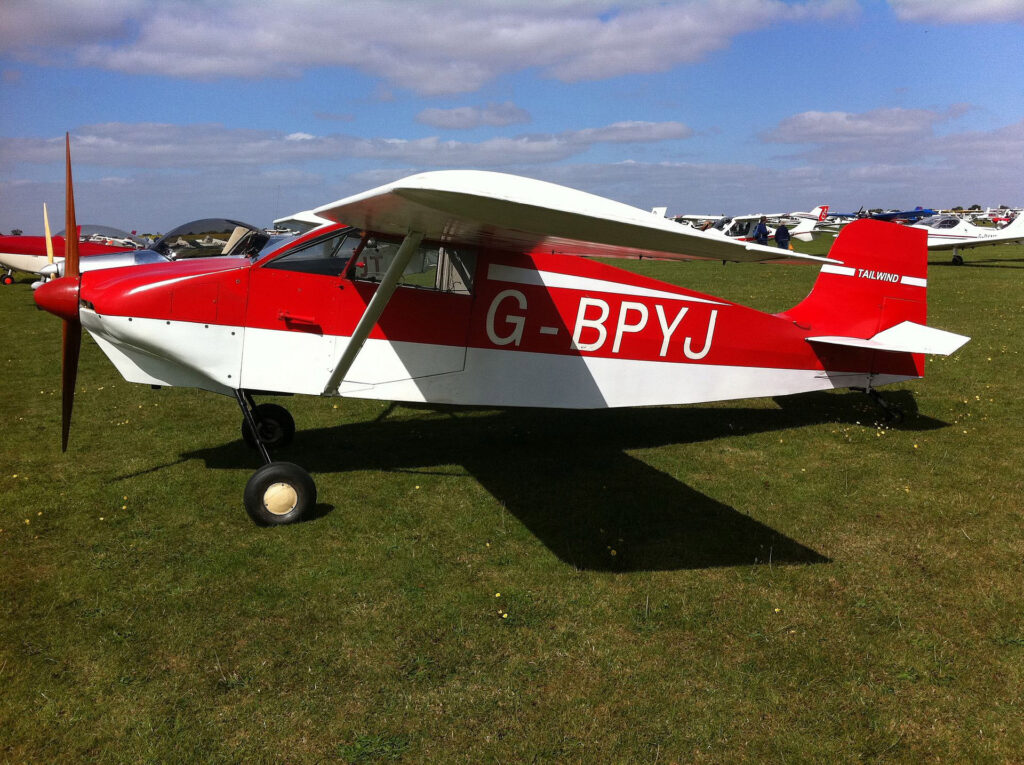
In 1952 and 1953, Wittman decided to build an airplane for personal use. His goal was straightforward: design a fast, economical, two-seat cross-country airplane that could carry two people and sixty pounds of baggage, fly with grace and gentleness at low speeds for safe operations, and achieve exceptional cruise speeds on modest power. Wittman was a meticulous engineer, and he put the first five airplanes he built through rigorous testing at four-G loads to ensure structural integrity. The resulting design, the Wittman W-8 Tailwind, first flew in 1953. It was a high-wing, strut-braced cabin monoplane with the same basic construction philosophy as the Playboy: steel-tube fuselage with fabric covering, wood wings with fabric covering, conventional taildragger landing gear, and accessory systems appropriate to a 1950s homebuilt. Typically powered by Lycoming or Continental engines in the 85 to 150 hp range, the Tailwind achieved cruising speeds that rivaled or exceeded those of contemporary factory-built two-seaters like the Piper Tri-Pacer and Aeronca Sedan, despite using significantly less fuel.
The Tailwind became notable for two accomplishments that establish its place in aviation history. First, in 1953, the W-8C variant became the first two-place experimental/amateur-built airplane certified by the FAA to carry a passenger, establishing a crucial precedent that legitimized homebuilt aircraft as serious transportation machines rather than novelty projects. Second, and perhaps more importantly from the perspective of design efficiency, the Tailwind demonstrated that an intelligently designed homebuilt airplane, using conventional materials and simple construction techniques, could outperform certified aircraft of similar weight and engine power. That achievement resonated deeply with the emerging homebuilding community and attracted serious builders who wanted something more than a weekend recreational machine. Wittman sold plans for the Tailwind, and the design was offered in kit form as well. Throughout the late 1950s and 1960s, Tailwinds began appearing at fly-ins and cross-country events, earning a reputation as dependable, fast, and economical machines that could carry a meaningful load over practical distances.
The design has evolved over decades. Modern Tailwinds use modified airfoils that are nineteen inches longer in span, reducing takeoff and landing distances while improving rate of climb and cruise speed at altitude. Aircraft Spruce and Specialty has been the exclusive distributor of Tailwind plans and materials kits since 1996, and the design continues to be built by homebuilders who appreciate its combination of efficiency, speed, and practical utility. Steve Wittman himself continued building airplanes and designing new variants well into his eighties. He died in 1995 in a crash of his final design, the O & O Special, a derivative of the Tailwind that he completed at age eighty. His impact on homebuilding and aviation design remains profound, and the Tailwind stands as a testament to his engineering philosophy: do more with less, build simple, and fly safe.
The Enduring Legacy
What makes the Big Three remarkable is not only that they were pioneer homebuilts in the 1950s and 1960s, but that all three remain in active production and continuous use today. The Baby Ace plans and kits are available through Ace Aircraft Manufacturing Company. The Stits Playboy can be built from plans available from multiple suppliers, and examples continue to appear at EAA events. The Wittman Tailwind plans are obtainable from Aircraft Spruce, and new builds are regularly documented in the homebuilding press. No other trio of aircraft designs from the early homebuilt era have maintained such consistent availability and builder interest over seven decades. That persistence speaks to several enduring qualities the designs possess: they were fundamentally sound engineering from the outset, they remain teachable examples of what can be accomplished with basic materials and conventional techniques, and they continue to deliver genuine value to the builders and pilots who choose them.
The Big Three also represent distinct answers to different questions posed by aspiring homebuilders. For someone asking, “What’s the cheapest airplane I can build to experience the satisfaction of owning something I made myself?” the answer has always been the Baby Ace. For someone asking, “What’s a modern, responsive, aerobatic airplane that I can build and fly for sport and fun?” the answer is the Playboy. And for someone asking, “What’s a practical, fast, cross-country airplane that will outperform certified aircraft of similar weight and prove the capabilities of intelligent design and simple construction?” the answer is the Tailwind. Each fills a distinct niche, and together they sketch the boundaries of what amateur aircraft construction can accomplish.
Significantly, the Big Three launched a revolution in aviation. Before the 1955 Mechanix Illustrated articles, homebuilding was a niche activity for dedicated enthusiasts. After those articles, and continuing through the influence of the EAA, homebuilding became a legitimate path to aircraft ownership for regular people. The Baby Ace, thePlayboy, and the Tailwind were at the forefront of the transformation. Their designs proved that simplicity and function need not be sacrificed for cost-effectiveness, that amateur builders could accomplish serious engineering given appropriate guidance and support, and that an aircraft built in a garage could be every bit as efficient, capable,
and safe as machines built in a factory.
![The discomfort of wearing prescription- or sunglasses under an ANR headset is eliminated with Flying Eyes. [Credit: Flying Eyes]](https://www.kitplanes.com/wp-content/uploads/2026/03/FlyingEyes-Group-218x150.jpg "Eyes Forward")
![Left to right, shiny new bulkheads, wooden form blocks, and old bulkheads. [Credit Tinley Ong]](https://www.kitplanes.com/wp-content/uploads/2026/03/IMG_3429-218x150.jpg "Second Chance Six")
![[Credit: LeRoy Cook]](https://www.kitplanes.com/wp-content/uploads/2026/03/DSC00008-218x150.jpg "Logging Time")