![[Credit: Zenith Aircraft Co.]](https://www.kitplanes.com/wp-content/uploads/2026/02/wksp-3-21-group1-1024x576.jpg)
Zenith Aircraft Company, the Mexico, Missouri kit manufacturer known for its accessible designs and supportive builder community, is riding a wave of activity as it enters 2026. Between expanding its hands-on workshop program to new regions, introducing time-saving kit improvements, and capitalizing on the FAA’s newly enacted MOSAIC rule, the company is demonstrating the kind of adaptive energy that keeps kit manufacturers relevant in a changing regulatory landscape.
The factory’s traveling workshop initiative represents a particularly interesting shift in how kit companies engage prospective builders. Rather than expecting builders and prospective customers to make pilgrimages to central Missouri, Zenith is bringing the experience to them, targeting regions with established builder communities and favorable winter weather. It’s a strategy that acknowledges both the geographical spread of the homebuilt movement and the practical reality that many potential builders need hands-on reassurance before committing to a build project.
Taking the Workshops on the Road
The company’s February 28-March 1 workshop at Somerton Airport in Arizona marks a strategic expansion into the Southwest, where late winter offers ideal conditions for outdoor aviation activities. Local Zenith builder Larry Nelson will host the event at his hangar at the small airport just south of Yuma on Highway 95. The timing capitalizes on the region’s pleasant February climate while tapping into what Sebastien Heintz, Zenith’s president, describes as “an active community of Zenith aircraft builders and pilots spread throughout Southwest Arizona and southern California.”
The Arizona event follows the established workshop format that Zenith has refined over years of monthly classes at its factory. Participants spend two days building a complete rudder assembly from a standard Zenith kit, working through the fundamental skills they’ll need for the rest of the aircraft: reading blueprints, following assembly manuals, drilling, and blind riveting. The process demystifies aircraft construction for first timers who often arrive uncertain about their abilities and available resources.
![[Credit: Zenith Aircraft Co.]](https://www.kitplanes.com/wp-content/uploads/2026/02/1000048997-1024x592.jpg)
Workshop fees run $375 for most models or $425 for the CH 750 Super Duty variant, which includes the complete rudder kit. Participants leave with a finished component ready to install on a future aircraft, but more importantly, they gain practical knowledge about what the building process entails. Additional helpers, typically spouses or family members, can attend at no charge, a detail that often proves decisive when couples are deciding whether to commit to a long-term building project.
Following the Arizona session, Zenith will continue to southwest Texas for a March 6-7 workshop in Boerne, returning to a location that has previously hosted the traveling program. The company drives its cargo van from Missouri to these events, offering kit and parts delivery to customers along the route, an efficient use of the cross-country trip that provides logistical value to existing customers while supporting the workshop activity.
The Sunday Fly-In Component
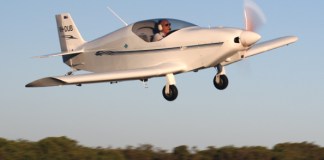
The Arizona workshop includes an informal regional fly-in on Sunday, March 1, inviting Zenith owners and enthusiasts to gather regardless of whether they participated in the workshop itself. Demonstrator aircraft will be available for demo flights, giving prospective builders the chance to experience the aircraft they’re considering in flight rather than simply studying specifications and photos.
This fly-in component transforms the workshop from a purely educational event into a broader community gathering. It’s the kind of social activity important in the homebuilt world, where information sharing and mutual support often determine whether projects get completed or languish in garages. Larry Nelson noted that accommodations near the airport include the Cocopah Casino and Resort less than two miles away, with dry camping available at the airport itself for five dollars per night. The airport offers limited but adequate facilities including showers and restrooms near the workshop hangar.
Kit Improvements: Pre-Cut Control Cables
Beyond its workshop expansion, Zenith recently announced availability of pre-cut and professionally swaged control cables as a kit option. The offering addresses one of those tasks that isn’t particularly difficult but can be intimidating for first-time builders concerned about getting critical components exactly right. Factory-prepared cables arrive ready to install, eliminating the measuring, cutting, and swaging work while ensuring professional quality.
The option is available both to new kit purchasers and to existing owners looking to refresh their aircraft’s control cables, a detail that demonstrates Zenith’s attention to the ongoing needs of its fleet. It’s part of a continuing effort to make kits quicker and easier to assemble without compromising the builder’s involvement in the substantial portion of the aircraft’s fabrication and assembly required for amateur-built certification.
Sebastien Heintz has emphasized repeatedly that modern CNC match-drilled parts and detailed assembly instructions have made aircraft construction far more accessible than many people assume. The pre-cut cables continue that trajectory, reducing the number of specialized tools and techniques builders must master while focusing their time and attention on the primary structure and systems assembly.
![[Credit: Zenith Aircraft Co.]](https://www.kitplanes.com/wp-content/uploads/2026/02/wksp-4-2025-factory-tour5-1024x683.jpg)
![[Credit: Zenith Aircraft Co.]](https://www.kitplanes.com/wp-content/uploads/2026/02/wksp-4-2025-craig-w-1024x682.jpg)
MOSAIC’s Impact on Zenith’s Product Line
The FAA’s MOSAIC rule, which took effect October 22, 2025, substantially expands the definition of Light Sport Aircraft and the privileges available to Sport Pilots. For Zenith, whose product line has long straddled the LSA and traditional amateur-built categories, the rule change creates favorable conditions across its model range.
In a recent discussion with Bryan Walstrom of the Experimental Aircraft Channel, Heintz explained how Zenith aircraft fit well within the expanded MOSAIC Sport Pilot framework. Many existing Zenith owners and pilots are already benefiting from the new rule’s provisions, which raise the maximum gross weight limits, increase allowable cruise speeds, and permit additional capabilities that were previously restricted to aircraft requiring private pilot certification.
The timing is particularly advantageous as the Experimental Aircraft Channel runs its “31 Day Build Challenge” throughout December, generating visibility for the kit-building process while the regulatory environment offers expanded flying privileges to a broader population of pilots. The alignment of favorable regulations with active promotional efforts creates momentum that individual manufacturers can leverage through their own outreach.
The Workshop Model’s Value Proposition
Zenith’s hands-on workshops address a fundamental challenge in the kit aircraft market: prospective builders often don’t know whether they possess the skills, patience, and workspace to successfully complete a multi-year project. The rudder workshop provides a definitive answer in two days. Participants tackle a representative cross-section of the building process under factory guidance, discovering both the challenges and the satisfactions involved.
Heintz notes that the rest of the kit is constructed using the same methods and tools demonstrated during rudder assembly. This isn’t an oversimplification meant to make the process sound easier than it is. The rudder genuinely represents the techniques used throughout the aircraft and building it provides an accurate preview of what lies ahead. Many participants arrive uncertain and leave ready to order a complete kit, having learned that aircraft construction is more approachable than they feared.
The family engagement aspect carries particular weight. Some builders report that the support or skepticism of a spouse determines whether projects get completed. When family members attend the workshop and see both the process and the achievable results, they often become advocates rather than skeptics. The social atmosphere of working alongside others tackling the same challenges adds to the appeal, replicating in compressed form the community aspect that sustains builders through longer projects.
Regional Community Building
The company’s decision to target specific regions for traveling workshops reflects an understanding that the homebuilt movement clusters geographically. Southwest Arizona and southern California harbor established Zenith communities, making them natural targets for workshops that draw both newcomers and existing builders. The fly-in component leverages those existing communities while expanding them through new connections.
This regional approach contrasts with the purely factory-centered model where all activity flows through the manufacturer’s headquarters. While Zenith continues its monthly factory workshops, the traveling program extends the company’s reach to builders who might never make the trip to Missouri but will drive a few hours to a regional event. It’s a hybrid model that maintains the factory’s role as the knowledge and support hub while acknowledging the practical benefits of distributed community building.
Nelson’s role as local host exemplifies this distributed approach. As an active Zenith builder himself, he brings credibility and local knowledge that factory representatives alone couldn’t provide. His hangar serves as both venue and demonstration that building and flying a Zenith is an achievable goal, not merely a manufacturer’s promise.
![[Credit: Zenith Aircraft Co.]](https://www.kitplanes.com/wp-content/uploads/2026/02/wksp-5-2025-demo-zac3-1024x683.jpg)
Manufacturing Philosophy
Underlying these various activities is a consistent manufacturing philosophy: make kit building accessible to people with ordinary skills and tools. Zenith’s designs emphasize straightforward construction using aluminum sheet metal and basic riveting techniques. The company has avoided exotic materials and complex fabrication methods in favor of approaches that builders can master in a home shop.
The CNC match-drilling is a significant advance over older kit methods. When parts arrive with holes already drilled to final size in precise locations, much of the measuring and layout work is eliminated. Builders follow clearly marked assembly sequences rather than interpreting drawings. The aircraft is still amateur-built in the legal sense, but it removes much of the uncertainty that deterred potential builders in earlier eras.
The availability of options like pre-cut control cables continues this trajectory. Zenith targets those specific tasks that present disproportionate anxiety relative to their actual difficulty or educational value. If a builder can install factory-prepared cables more confidently and quickly than cutting and swaging them, the time and attention saved can be applied to other aspects of their project.
The Mexico, Missouri Hub
Despite the traveling workshops, Zenith’s Mexico, Missouri facility remains the company’s operational hub. The factory hosts monthly workshops for builders who prefer the headquarters experience or live within reasonable travel distance. The facility also serves as the source for the kits, parts, and technical support that keep the geographically dispersed builder community moving forward.
The company’s willingness to load up a cargo van and drive to Arizona and Texas demonstrates commitment to customer service that goes beyond selling kits. Delivering parts along the route benefits customers who would otherwise face shipping costs and delays, while the visibility of the Zenith van traveling through the Southwest serves its own promotional purpose. It’s the kind of practical, personal approach that characterizes many successful kit manufacturers who understand they’re selling not just aircraft components but ongoing relationships with builders who will need support over several years.
Positioning for Growth
As Zenith enters 2026, the company appears positioned to benefit from several converging factors. The MOSAIC rule expands the potential market for its designs by making them accessible to more pilots with fewer restrictions. The traveling workshop program extends the company’s reach into established regional communities while building new ones. Kit improvements like pre-cut cables make the building process more approachable for first timers while serving existing owners’ maintenance needs.
The homebuilt movement has always combined practical considerations with emotional and social factors. People build aircraft partly because it’s more affordable than buying certificated aircraft, but also because they enjoy the building process, value the learning experience, and appreciate the community connections. Who doesn’t like fly-ins? The Zenith initiatives address this desire for social gathering. Workshops teach and reassure, design improvements reduce technical intimidation without eliminating challenge; the regional gatherings strengthen aviation community bonds.
The Southwest workshops of early 2026 will serve as a test of whether the road show model can generate new builder activity in regions far from the Missouri factory. If successful, the approach could expand to other areas with sufficient existing Zenith presence to support regional events. The model relies on local hosts like Nelson willing to provide facilities and coordination, but it offers manufacturers a way to maintain personal connections with builders across the country without requiring all activity to flow through a single facility.
Whether measured by workshop attendance, kit sales, or the number of flying Zeniths, 2026 will likely prove to be a strong year for the company. The regulatory environment is favorable, the product line is mature and well-supported, and the outreach strategy balances factory resources with distributed community engagement. For prospective builders considering their options, the multiple workshop locations and the reassurance of hands-on experience before committing to a full kit purchase reduce many of the barriers that have historically deterred people from starting projects.
The challenge for any kit manufacturer is converting interest into completed, flying aircraft. Workshops help by demonstrating that building is achievable. Kit improvements help by reducing the complexity and uncertainty of specific tasks. Community support helps by providing encouragement and practical assistance when builders encounter difficulties. Favorable regulations help by expanding what builders can do with their completed aircraft. Zenith’s current activities address all these factors, creating an environment where more people might reasonably conclude that building their own aircraft is not only possible but genuinely enjoyable.