![[Credit: CubCrafters]](https://www.kitplanes.com/wp-content/uploads/2026/09/DSC04228.jpg?w=696)
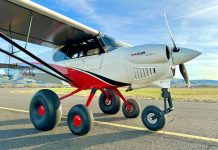
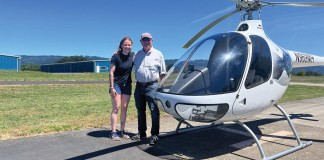
There is a unique sound a turbine engine makes on start—a rising whistle, followed by a smooth, spooling hush. Until this summer you had to buy a very large, very expensive airplane to hear it from the left seat. CubCrafters is changing that. The new Carbon Cub ULT made its debut at Oshkosh.
The Yakima, Washington company says it has built the first U.S.-manufactured turboprop aircraft eligible to be flown under MOSAIC regulations. It is, in other words, a turboprop you can fly as a sport pilot, and, if you have the ambition, a turbine powered Cub you can help build yourself.
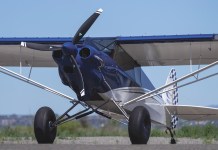
That last part is what makes the ULT a story for KITPLANES readers. Strip away the jet fuel and the FADEC and you are left with the Carbon Cub airframe that experimental builders have been finishing in the CubCrafters factory-assist program for years: a chromoly-and-carbon two-seat taildragger with preternatural STOL characteristics. What has changed is what hangs on the firewall—and what the regulations now permit an entry-level certificate holder to command. CubCrafters president and CEO Patrick Horgan does not undersell the effort. “The Carbon Cub ULT represents some of the most advanced engineering work ever undertaken at CubCrafters,” he says.
The Regulatory Opening
MOSAIC is the connective tissue here, and the reason a turbine-powered light two-seater is suddenly legal territory for a Sport Pilot at all. The old light-sport rules boxed a Sport Pilot into a 1,320-pound airplane with a fixed-pitch propeller, and a turbine-powered airplane often required specific type training or a type rating and a serious insurance conversation. MOSAIC replaced that rigid weight ceiling with performance-based limits—the most consequential being a clean stall speed at or below 59 knots, and, critically for our purposes, opened the door to performance enhancements, e.g., constant-speed propellers, retractable gear, and novel propulsion.
The aircraft still must meet the stall-speed and other design criteria, and the pilot still flies under the familiar sport-pilot limits: day VFR unless additionally endorsed, a single passenger; a valid U.S. driver’s license suffices in lieu of a medical certificate. CubCrafters describes the ULT as “designed for the MOSAIC era.” The airplane simply could not have been offered to the homebuilt community before the rule existed.
Turbine at the Firewall
The heart of the ULT is the TurboTech TP-R90, a regenerative turboprop from the French aerospace firm TurboTech. “Regenerative” is not garnish; it is the whole point. The engine recovers and reuses heat energy that would otherwise be lost through the exhaust, preheating incoming air through a recuperator and reclaiming energy a conventional small turbine simply throws overboard. The result, both companies claim, is fuel consumption comparable to the gasoline-powered Carbon Cub UL—addressing the historic demerit of small turbines, which have always been thirsty—while retaining the qualities pilots covet, i.e., smoothness, durability, and the mechanical simplicity of a rotating group with a fraction of a piston engine’s moving parts. TurboTech describes the TP-R90 as its flagship engine, combining patented regenerative turbine technology with full-authority digital engine control, and the Carbon Cub ULT is the company’s first production aircraft partnership in the United States.
The ULT designation itself is a small piece of wordplay CubCrafters is happy to explain. The original “UL” reflected the Carbon Cub UL’s focus on lightweight performance and unleaded-fuel compatibility. The new “UL’T” adds “T” for turbine—while also standing, as the company puts it, for the “ULTimate” evolution of the backcountry Carbon Cub platform.
The engineering underneath that tidy branding is the harder story. Small turbines have tempted light-aircraft designers for decades and defeated most of them, because a conventional gas-turbine cycle is brutally inefficient at the modest power a two-seater needs; the fuel flow that keeps a big PT6 economical becomes ruinous when scaled down. TurboTech’s recuperated cycle is the answer, trading a heavier, more complex engine for a fuel burn that finally makes sense at this end of the spectrum. Pairing it with an airframe already engineered for light weight and low drag is what lets CubCrafters claim piston-like economy from a turbine—a sentence that would have drawn skeptical looks not long ago. TurboTech, for its part, says it developed the TP-R90 specifically for light aircraft, with push-button starting, single-lever power control, and simplified maintenance as design goals from the outset rather than afterthoughts. Whether the real-world economy holds up is exactly what the Yakima flight-test program is there to prove, and it is the figure this magazine will be watching most closely once airplanes reach customers.
What that turbine means in the cockpit is a deliberate absence of ceremony. There is no turbine-management ritual, no watching ITT like a hawk during a hot start. Starting the airplane is as simple as turning on the master switch and pressing the start button; the dual-channel FADEC then automatically manages fuel flow, ignition, engine temperatures, and propeller operation throughout the start sequence and the entire flight envelope, eliminating procedures traditionally associated with both piston and turbine aircraft. Power is a single lever. A dedicated turbine-engine display joins the Garmin avionics on the panel, and CubCrafters says the combination delivers a remarkably simple flying experience—pilots focused on the adventure rather than the engine.
“The first thing pilots notice is how effortless the airplane feels,” says Brad Damm, CubCrafters vice president. “You push and hold the start button for a few seconds, and the aircraft is ready to go fly. The FADEC handles the details, the turbine is incredibly smooth and quiet, and the aircraft retains the lightweight performance and responsiveness that pilots love about the Carbon Cub. It’s one of those airplanes that makes you look for excuses to go flying.” His counterpart at TurboTech frames the partnership in similar terms. “CubCrafters has an exceptional reputation for innovation and engineering excellence in backcountry aviation, and the Carbon Cub ULT is an ideal platform to demonstrate the capabilities of the TP-R90 engine,” says TurboTech CEO Damien Fauvet. “Together, we believe we are introducing a new generation of efficient, practical, turbine-powered recreational aircraft.”
![[Credit: CubCrafters]](https://www.kitplanes.com/wp-content/uploads/2026/09/DSC01106-1.jpg?w=696)
![[Credit: CubCrafters]](https://www.kitplanes.com/wp-content/uploads/2026/09/DSC01542.jpg?w=696)
The Numbers
CubCrafters’ preliminary specifications place the ULT squarely inside the MOSAIC envelope while trading on the turbine’s power-to-weight advantage. Empty weight is estimated at 880 pounds, with a maximum gross of 1,865 pounds for an estimated useful load of 985 pounds—a remarkable figure for a two-seater and a direct dividend of the carbon-fiber-and-chromoly structure the Carbon Cub line is built around. Fuel capacity is 44 gallons of Jet A. Cruise is estimated at 130-plus mph and stall at a MOSAIC-friendly 32 mph, with a claimed takeoff roll as short as 50 feet and a landing roll of 90 feet—the short-field pedigree the airplane inherits intact from CubCrafters’ latest generation of aerodynamic refinements. Endurance is pegged at an estimated 5.2 hours and range at roughly 682 statute miles. Dimensions mirror the piston Carbon Cub UL: 23 feet 3 inches long, a 34-foot-3-inch wingspan, and 179 square feet of wing.
These are, it must be said, estimates. The ULT has been in active flight testing near Yakima, where CubCrafters says the program continues to validate performance and refine the aircraft ahead of the Oshkosh debut, and the specifications carry the usual subject-to-change caveats that attend any airplane still earning its numbers. But the design targets are coherent, and they describe an airplane that behaves like a Carbon Cub until the moment you firewall a turbine.
Now the part I promised at the top. The ULT starts at $690,000, with a $75,000 deposit securing a production position; the company is accepting deposits now, with initial customer deliveries expected in 2027. CubCrafters is offering it in two configurations familiar to anyone who has followed the Carbon Cub line: a factory-built Light Sport version and a Factory Builder Assist Experimental Amateur-Built program, the same structure under which the piston Carbon Cub UL is sold today. For perspective, that piston UL—itself a genuinely capable airplane—starts at $293,500. The turbine, in other words, roughly doubles the price. Nobody at CubCrafters is pretending otherwise. The $690,000 window sticker is the honest cost of being first to hang a jet engine on a sport-eligible airframe. What MOSAIC changed is not the price of turbine ownership; it is who is legally allowed to fly the thing once it is built.
![[Credit: CubCrafters]](https://www.kitplanes.com/wp-content/uploads/2026/09/DSC05149.jpg?w=696)
What It Means for Builders
For the KITPLANES reader, the ULT is less a product to rush out and order than a marker of where the sport is heading. MOSAIC was written to be technology-neutral, and CubCrafters has taken the rule at its word, proving that “sport-eligible” and “turbine-powered” are no longer contradictions. (The TurboTech TP-R90 engine is already in use in Europe in homebuilts and even in ultralights. Here in the USA, TL Sport Aircraft has announced the option of installing the TP-R90 on its TL Sirius, TL Stream, and TL Sparker models.) The Factory Builder Assist path is the detail that matters most. It means the airplane arrives in the experimental-amateur-built world where our readers live, with the owner’s hands in the build and a state-of-the-art FADEC turboprop the reward. This is the same builder-assist model that has put hundreds of Carbon Cubs on backcountry strips—now with the exhaust note of a jet.
It is worth remembering how recently this was unthinkable. A turboprop that a Sport Pilot could legally command, in an airframe a customer could help assemble, would have been a contradiction in terms two years ago. MOSAIC redrew that map in a single stroke, and CubCrafters was ready with an airframe that already occupied the intersection of light weight and serious capability. The ULT will, likely, not be a common sight on the ramp but its significance is nevertheless undeniable.
Whether the market will bear a $690,000 two-seat taildragger is a question 2027 will answer. What is already settled is the principle: the turbine has come down-market far enough that the limiting factor is no longer your certificate. It is your budget. For a certain kind of builder—the one who has always wanted to hear that spooling whistle from the left seat—that may turn out to be the best trade in aviation.
This article first appeared in the 2026 September Issue of KITPLANES magazine.