
Scott Spangler

Scott Spangler A pilot since 1976, Spangler was the founding editor of Flight Training magazine. In 1999 he launched and edited NAFI Mentor for the National Association of Flight Instructors, and for seven years was editor in chief of EAA publications. As a freelancer he’s written for Air & Space Smithsonian, Overhaul & Maintenance, Aviation for Women, Twin & Turbine and a number of non-aviation titles.

The Big Toot
The Big Toot Tommy Meyer built is not the two-seat biplane his father envisioned. “It was going to be a side-by-side version of Little...
eBay Biplane
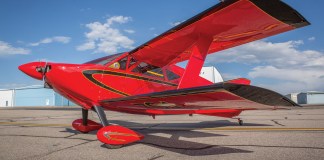
“Around 2006, I was on eBay quite a bit,” said Doug Eastman of Thornton, Colorado, looking for parts for the “first airplane I ever...
Minnesota Mission
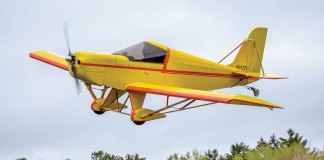
Creating a bespoke airplane is one benefit of building from plans; when assembling a kit, builders cannot make many changes.


Fixed Formation
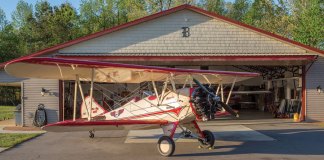
The Bel-Aire 4000 flies on lower wings from a Piper PA-22 Colt and upper wings from a PA-12 Super Cruiser.



In Case You Missed It

Build It Better: Where’s Your Margin?
How can you give yourself that margin of safety that you hope you'll never need?
Right-Angle Deburring Tool
Most of us have a threaded drill kit. Mine has an assortment of common...

Ask the DAR
What do you need to do when you buy an Experimental/Amateur-Built aircraft? What should a builder/owner do when they're ramp checked?