
![Nearly 3,000 RV-6 kits were built during the design’s highly successful run. [All Images Credited to Van's Aircraft]](https://www.kitplanes.com/wp-content/uploads/2026/03/RV6-Rusciano-RUS05842-2880x1600HomePageBanner_KK-1024x569.jpg)
The first two RV-15 wing kits left Van’s Aircraft’s Aurora, Oregon factory on December 23, 2025, bound for Reno air racer Kevin Eldredge and pilot Spanky Melton. The shipments were symbolic of Van’s aggressive post-bankruptcy restructuring and confidence in the company’s most ambitious new design in decades.
Van’s is shipping wing kits now, and Van’s says sales are exceeding expectations. The $21,000 wing kits—featuring Van’s fastest-building wing to date, factory-built fuel tanks, and innovative vortex-generator-equipped flaps—arrive in stackable plastic boxes with each component identified by photo, part number, and QR code for easy reordering.
For builders who weathered Van’s 2023-2024 financial crisis and the company’s May 2024 Chapter 11 emergence, the RV-15 production launch signals the dawn of Van’s second act. The past four months—October 2025 through February 2026—demonstrate a company executing systematic transformation while maintaining the engineering excellence and builder support that enabled the creation of 11,000 RVs over five decades.
The High Wing Gambit
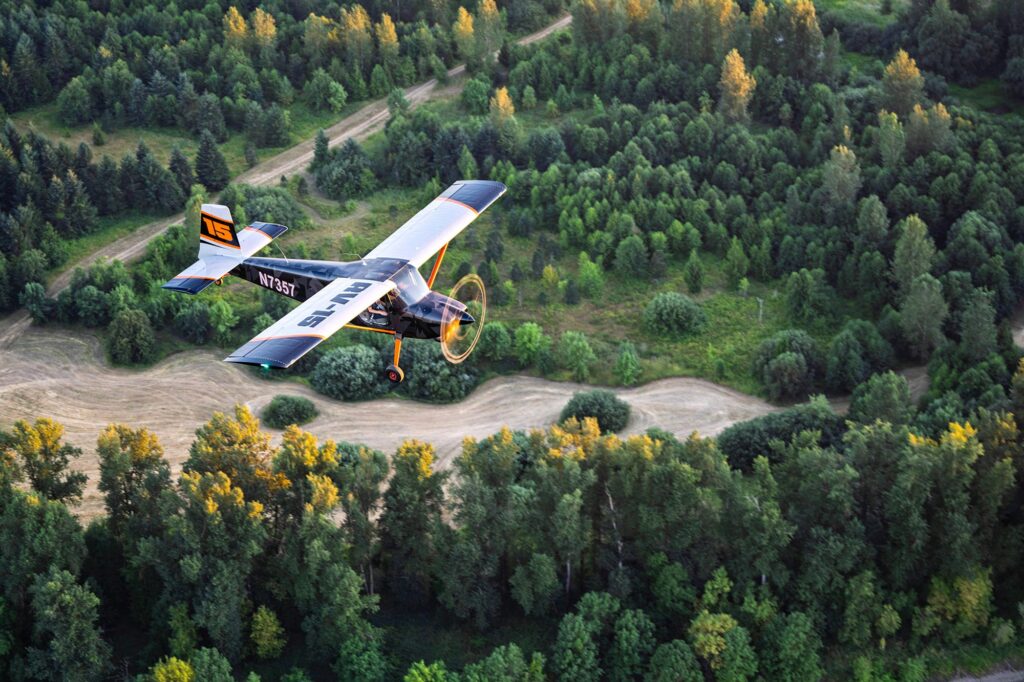
The RV-15 represents Van’s first high-wing aircraft and its boldest market expansion since the four-seat RV-10 debuted in 2003. Designed for backcountry operations while retaining RV cross-country capability, the RV-15 targets the growing utility/STOL segment where Kitfox, Just Aircraft, and Rans designs dominate.
Vans has consistently positioned the RV-15 as a larger, more utility-oriented evolution of the RV series. The aircraft incorporates long-stroke landing gear, high payload capacity, and a wing optimized for low-speed handling — features that enable operations from shorter, rougher strips that many previous RV models would avoid. These attributes definitely make the airplane backcountry capable. Vans’ performance estimates emphasize a blend of STOL-friendly traits with the traditional RV strengths of efficiency and cross-country speed.
Van’s patented articulated landing gear—featuring four internal oil/nitrogen shock absorbers per main gear leg—distinguishes the RV-15 mechanically. “The shock system is like nothing anyone’s ever seen,” observed AOPA Editor-at-Large Dave Hirschman after flying the RV-15 prototype in August 2025. “It soaks up bumps and rough surfaces while maintaining excellent ground handling.”
Hirschman’s flight report documented impressive performance: 500-foot takeoff roll, 1,500 fpm climb rate, 140-knot cruise speed, and 60-gallon fuel capacity enabling 4–5-hour endurance with reserves. “The RV-15 lifts off in about seven seconds after a 500-foot takeoff roll with flaps up,” Hirschman reported. “The airplane accelerates to 80 knots indicated in a 10-degree nose-up attitude and climbs at 1,500 feet per minute.”
The aircraft’s development required extensive refinement throughout 2024-2025. Van’s engineering team replaced the original stabilator with a conventional elevator/horizontal stabilizer on a lengthened tail cone, dramatically improving pitch control. Additional modifications included aileron airfoil changes, increased aileron throw, reduced control system friction, thrust line adjustments, and relocated flap handle.
“We’re moving on to the next phase of structural refinement and kit development,” Van’s stated in late 2024, with company founder Dick VanGrunsven personally conducting development flight testing on his 85th birthday in November 2024. At 85, VanGrunsven’s hands-on involvement underscores the RV-15’s importance to Van’s legacy.
The production timeline follows a carefully orchestrated sequence designed to manage cash flow while maintaining quality. Wing kits began shipping in December 2025 at $21,000 each. Tail/empennage kits open for sales in late January 2026 with deliveries expected in March (approximately $9,000). Fuselage kit orders begin in August 2026 with October deliveries (estimated $20,000). Firewall-forward and finish kits both launch in late 2026, bringing the complete kit price to approximately $85,000 excluding engine, propeller, and avionics.
This phased approach—validating each major assembly before proceeding to the next—reduces technical risk while generating progressive revenue. Builders receiving wing kits gain priority access to tail kit orders, incentivizing early deposits while ensuring serious customers get first access.
A tricycle-gear RV-15A variant appears in Van’s planning documents, though timing remains “TBD.” Given most pilots’ tricycle-gear training and Van’s historical pattern of offering both configurations (RV-6/6A, RV-7/7A, RV-8/8A, RV-14/14A), an RV-15A seems inevitable despite the engineering challenges of adapting the unique landing gear system.
MOSAIC: The Regulatory Landfall
If the RV-15 represents Van’s product offensive, the FAA’s Modernization of Special Airworthiness Certification (MOSAIC) regulations delivered strategic defense—expanding Van’s addressable market overnight.
MOSAIC Part 1, implemented October 22, 2025, permits Sport Pilots to operate aircraft with stall speeds up to 54 knots VS1 (previously 45 knots) while removing numerous equipment restrictions. The change brings most Van’s models within Sport Pilot privileges: RV-3, RV-4, RV-6/6A, RV-7/7A, RV-8/8A, RV-9/9A, and RV-12/12iS series.
“It’s exciting that so many RVs are available to be flown as a Sport Pilot,” said Rian Johnson, Van’s head of design engineering and chairman of the ASTM F37 committee governing light-sport aircraft standards. “It’s beyond the expectation that we had in the early phases of MOSAIC.”
The RV-7 and RV-8 series alone represent approximately 3,600 flying aircraft—roughly one-third of the entire RV fleet. These proven cross-country machines now welcome pilots exercising Sport Pilot privileges, potentially expanding the used RV market and introducing new builders to the RV ecosystem.
The RV-10 and RV-14/14A remain just above the Sport Pilot stall speed threshold but qualify under the expanded MOSAIC aircraft definition. While not flyable under Sport Pilot privileges, they benefit from the simplified certification pathway MOSAIC Part 2 will establish.
Part 2, expected to launch at EAA AirVenture 2026, creates a new certification basis allowing manufacturers to produce aircraft meeting MOSAIC standards without expensive FAA Part 23 certification. Van’s actively helped shape these regulations through extensive comment submissions, advocating for the 54-knot threshold and arguing for international harmonization at 61 knots to include trainers like the SR20.
Van’s strategic positioning proves prescient: Johnson’s dual role as company chief engineer and ASTM F37 committee chairman provides unparalleled insight into standards development. This enables Van’s to design future aircraft meeting consensus standards as they crystallize, potentially offering certified Special Light Sport Aircraft (SLSA) variants without Part 23 certification costs.
“MOSAIC opens up a new avenue to building exciting new models,” Van’s stated, noting the regulations influenced strategic planning for future aircraft development.
The 2026 RV-12iS: Evolution For Training
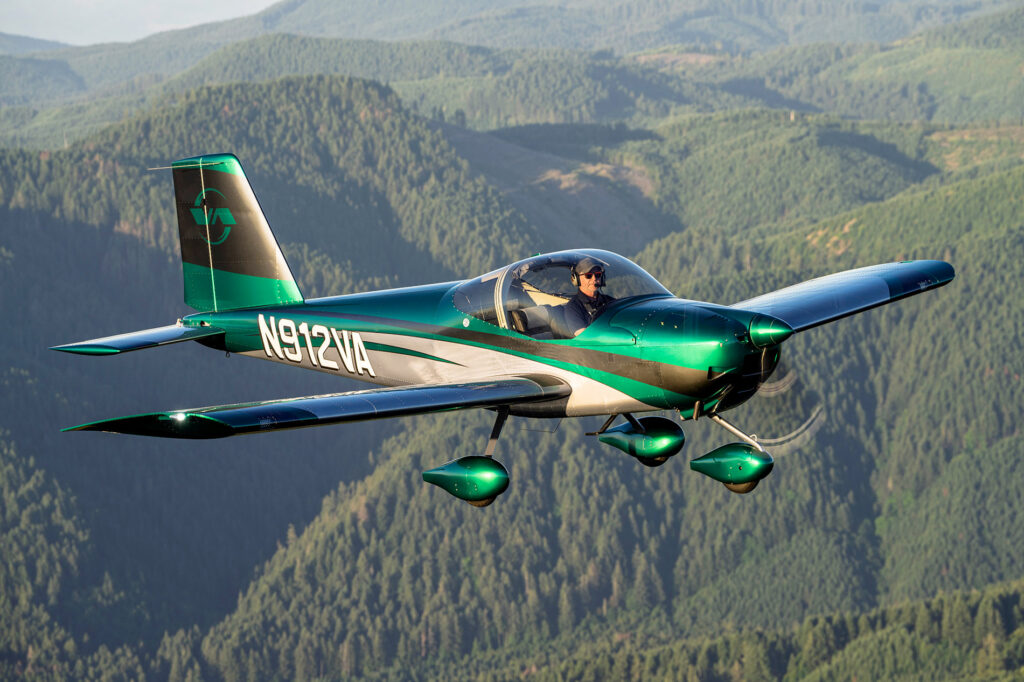
While the RV-15 captures headlines, Van’s unveiled significant improvements to its factory-built RV-12iS light sport aircraft at AirVenture 2025. The 2026 model addresses feedback from the 40 flight schools nationwide operating RV-12iS trainers.
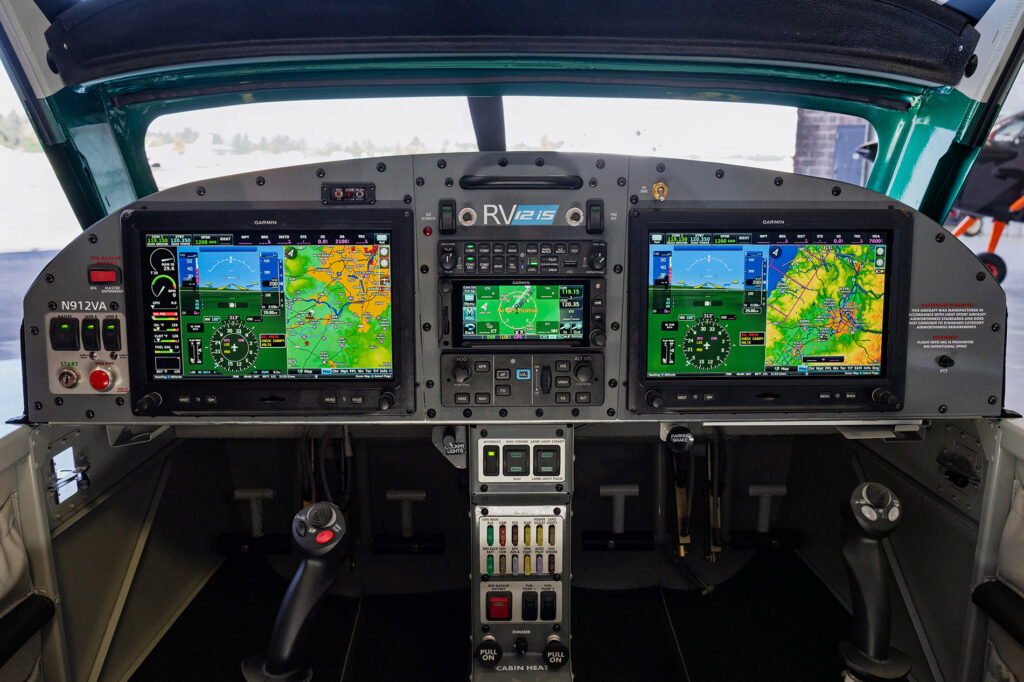
Key enhancements include an additional alternator enabling IMC flight capability, under-wing-mounted pitot/angle-of-attack mast, updated Rotax fuel pumps eliminating previous 6,500-foot density altitude restrictions for automotive gasoline, parking brake, and alternate air and static sources. Comfort improvements include memory foam seats and all-new leather interior.
“Something that’s brand new” according to Van’s product managers, the parking brake addresses ground handling requests from flight schools conducting high-volume training operations. The enhanced charging system and instrument flight capability position the RV-12iS as a sophisticated platform for private, instrument, and commercial training.
Van’s manufactures RV-12iS aircraft at three units per month, with 32 aircraft completed in 2025 compared to 26 in 2024. More than 120 factory-built RV-12iS aircraft now serve the training and private owner market. The Platinum edition—featuring full Garmin G3X Touch dual-screen panel, autopilot, lighting package, and premium paint—carries a price of approximately $249,900.
The RV-12iS proved strategically valuable through Van’s partnership with Joby Aviation, which selected the aircraft for its FAA Part 141-certified flight academy training future electric vertical takeoff and landing (eVTOL) pilots. Joby builds its own RV-12iS aircraft in partnership with Van’s, creating a pilot pipeline for planned air taxi operations.
“The RV-12iS has the sort of technology that will take people all the way up through the G3000 type avionics suites,” noted AOPA’s Dave Hirschman after flying the 2026 model, emphasizing its training sophistication.
Streamlining The Lineup
Van’s announced in July 2025 the retirement of its three earliest designs—the RV-3, RV-4, and RV-6/6A—from active kit production effective September 30, 2025. The company continues offering replacement parts and technical assistance for these foundational designs representing thousands of flying aircraft.
“As kit orders for these models have declined, and as we focus on streamlining operations and bringing new designs into production, we’ve decided to end active kit production for these RV models,” Van’s stated.
The RV-6/6A alone accounts for nearly 3,000 completed aircraft—Van’s most popular design historically. However, the side-by-side RV-6/6A was superseded by the RV-7/7A in 2001, which employs more modern manufacturing technologies reducing build time. Similarly, single-seat RV-3 and tandem RV-4 builders now gravitate toward the RV-8/8A series.
This model consolidation reflects post-bankruptcy operational discipline. Rather than maintaining legacy product lines with declining order rates, Van’s concentrates manufacturing capacity on higher-demand current-generation kits while developing new products. The decision demonstrates sustainable profitability focus over sentimentality.
Systems and Operations Transformation
Behind the product news lies comprehensive business transformation addressing root causes of Van’s 2023-2024 financial crisis. The company’s partnership with Fuuz, announced in August 2024 and implemented throughout 2025, represents a manufacturing systems overhaul replacing Van’s legacy enterprise resource planning (ERP) system.
The cloud-based Manufacturing Execution System (MES), Warehouse Management System (WMS), and quality control solution enables real-time visibility into manufacturing costs, inventory levels, and production scheduling. Van’s Chapter 11 declaration revealed the company “was selling a high volume of aircraft kits below its cost” during COVID-era demand surge because inadequate systems prevented accurate cost tracking.
The Fuuz implementation provides capabilities essential for sustainable operations: accurate production costing, inventory management, and production scheduling. Combined with manufacturing floor reorganization and supply chain enhancements, the systems enabled dramatic lead time reductions
Results speak clearly: QuickBuild component lead times decreased from 18 months to 12 months. Empennage/tail kits now ship within two weeks of order placement. Backorders dropped by 50 percent. Unresolved customer inquiries plummeted from 3,500 to 385. Call wait times were cut nearly in half.
Van’s upgraded its webstore in January 2025, implementing free shipping on domestic orders over $200, $15 flat rate for smaller orders, integrated shipping costs, and ACH payment discounts. These customer experience improvements reflect broader recognition that digital commerce capabilities represent competitive differentiators.
“Our goal is to provide future RV-15 builders with high-quality wiring harnesses and instrument panels that dramatically reduce the build time and remove anxiety and uncertainty in this portion of their project,” Van’s stated when announcing creation of a new avionics department. Initially serving RV-15 builders and potentially future MOSAIC aircraft, the in-house capability addresses persistent pain points where electrical system integration frequently causes delays.
Van’s introduced several builder-assistance options reducing construction time: QuickBuild fuel tanks (pre-built, pressure-tested tanks for RV-14/14A and RV-10 wing kits) and pre-built flaps and ailerons for RV-10 ($2,729 with kit order) and RV-14/14A ($2,679 with kit order). These options reflect direct builder feedback and industry trends toward reducing build times while maintaining amateur-built certification thresholds.
Strategic Hiring: Marc Cook Joins Van’s
Van’s Aircraft appointed Marc Cook as E-commerce and Media Manager in April 2025, filling a critical customer-facing role. Cook brings exceptional industry credentials: Editor-in-Chief of KITPLANES magazine for 11 years (more than 130 issues), multi-time aircraft builder, and multiengine/instrument-rated pilot with 5,000 hours across 200+ aircraft types
Cook’s responsibilities encompass webstore expansion, customer-facing systems improvement, and enhanced community communications. His appointment signals Van’s recognition that customer experience and digital engagement drive competitive advantage in the modern kit aircraft market.
“Working inside the organization that’s built more kit aircraft than any other is a tremendous opportunity,” Cook stated upon joining Van’s. His deep industry knowledge and builder perspective provide valuable insight for systems development and customer communication strategies.
Van’s launched an opt-in RV Builder Network in March 2025 facilitating connections between builders and owners in geographic proximity. The network enables organizing fly-outs, obtaining mentorship from experienced builders, finding build task assistance, and information sharing about community events.
Van’s posted on its vansaircraft.com RV Builder Groups page, “One of the things that makes Van’s Aircraft stand out is the strength of the RV community—builders and owners who share knowledge, lend a hand, and support each other.” The platform represents proactive community stewardship particularly valuable as the company rebuilds trust follow ing bankruptcy-related disruptions.
Special Projects and Partnerships
Van’s provides technical support for several notable projects demonstrating the RV platform’s versatility and the company’s commitment to accessibility.
Jessica Cox’s extraordinary RV-10 modification project—creating a foot-controlled aircraft for the pilot born without arms—targets first flight in 2026. Cox, the world’s first pilot born without arms, works with EAA Chapter 898 to build an RV-10 with custom controls enabling operation of pitch, roll, yaw, and throttle entirely by foot. University of Arizona engineering students designed the control system with testing conducted in X-Plane 12 flight simulation.
The four-seat RV-10 offers substantially greater capability than Cox’s current Ercoupe, with 180-200 mph cruise speeds enabling efficient travel to inspire children with disabilities. Van’s highlighted this project at EAA AirVenture 2024, noting: “Jessica’s approach to aviation and her advocacy for people with disabilities continue to inspire us all.”
Van’s provides technical assistance for DeltaHawk Engines’ development of a firewall-forward installation package for the DHK180 jet-fuel-powered diesel engine in the RV-14. Award-winning builder Craig Saxton’s RV-14 completed first flight with the DHK180 installation, supported by Synergy Air builder assistance company.
The DeltaHawk engine offers compelling propositions: Jet-A fuel operation, claimed 40 percent reduction in total cost of ownership, 35-40 percent lower fuel consumption, superior altitude performance through turbocharging, and simplified operation with no mixture control and single-lever power management. The January 2026 Sport Aviation magazine featured the DHK180-powered RV-14 prototype.
This partnership diversifies powerplant options while positioning RV aircraft for a potential future where leaded aviation gasoline availability becomes constrained—an increasingly realistic scenario as environmental regulations tighten.

By the Numbers: 2025 Performance
Van’s rebounded strongly following May 2024 Chapter 11 emergence, delivering approximately 1,200 kit components in 2025 and fulfilling nearly 12,000 parts orders. The company made “significant strides—improving kit lead times, advancing the RV-15 project, and implementing key operational enhancements.”
Manufacturing improvements included more in-house weldment production enabling “improved weld fixtures and enhanced quality.” Redesigned empennage/tail kit packaging “greatly reduced component damage.” Enhanced quality checks reduced inventory errors and improved order accuracy.
These operational improvements directly address the Chapter 11 declaration’s acknowledgment that “overstressed workforce, operating support systems and management skills result[ed] in a series of one-off but very costly errors.” The transformation from crisis to capability required systematic attention to processes, systems, and organizational capacity.
RV aircraft completions average approximately 1.5 aircraft per day—a remarkable testament to design buildability and enduring appeal. With more than 11,000 RVs flying worldwide, Van’s maintains its position as the largest kit aircraft manufacturer globally. First flight reports from November 2025 through January 2026 document completions across the model range: RV-12iS, RV-7/7A, RV-8/8A, RV-14/14A, RV-10, and RV-9/9A.
Looking ahead
Van’s transformation from existential crisis to growth-oriented execution represents a pivotal inflection point. The RV-15 production launch, MOSAIC regulatory tailwind, and systematic operational improvements position the company for sustainable expansion.
Three trends merit particular attention:
Product innovation: The RV-15 demonstrates Van’s retained engineering capability to develop genuinely new designs rather than merely iterating existing platforms. The patented landing gear, innovative flap system, and 60-gallon fuel capacity differentiate the RV-15 within the backcountry segment while maintaining Van’s Total Performance philosophy.
Business maturation: Manufacturing systems modernization, customer service infrastructure investment, and professional management discipline reflect organizational evolution beyond founder-led informality. These capabilities proved insufficient during COVID-era demand surge; their post-bankruptcy enhancement suggests appropriate lessons learned.
Market positioning: MOSAIC expands Van’s addressable pilot population by bringing most RV models within Sport Pilot privileges. Combined with partnerships like Joby Aviation for training aircraft and exploration of alternative powerplants, Van’s demonstrates strategic flexibility responding to aviation’s evolving landscape.
The company’s future hinges on RV-15 commercial success and operational execution sustaining post-bankruptcy momentum. Early wing kit demand and the aggressive but achievable production timeline suggest realistic assessment of internal capabilities. The 1.5-aircraft-per-day completion rate from existing builders indicates robust end-market demand and design satisfaction.
For builders who weathered Van’s challenging period, the past three months provide tangible evidence of the successful transformation, converting existential crisis into operational opportunities while launching its most ambitious new design in decades. Whether this momentum sustains through 2026-2027 will determine if Van’s Aircraft’s second act matches the success of its first 50 years.
But as those first two RV-15 wing kits departed Aurora for Reno in late December, one conclusion seemed inescapable: Van’s Aircraft is back in full flight
![At Sun ‘n Fun 2026, Viking Aircraft Engines surprised the crowd with its first complete kit — the V-42, a high-wing twin powered by two Honda-based engines. Here’s an early look. [Credit: Andrew Robinson]](https://www.kitplanes.com/wp-content/uploads/2026/08/P1020293.jpg?w=218&h=150&crop=1 "Viking V-42 Twin")

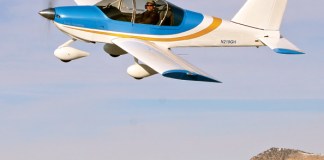
The aircraft described in the photo as a beautiful RV-6A is N214VA, a Vans demonstrator RV-14A.
Comments are closed.