
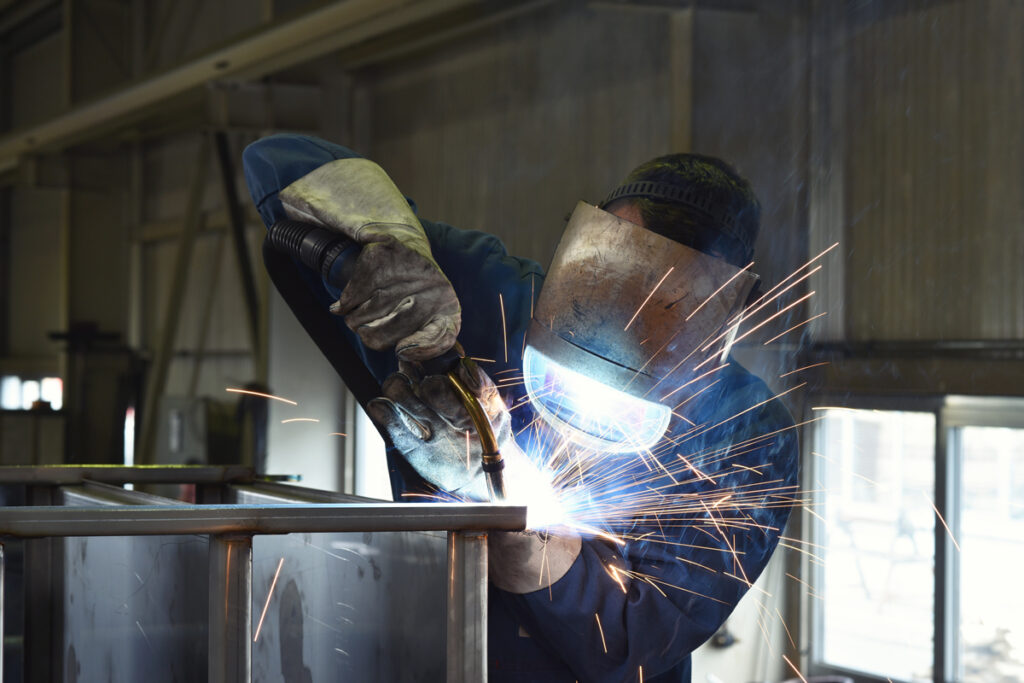
The choice of welding method for your homebuilt aircraft’s steel tube fuselage represents one of the most critical decisions in your building journey. Each welding process offers distinct advantages and challenges that directly impact structural integrity, cost, and construction timeline. This comprehensive analysis examines five primary welding methods available to amateur builders, evaluating their technical merits, regulatory compliance, and economic considerations for aircraft steel tube construction.
Recent developments in welding technology, coupled with evolving FAA guidance and the availability of specialized equipment like plasma welding systems, have expanded options beyond the traditional oxy-acetylene approach that dominated homebuilt aviation for decades. Understanding these alternatives empowers builders to make informed decisions based on their specific requirements, skill levels, and budget constraints.
Regulatory Framework and FAA Requirements
The Federal Aviation Administration provides guidance for aircraft welding through Advisory Circular AC 43.13-1B, which establishes acceptable methods, techniques, and practices for aircraft inspection and repair. While this document primarily addresses certificated aircraft maintenance, its principles apply to amateur-built aircraft construction under the experimental category.
For experimental amateur-built aircraft, builders must demonstrate that the major portion (more than 51 percent) of fabrication and assembly tasks were completed by amateur builders. Welding represents a significant component of this fabrication requirement, and the FAA recognizes several welding processes as acceptable for aircraft construction, provided they meet established standards for materials and workmanship.
The regulatory framework requires that welding be performed using materials conforming to accepted government or industry standards such as Army/Navy (AN), National Aerospace Standards (NAS), Technical Standard Order (TSO), or Military Specifications (MIL-SPEC). For steel tubing applications, 4130 chromium-molybdenum steel conforming to specifications MIL-T-6731 (welded) or MIL-T-6736 (seamless) represents the standard choice for aircraft construction.
Visual inspection requirements mandate that completed welds exhibit smooth seams, uniform thickness, proper tapering into base metal, and freedom from blowholes, porosity, projecting globules, pitting, burning, cracking, or distortion. The regulatory emphasis on proper inspection and documentation underscores the critical nature of welding quality in aircraft construction.
Oxy-Acetylene Welding: The Traditional Standard
Oxy-acetylene welding remains the most common approach in homebuilt and restoration circles, representing the historical foundation of aircraft construction techniques. This gas welding process uses a highly concentrated oxygen/acetylene flame to bring metal surfaces to melting temperature, creating fusion joints with separate filler rod addition.
Technical Advantages for Aircraft Construction
The primary advantage of oxy-acetylene welding lies in its broader heat-affected zone compared to arc processes. This wider heating pattern provides partial normalization during the welding process, naturally relieving stresses caused by thermal expansion and contraction. The flame’s adjustable characteristics allow precise heat control, essential when welding thin-wall tubing typical in aircraft construction.
The versatility of the acetylene torch extends beyond welding to include heating, bending, and general metalworking tasks essential in aircraft construction. This multipurpose capability justifies the equipment investment for builders who require extensive fabrication capabilities throughout their project.
Oxy-acetylene welding produces predictable weld characteristics with 4130 steel, typically resulting in heat-affected zones that test at nearly zero hardness adjacent to the weld. This contrasts favorably with some arc processes that can create harder, potentially more brittle zones.
Technical Limitations
The primary disadvantages include slower welding speeds compared to modern arc processes and the ongoing expense of gas cylinder refills. The fire hazard associated with acetylene storage and use requires careful attention to safety protocols, particularly in home workshop environments.
Skill development requires significant practice to achieve consistent results, and the manual nature of the process makes it less suitable for production welding scenarios where speed and repeatability are priorities.
Equipment Costs and Requirements
A basic oxy-acetylene setup suitable for aircraft construction typically costs between $350-800, excluding gas cylinders. This includes regulators, torches, hoses, and cutting attachments. Gas cylinder deposits and refills represent ongoing operational expenses that can be substantial for builders in rural areas distant from welding supply distributors.
Professional-grade equipment with precision regulators and specialized aircraft welding tips can approach $1,000 or more, but such investment provides improved control and consistency essential for critical aircraft applications.
TIG Welding: Precision and Control
Gas Tungsten Arc Welding (GTAW), AKA Tungsten Inert Gas, or TIG welding, has gained significant acceptance in aircraft construction due to its precise control characteristics and clean weld appearance. This process uses a non-consumable tungsten electrode to create the welding arc while an inert gas shield protects the weld pool from atmospheric contamination.
Technical Advantages
TIG welding offers superior precision control, making it ideal for thin-wall tubing applications common in aircraft construction. The process produces extremely clean welds with minimal spatter and no flux residue, eliminating post-weld cleaning requirements. The precise heat input control helps minimize distortion in lightweight aircraft structures.
The process excels when welding aluminum components, stainless steel, and exotic alloys increasingly used in modern homebuilt designs. TIG welding provides excellent weld quality that often meets or exceeds requirements for critical aerospace applications.
Advanced TIG systems offer pulsed welding capabilities that further reduce heat input and distortion while improving bead appearance and penetration control. These features prove particularly valuable when welding critical structural joints.
Technical Limitations and Considerations
The primary concerns with TIG welding for aircraft applications relate to the concentrated heat input and potential for creating harder heat-affected zones compared to oxy-acetylene welding. Some sources suggest that TIG welding may require post-weld stress relieving to achieve optimal mechanical properties.
The process demands high skill levels and extensive practice to master, particularly for out-of-position welding common in aircraft construction. Welding speeds are significantly slower than other arc processes, extending construction timelines.
Consumable costs are substantial, including argon shielding gas and tungsten electrodes, with average usage costs higher than MIG welding due to slower welding speed]. Equipment setup and parameter selection require more technical knowledge than simpler processes.
Equipment Investment
TIG welding equipment ranges from $500 for basic hobby units to over $5,000 for professional-grade machines with advanced features. A complete aircraft-suitable setup including gas cylinders, regulators, and accessories typically requires $2,000-3,000 investment.
The Miller Multimatic 220 AC/DC represents a popular choice among homebuilders, offering TIG, MIG, and stick capabilities in a single unit priced around $4,285. Such multi process machines provide flexibility for builders working with diverse materials and applications throughout their project.
MIG Welding: Speed and Productivity
Metal Inert Gas welding, commonly called MIG welding, has gained traction in aircraft manufacturing due to its superior speed and relatively easy learning curve. The process uses a continuously fed wire electrode with shielding gas protection, enabling faster welding speeds than TIG or oxy-acetylene methods].
Technical Performance
MIG welding offers significant productivity advantages, with welding speeds 50% to 200% faster than TIG welding depending on material thickness and joint configuration. The continuous wire feed eliminates the need to add separate filler material, reducing skill requirements for acceptable results.
The process works well on a variety of steel alloys used in aircraft construction and can accommodate material thicknesses from very thin sheet to heavy structural members. Modern MIG equipment provides excellent arc stability and bead appearance suitable for aircraft applications.
Several major aircraft manufacturers, including American Champion and Maule, have successfully used MIG welding for production aircraft since the 1960s. This commercial validation demonstrates the process’s suitability for aircraft applications when properly implemented.
Critical Concerns for Aircraft Applications
The primary concern with MIG welding for aircraft applications involves the potential for elevated hardness in the heat-affected zone. Sources indicate that MIG welds can produce hardness levels of Rc 38-41 in the weld zone, compared to Rc 19-23 for unwelded 4130 tubing. This increased hardness may affect ductility and create potential brittleness issues.
Industry experts recommend careful attention to welding parameters and post-weld stress relieving to mitigate these concerns. The American Petroleum Institute sets maximum hardness limits of Rc 27-30 for their pipeline welds specifically due to martensitic formation risks associated with rapid cooling.
The process requires more complex equipment setup compared to stick welding and depends on shielding gas availability, limiting its suitability for field repairs. Spatter and slag removal may be required depending on welding parameters and techniques used.
Equipment and Operating Costs
MIG welding equipment suitable for aircraft applications ranges from $300 for basic hobby units to $2,000 for professional machines]. The Lincoln Power MIG 215 MPi, priced around $2,249, represents a popular choice for serious homebuilders.
Ongoing consumable costs include welding wire and shielding gas, typically resulting in lower operational costs than TIG welding due to faster welding speeds. Gas mixture selection (typically 75% argon/25% CO2) affects both weld quality and operating costs.
Plasma Arc Welding: Advanced Technology
Plasma Arc Welding (PAW) represents an advanced welding technology increasingly used in aerospace applications. This process uses a constricted arc between a tungsten electrode and the workpiece, creating extremely high temperatures and precise heat input control.
Technical Capabilities
Plasma welding offers several advantages for aircraft construction, including keyhole welding capability that enables single-pass penetration on thicker materials while maintaining precise heat input control. The concentrated heat source produces minimal distortion compared to conventional arc welding processes.
The process provides exceptional weld quality with deep penetration and minimal heat-affected zones. Variable polarity plasma arc welding (VPPA), developed specifically for aerospace applications, offers particular advantages when welding aluminum alloys.
Plasma welding can accommodate materials from foil thickness to heavy plate, making it suitable for diverse aircraft applications. The process produces consistently high-quality welds suitable for critical aerospace applications.
The Multiplaz System
Plasma welding is my personal go-to choice for almost all welding projects. The Multiplaz 3000/3500 represents a unique approach to plasma welding, using water and alcohol solutions instead of traditional shielding gases. This Russian-developed system earned recognition at the Geneva World Invention Show and offers several compelling features for aircraft builders.
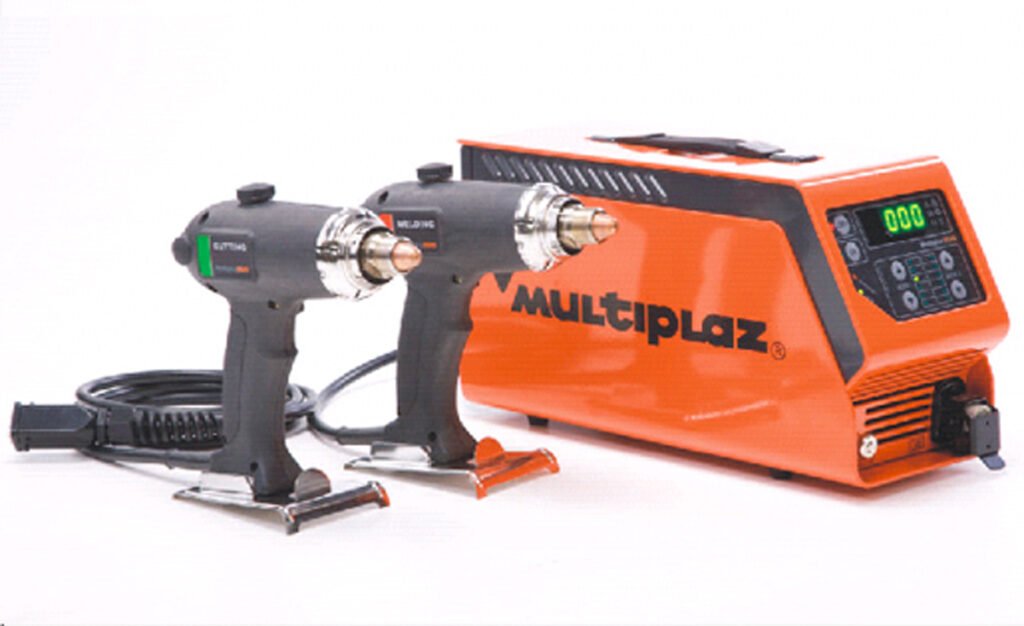
The system provides welding, cutting, brazing, and heating capabilities in a single portable unit weighing approximately 30 pounds with a carrying case. Operating on both 110V and 220V power, the system offers flexibility for various workshop configurations.
The Multiplaz 3500 can weld steel from 0.4mm to 50mm thickness and cut steel up to 10mm thick. The absence of expensive consumables beyond water and alcohol provides long-term operating cost advantages. The system creates a vapor shield around the plasma arc, reducing atmospheric contamination and hazardous emissions.
System Limitations and Considerations
The primary limitation is the substantial initial investment, with the Multiplaz 3500 priced at $3,900 at time of writing. This represents a significant cost compared to traditional welding equipment, though the multi-process capability may justify the investment for some builders.
The technology is relatively new and not widely available through traditional welding supply channels, potentially limiting service and support options. Limited experience within the homebuilt community means fewer sources for technique development and troubleshooting guidance.
Stick Welding
Shielded Metal Arc Welding (SMAW), commonly called stick welding, represents the most economical entry into arc welding. This process uses a flux-coated consumable electrode that provides both filler metal and arc shielding. However, while stick welding excels for heavy-duty applications it is extremely difficult when working with thin-wall tubing typical in aircraft construction. The high heat input and coarse arc characteristics make it unsuitable for precision work on lightweight structures. According to the EAA, most aircraft applications require the finesse available only through gas or TIG welding processes.
Heat Treatment and Stress Relief Considerations
Post-weld heat treatment represents a critical consideration for aircraft welding, particularly with modern arc processes that can introduce residual stresses. The FAA recognizes that welding introduces thermal stresses that may require mitigation through controlled heating and cooling cycles.
Stress Relief Principles
Welding creates residual stresses through localized heating and cooling cycles that cause material expansion and contraction. These stresses can lead to distortion, cracking, or reduced fatigue life if not properly addressed. Post-weld heat treatment addresses these issues by controlled heating to temperatures that allow stress relaxation without affecting material strength.
For 4130 steel aircraft construction, stress relieving typically involves heating to temperatures between 1000-1200°F and controlled cooling. Thin-wall tubing (.120″ and under) typically does not require stress relief, while thicker sections benefit from this treatment.
Process-Specific Requirements
Oxy-acetylene welding inherently provides some stress relief through its wider heating zone and slower cooling rates. TIG and MIG welding, with their concentrated heat input, may benefit more from formal stress relieving procedures.
Some builders report successfully using oxy-acetylene rosebud tips to provide localized stress relief for TIG welds, combining the precision of TIG welding with the stress relief benefits of gas heating. This hybrid approach offers potential advantages for critical applications.
Economic Analysis and Equipment Selection
The total cost of welding equipment extends beyond initial purchase price to include ongoing consumables, maintenance, and productivity factors that affect overall project economics.
Initial Investment Comparison
Stick welding offers the lowest entry cost ($100-1000) but limited aircraft applicability. Oxy-acetylene systems ($350-800) provide proven aircraft capability with moderate initial investment. MIG systems ($300-2000) offer good capability-to-cost ratios for builders seeking productivity.
TIG systems command higher initial investments ($500-5000+) but provide superior precision and weld quality. Plasma systems, particularly the Multiplaz units ($3900), require the highest initial investment but offer unique multi-process capabilities.
Operating Cost Considerations
Gas-dependent processes (oxy-acetylene, TIG, MIG) involve ongoing cylinder refills or purchases that can be substantial over the course of a project. Rural builders may face higher gas costs due to delivery charges and minimum order requirements.
Stick welding has minimal ongoing costs but limited aircraft applicability. The Multiplaz system’s water-based operation offers potential long-term savings after the high initial investment.
Productivity and Time Value
Construction time represents a significant factor in total project costs. MIG welding’s speed advantages can reduce construction time substantially compared to oxy-acetylene or TIG welding]. For builders whose time has significant value, productivity improvements may justify higher equipment costs.
TIG welding’s precision reduces the need for post-weld cleanup and fitting adjustments, potentially offsetting its slower welding speeds. The “right the first time” characteristic of quality TIG work provides value beyond simple speed comparisons.
Modern Equipment Recommendations
Based on current market offerings and homebuilder requirements, several equipment configurations merit consideration for aircraft construction projects.
Entry-Level Recommendations
For builders seeking proven aircraft welding capability with moderate investment, a quality oxy-acetylene outfit from established manufacturers like Victor or Smith represents the conservative choice. Total investment including cylinders typically ranges $800-1200 for aircraft-suitable equipment.
Budget-conscious builders might consider the Lincoln Power MIG 215 MPi ($2,249) for its multi-process capability and established reputation. This approach provides MIG productivity with TIG precision options as skills develop.
Advanced System Options
The Miller Multimatic 220 AC/DC ($4,285) offers comprehensive multi-process capability suitable for diverse aircraft materials. Its AC/DC TIG capability proves particularly valuable for aluminum work increasingly common in modern homebuilt designs.
For builders prioritizing cutting-edge technology and multi-process capability, the Multiplaz 3500 ($3,900) provides unique advantages despite its high initial cost. The system’s portability and low operating costs may justify the investment for builders requiring extensive cutting and welding capabilities.
Professional-Grade Considerations
Serious builders contemplating multiple projects or commercial applications might consider higher-end systems like the Miller Bobcat 265 engine-driven unit ($8,054) for ultimate flexibility. Such systems provide welding capability independent of electrical power and include auxiliary power for other construction needs.
Conclusion and Recommendations
The selection of welding equipment for homebuilt aircraft construction involves balancing technical requirements, economic constraints, and individual builder capabilities. No single welding process provides optimal solutions for all applications, and many successful builders employ multiple processes throughout their projects.
Oxy-acetylene welding remains the proven standard for homebuilt aircraft, offering excellent results with moderate equipment investment and inherent stress relief characteristics. Builders prioritizing traditional methods and proven results should consider this approach.
TIG welding provides superior precision and weld quality but requires higher skill levels and equipment investment. Builders working with diverse materials or requiring exceptional weld appearance should evaluate TIG systems.
MIG welding offers productivity advantages and relatively easy learning curves but requires attention to potential hardness issues and stress relief requirements. Builders prioritizing construction speed over traditional approaches may find MIG welding attractive.
Plasma welding represents cutting-edge technology with unique capabilities but requires substantial initial investment. Builders seeking multi-process capability and minimal operating costs should consider these systems despite their high entry costs.
The regulatory environment provides flexibility for amateur builders to select welding processes appropriate to their specific requirements, provided they maintain acceptable standards for materials and workmanship. Proper documentation, inspection, and adherence to established practices ensure regulatory compliance regardless of process selection.
Success in aircraft welding ultimately depends more on proper technique, adequate practice, and quality materials than on specific process selection. Builders should prioritize developing competency in their chosen process rather than pursuing the theoretically optimal equipment configuration. The safest aircraft is the one built with methods the builder has mastered, regardless of theoretical advantages offered by alternative approaches.








Just a comment that laser welding was not part of the article. I recently purchased a laser welder and was totally amazed at the results. I have been TIG welding for almost 30 years and laser welding was much easier to implement and control. My laser unit is only 700 watts but for 4130 at a 1/4″ or less works extremely well.
Comments are closed.