Back in the old days, the measure of a good homebuilt airplane was simply that it made it into the air. When I was young, there was a ramshackle hangar down at the end of the row, almost in the woods, and rumor had it that a few guys hung out there with an airplane they had built. Every once in a while, it would be rolled out, and the engine would be run—and on rare occasions, it would fly around the patch once or twice. Then it would get rolled back into the hangar for repairs and/or modifications. Rumor had it that it got 10 hours of work done for every hour of flying. Such were the roots of experimental aviation and EAA.
Today, we have far different expectations for homebuilt aircraft produced from kits. While you can still buy plans and material packages, most modern builders open up a box of nicely packaged parts that all fit together properly according to well-written and fully illustrated instructions. New owners are almost disappointed if they don’t get that “new airplane smell” when they open the canopy or doors. It’s a different world, and one in which people tend to expect perfection in all things purchased—including airplane kits.
Unfortunately, perfection isn’t a goal—it’s a trap. It’s a time sink. It’s the road to perdition—one which, if you start down that path, is likely to end up with a stalled project that eventually gets sold.
Let’s be clear—the goal of building as well as you can is admirable and should be rewarded. Building a solid, safe airplane isn’t the high bar to be reached—it is the minimum goal that is required to finish. But safe and solid is not the same as perfect. Anyone who has engaged in anything that requires skill knows that perfection is actually unattainable.
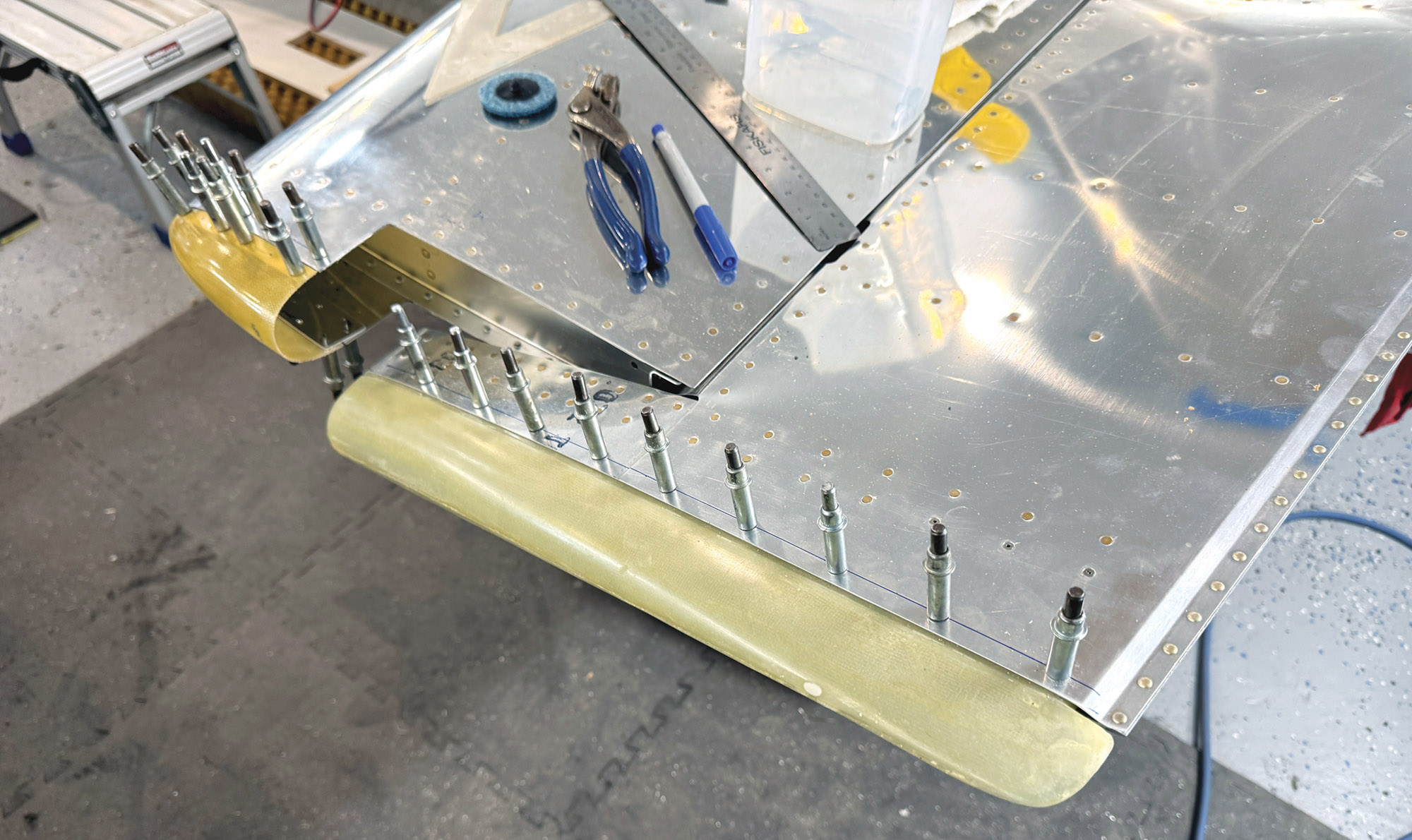
Yes, you get better all the time. Every rivet you set, every composite layup you do, and every landing you fly makes you better. You refine your technique, make fewer errors, achieve greater precision—or at least we hope so! But “perfection” is a lofty goal that is (according to the philosophy majors) unattainable. No matter how good I might get at something, I always know I can do better—partly because as I improve, my standards become higher, my eye more critical. I realize that while I drilled that hole within 1/64th of its specified location, if I had used my optical center punch, I could have gotten it even closer.
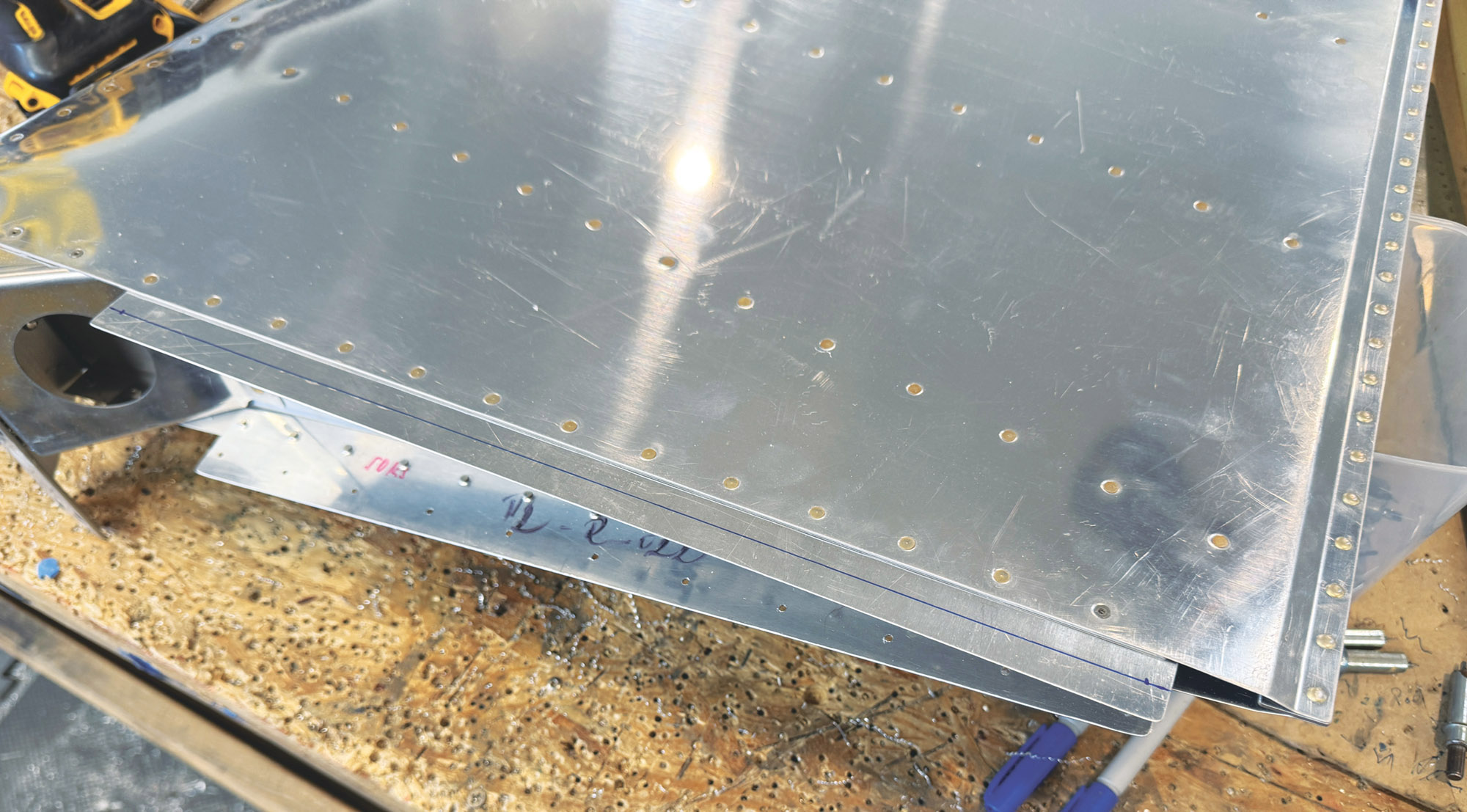
So if perfection is unattainable, what should be our goal? Is it the standard of a Gold Lindy winner? That’s fair enough. Truth be told, a few first-time builders have come out of nowhere at Oshkosh and taken away that gold statue. It’s not common, but it happens. Sometimes building “in a vacuum,” unaware of what is customary among other builders, is an asset. You set your own standards based on AC 43.13, other mechanics’ handbooks, and what your Pappy taught you—and they turn out to be higher than anyone else’s.
Once again, “solid and safe” should be a bar that you must meet. Anything over and above that is, quite frankly, about ego—how much better you can do than “the other guy.” And as long as that doesn’t get out of hand, there’s no problem. I improve all the time because I see what others have done, and I challenge myself to do as well or better. But sometimes, things can get a little ridiculous.
There is the (probably apocryphal) story of two airplanes at Oshkosh that were in the finals for the Gold Lindy. They were identical, except for a row of Phillips head screws on the fuselage. One had all the “crosses” lined up identically, and the other had them tightened at random points of rotation. The judges gave the prize to the one with all the screws lined up. Which leads to the question: Is it about appearance, or proper building technique? Because almost by definition, the one with the screws lined up had some of them over-torqued and some under-torqued, while the one with random orientation probably had them all torqued correctly.
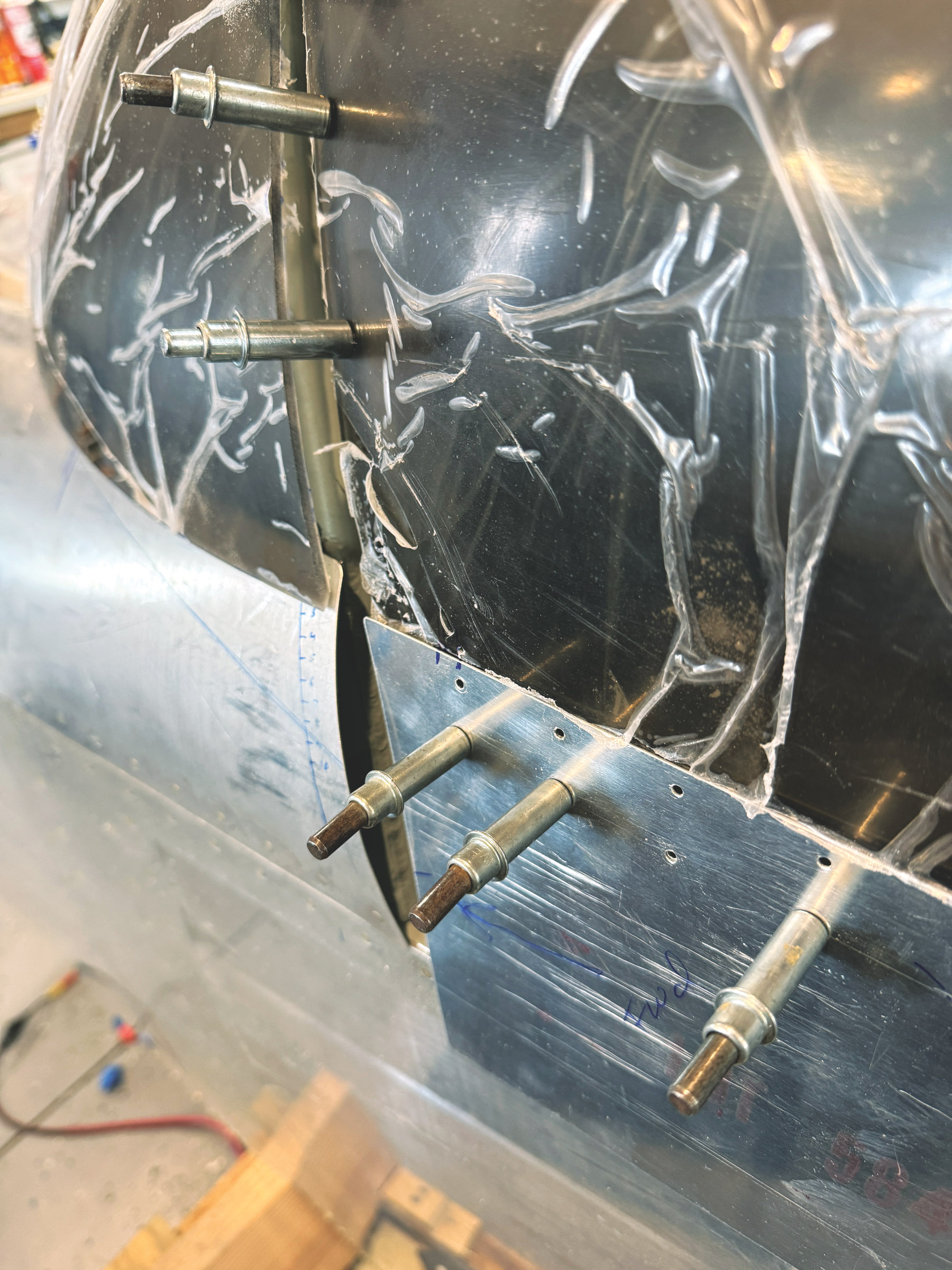
So what, then, is “perfect”—other than unattainable? In the aeronautical engineering world, we have a saying attributed to Antoine de Saint-Exupéry: “Perfection is achieved, not when there is nothing more to add, but when there is nothing left to take away.” In other words, lightness and simplicity are the goals. That doesn’t automatically mean that an unpainted RV-6 with a wooden prop and lightening holes in every rib is perfect, whereas one with a nice paint job, constant-speed prop, and full IFR panel isn’t. Perfection has to account for the goals of the designer and the needs of the pilot. The light airplane is perfect for aerobatics and day flying. The heavier one is perfect for cross-country travel in changing weather. Using one for the other’s mission will be a compromise.
Perfect, in my mind, is an airplane that meets your own expectations—for fit, finish, and function. I have an image of what a good rivet line looks like, what a perfect cowl gap should be. I know how I’m going to use a specific airplane and can judge how it meets the mission. I know I can paint an airplane myself—I’ve done it—but I also know I can have it done with better results. It may not be perfect by anyone else’s standards, but if people say, “Wow, what an amazing paint scheme!” I’m happy—even if, up close, there are a few runs in the clearcoat under the right light.
The Rocket will never be perfect in my mind because I know where the mistakes are. Others might not call them mistakes, but I know where I slipped with a screwdriver and scratched some primer. But it’s under the floor, and no one will see it. If I don’t obsess over it, no one else will know. There’s a spot where a grommet goes through an underfloor rib for a wire bundle. I intended to use a half-inch grommet but went one step too far on the step drill and now it’s 5/8 inch. Not what I intended, but certainly not a problem. Is it perfect? You decide.
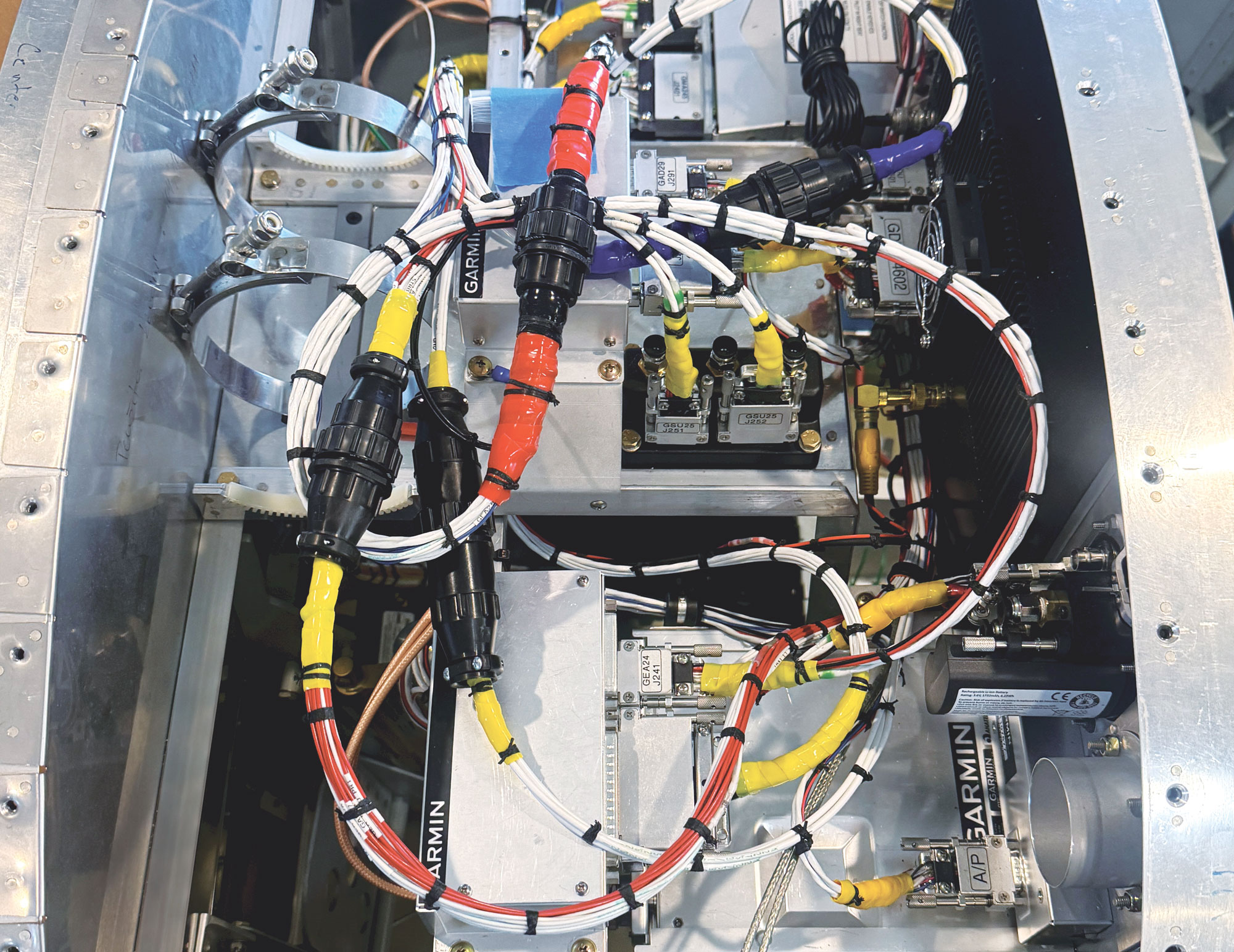
One of my biggest pleasures comes from building a wiring harness where all the wires in every bundle are parallel and laced to perfection. When I was building the harness deep under the panel, I routed a wire for the oil pressure switch in the wrong direction. I already had the whole bundle tied up beautifully. It was the result of many cramped, uncomfortable work sessions. Did I cut the bundle open and start over? Nope—I abandoned the wire in place and ran a new one from the back of the panel to the firewall. I guess I have a “spare” wire under the floor now. Perfect? By whose definition?

There are things in aircraft building that do need to be done as close to perfect as possible. Anything that holds or transports fuel must be liquid-tight and strong. Anything structural or part of the control system—those need to be right. Wiring needed to keep the engine running? Yes, do that well. But for many other things, a range of quality is acceptable, and the airplane will still be safe and serve you well.
The true skill in building isn’t achieving perfection—it’s learning how to adapt to small problems and mistakes along the way, fixing them so they don’t affect the finished product, and making sure no one will notice. Building is about adapting. I always cite the example of a major manufacturer building a wing. On the last day, a worker egg-shapes a hole. They don’t scrap the whole wing—they oversize the hole, engineer a fix, and move on. The wing is serviceable and documented as fine—but it’s no longer “perfect”…and no one cares.

Strive for a very good build. If you aim for perfection, you might never finish your first subassembly. Here’s the secret: Those less experienced than you will think what you’ve done is perfect. You’ll know it’s not. You’ll know you tipped a rivet just slightly. You’ll also know that it doesn’t matter. It’ll be hidden forever, and the finished airplane will impress. You’ll know you can always do a little better—and that is the challenge that keeps us coming back to the shop.
Photos: Paul Dye, Louise Hose
![[Credit: magniX]](https://www.kitplanes.com/wp-content/uploads/2026/04/Magnix.jpg?w=218&h=150&crop=1 "magniX Opens Pre-Orders for an Electric Engine Aimed at Homebuilders")