![Andrew bought a Thorp T-18 project, which started him down the road to experimental aircraft project ownership and construction. [Credit: Andrew Robinson]](https://www.kitplanes.com/wp-content/uploads/2026/04/IMG_7725-768x1024.jpeg)
By the time you read this, some number of my columns and articles will have already made it into print, and you may be wondering, “Who is this guy, and why is he clogging up my favorite magazine?” Fair enough.
A little under forty years ago I earned a degree in aerospace engineering (Go Jackets!) just in time for the end of the Reagan defense spending and just before a computer science degree could have made me a stock-option millionaire in the dotcom boom. There is a lot to be said for timing, but I don’t have it. After a year of metallurgy grad school and job hunting, I was hired by Boeing Wichita to be a liaison engineer where my second education in aerospace began. Out there on the flight line my hands-on experience included programs for re-engining the KC-135 with the CFM-56 engines, plus converting 747s into Special Freighters and modifying a second 747 into a Space Shuttle carrier. I also saw the second 747-200B being transformed into a VC-25A to function as Air Force One, but only from afar since it was all behind a fence and I wasn’t cleared for that program. Still, cool to see it in green and before it became AF-1.
I was young, thinner, and had free roam of the flight-line to explore and learn as much as possible about the aircraft in our hangars. Given this license to explore, I have been into nearly every nook and cranny of a 747, including inside the center wing tank (I’ve been in smaller hotel rooms), and all the way to the top of the access passage in the vertical fin. One unexpected treat for 23-year-old me was getting to ride the brakes of a 747 that was being towed. This meant that I sat there in the cockpit three stories up with the instruction not to touch anything unless I was asked to jump on the brakes by the mechanic who was also there for that purpose. From that adventure, I learned two things: someone is present to ride the brakes on the remote chance that a tow bar breaks or becomes unhooked, and there are guys who aren’t necessarily pilots but are authorized for ground operations such as engine start and taxiing. Cool.
My undergraduate degree was heavily on the theoretical and math side of things, because ultimately my school preferred to be channeling undergraduates towards grad degrees, particularly doctorates. (Which I don’t completely agree with and is a whole ‘nother discussion.) That is why I contend that my second education in aerospace, the practical side, has been every bit as valuable as the original degree.
Liaison engineering is still an apprenticeship type of specialty where you shadow an experienced engineer and learn the trade until such time as your peers determine that you are knowledgeable enough to disposition repairs on your own. Getting signature authority at an airframe manufacturer is similar to being signed off to solo: you realize that the training wheels are off and that the soundness of that repair is based on your disposition that you signed your name to. To be sure, there are times when you’ll get a stress guy to sign off on the stress analysis, or you’ll converse with more senior engineers as a “sanity check” to what you are thinking, but for the most part you are calling out how to execute a given repair and signing your name to it. I will also note that both Lockheed and Boeing have (or had at the time) a handbook of standard liaison repairs with all the required steps and specs to adhere to.
Fortunately, many of the issues are repetitive in nature such that there are a number of standard repairs that you’ll personally develop so that you aren’t reinventing the wheel every time. For the KC-135 re-engining program, a single engineer supported the program once the aircraft began coming in for the engine replacements and other maintenance. Because they were all the same airframe, they all had cracks, corrosion, and other issues in the same places. After the initial batch of airframes, the liaison engineer for the KC-135R program had a drawer full of dispositions ready to go. A couple of times per day he would take a stack of the problem reports (PRs) from the inspectors out to the hangar floor, examine each aircraft to verify the problem was as reported, as expected, and nothing new, and then start stapling signed and stamped dispositions to the PRs. Very efficient, but a bit atypical in that you don’t often have such a homogenous collection of aircraft and repairs. Similarly, the Liaison handbooks are handy in that you can specify “repair per Standard Repair XYZ” and the handbook’s XYZ repair includes the materials, the fasteners, the repair, the process, and all routine call-outs such as the specs for the appropriate primer or sealant.
The rest of my on-the-job training was in subjects directly applicable to homebuilt aircraft, particularly sheet metal aircraft. I learned about different types of fasteners, rivet spacing, edge distance, bend radii, stress risers, fatigue, etc. Again, it was an entire second education that my undergraduate degree did not address on the practical side, or barely touched upon. As an aside: most of these same topics are addressed in workshops at AirVenture and Sun-n-Fun, third party workshops, and in past issues of this magazine. I highly recommend learning these practical matters if you are building or thinking about building a homebuilt aircraft. You’ll be glad you did.
After a stint on the flight line, I joined the 777 program where I was one of the youngest designers on the Wichita team. During a program briefing where they showed the scatter plot of age and experience, I was not on the viewgraph (yes it was that long ago…) because I was literally off the lower left corner of the chart. Boeing was a truly great place to work back then, and the “Triple Seven” program was second to none, but I was a long way from home and after about 15 months headed back south to work on cargo planes at Lockheed. While there, my job roles included liaison engineering, designer, and systems engineering. Then to Rockwell (soon to be acquired by Boeing) to play with small missiles for a little over a year before that facility was dispersed to other locations. I use the word “play” because I was getting to work with small rockets and get paid for it. Way cool. I went back to school part time to learn computer science (still too late for the dotcom boom) and was fortunate to start designing cockpit displays, including several of those now in use on the flight deck of the C-5M.
Due to the user interface experience, a friend recruited me to telecom to overhaul some proprietary UIs. I knew nothing about telecom, but it was a pay raise and a fraction of the commute in Atlanta’s notorious traffic, so I entered the unknown. A later acquisition and subsequent layoffs had me back in aerospace for several more years before, yet another telecom offer that I couldn’t refuse. I now expect to retire from that industry but may wind up going back to aerospace contracting as a retirement job if need be. Who knows what the future will hold?
Rewind back to the mid-90s and I was introduced to the EAA and homebuilt aircraft by a couple of co-workers and started reading Kitplanes magazine. In one bit of paths crossing, it turns out I ran into Dick Starks, one of my favorite Kitplanes contributors, and other members of the Kansas City Dawn Patrol at a WWI fly-in in Alabama but didn’t know who they were at the time. Sadly, Starks passed away in January of this year; if you’ve never read his articles, I recommend taking the time to look them up in the Kitplanes archives. Ditto for his book, “You Want to Build and Fly a WHAT?: Or … How I Learned to Fly, Built a WWI Replica, and Stayed Married”. He was a treasure for the homebuilt community and this publication.
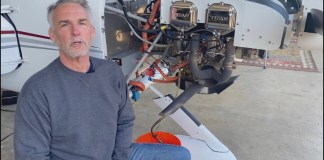
About 25 years ago, I bought a Thorp T-18 project, which started me down the road to experimental aircraft project ownership and construction. As with so many before me, after a fair amount of initial progress it was interrupted by kids, work, divorce, moves, remarriage, and life in general. I later bought another project just for the engine, then realized it was so much closer to completion than the Thorp and focused on getting the “beater” completed, which (no surprise) still took longer than expected. Meanwhile, the T-18 became part of my EAA chapter’s Youth Build sessions and is now steadily moving down the road to completion.
The homebuilding, plus teaching kids in the Youth Build sessions, has had me back in my liaison handbooks from decades ago and has kept my aerospace knowledge fairly fresh, even when my paycheck comes from a different field. That said, some of what I cover in these columns may be subject to the vagaries of memory. If I wind up being way off, feel free to let me know.
Ever present in those 30-plus years since being introduced to experimental aircraft has been Kitplanes magazine, which quickly became my favorite monthly magazine with an uninterrupted subscription since the early 90s. From its various contributors I have gleaned a wealth of knowledge, plus inspiration to continue my own projects as I first turned to Completions with each new issue. Yes, I also enjoy our sister publication Flying (and a bunch of other aviation and automotive magazines), but the content of Kitplanes was typically hitting closer to home in my efforts to have my own airplane, one that I didn’t have to rent at ever increasing $$$ per hour.
More recently, after multiple decades of benefitting from all the shop tips, build techniques, and product reviews, I decided to start trying to pass along some of my own knowledge and practical experience in the form of how-to articles which have started to be published herein, and YouTube videos, of which I will be the first to admit are very unsophisticated and (so far) few in nature. As much as I roll my eyes at social media “influencers”, I have come to appreciate that it is not as easy as it looks to create good content that is both appealing and informative, and that goes double for being able to do it on a regular basis in order to keep providing fresh material. (People ask me why I subscribe to so many magazines, and it is because I like to read a lot and magazines provide a constant stream of new, fresh, interesting content. In contrast, even if I do find a series of books that I like, I’ll probably have read the whole series in a few months or less and then be having to search for a new series.)
Do I expect to be able to monetize my social media? No, not even a little bit. It doesn’t appeal to a broad enough cross-section of viewers even with me babbling on about my three favorite subjects: aviation, cars, and running. Going back to YouTube, nearly every possible home or car repair will have someone posting a how-to video online, and I have benefitted greatly from that information, either for performing the repair myself, or at least being able to accurately diagnose the problem before having someone else do it. So hopefully someone else can likewise benefit from my experiences, whether it is rebuilding a starter or carb, or completing a marathon as an overweight, old(er) fart.
As for being an influencer, just saying that I am one (or want to be) in front of my kids and seeing their faces is good for a laugh. To clarify, in front of other people I refer to myself, very tongue-in-cheek, as a MySpace influencer; adults of a certain age will get it and chuckle, whereas the kids have no clue what MySpace is (was).
Regarding Oshkosh and AirVenture, I have only been able to attend once, and that was thirty years ago. I do, however, manage to make it down to Sun n Fun nearly every year since Lakeland, Florida is drivable for me.
Back to Kitplanes: when I started reading it decades ago, I never imagined being a contributor one day, so I am very happy to be here and (hopefully) providing interesting content. Happy flying.
![A sleek Glasair II. [Credit: Glasair]](https://www.kitplanes.com/wp-content/uploads/2026/08/Glasair-II_2863.jpg?w=218&h=150&crop=1 "Class of ’86: How 1986 Transformed the Modern Kit Building Industry")
![Careful planning and determination will get you to your goal of building and flying your own airplane. [Credit: AdobeStock]](https://www.kitplanes.com/wp-content/uploads/2026/05/Pulsar-Sunset.jpg?w=218&h=150&crop=1 "Last Bits")
![Making rare use of my drafting tools for the internal timing. [All Images Credited to Andrew Robinson]](https://www.kitplanes.com/wp-content/uploads/2026/05/P1010535.jpg?w=218&h=150&crop=1 "Conquering the Magneto, Part 2")
![[Credit: AdobeStock]](https://www.kitplanes.com/wp-content/uploads/2026/05/AdobeStock_262642207_AGCuesta.jpg?w=218&h=150&crop=1 "Winging It")
![Lowell Farrand spent years serving as an FAA DAR and is in the EAA Hall of Fame. He offers sound advise to builders. [Credit: Bill Wilson]](https://www.kitplanes.com/wp-content/uploads/2026/05/unnamed-4.jpg?w=218&h=150&crop=1 "Think Like a Builder")
![Humberd and his daughter using the 701 for some farm duty transportation. [All Images Credited to Jon Humberd]](https://www.kitplanes.com/wp-content/uploads/2026/05/1-3.jpg?w=218&h=150&crop=1 "Builder’s Spotlight")
![The integrated ECLIPSE NG features a very sunlight readable display that shows the engine and all flight data organized in one or more pages. [Credit: Fielden Aero LLC]](https://www.kitplanes.com/wp-content/uploads/2026/04/1_Screenshot_.jpg?w=218&h=150&crop=1 "FLYBOX Avionics")
![[Credit: Chat GPT]](https://www.kitplanes.com/wp-content/uploads/2026/04/Generated-image.jpg?w=218&h=150&crop=1 "Homebuilder’s Insurance")
![Checking out East Tennessee scenery from the 701. [Credit: Jon Humberd]](https://www.kitplanes.com/wp-content/uploads/2026/04/3.jpg?w=218&h=150&crop=1 "Builder’s Spotlight")