

![[Credit: Lisa Credit]](https://www.kitplanes.com/wp-content/uploads/2026/10/Experimental.jpg?w=265&h=198&crop=1 "Have You Seen Your Oplims?")
![[Credit: Andrew Robinson]](https://www.kitplanes.com/wp-content/uploads/2026/10/737_VGs2.jpg?w=265&h=198&crop=1 "Vortex Generators")
![[Credit: Van's Aircraft]](https://www.kitplanes.com/wp-content/uploads/2026/10/Vans_RV14A.jpg?w=265&h=198&crop=1 "Something New On The Horizon")
![[Credit: Lisa Turner]](https://www.kitplanes.com/wp-content/uploads/2026/10/Chute-Topaz-Gigapixel-2x-scale.jpg?w=265&h=198&crop=1 "Should You Consider A Whole Aircraft Parachute?")

Unusual Attitude
RV builder Kathleen Evans makes a case for airplane building as a true partnership between spouses based on mutual interest and respect.
Aero ‘lectrics
Columnist Jim Weir comes up with what he thinks is the optimal design for getting power from the 12-volt aircraft battery to the LED without wasting any.
The Home Machinist
Charlie Taylor, the Wright brothers trusted right-hand man and machinist, made their early powered flight experiments possible. And he built the engine using only a drill press, a lathe, a simple scale and more than a little ingenuity; by Bob Fritz.
Wind Tunnel
This month columnist Barnaby Wainfan takes a look at how the airplane responds in roll when the pilot is maneuvering. Two key factors are roll acceleration and the steady-state roll rate.
Van’s RV-12
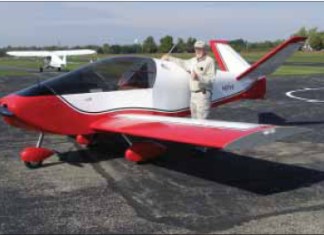
In typical fashion, Van’s Aircraft refused to rest on its laurels after the RV-12’s prototype debut last year, and sought to improve on an already good design. The new production airplane has changed (beyond its color), with a castering nosewheel, toe brakes instead of a grip, reshaped control sticks for better clearance, ground-adjustable seats fore and aft as well as in tilt, and the list goes on. Best of all, this day/VFR machine is still a delight to fly; by Ed Kolano.
Van’s RV-12
In typical fashion, Vans Aircraft refused to rest on its laurels after the RV-12s prototype debut last year, and sought to improve on an already good design. The new production airplane has changed (beyond its color), with a castering nosewheel, toe brakes instead of a grip, reshaped control sticks for better clearance, ground-adjustable seats fore and aft as well as in tilt, and the list goes on. Best of all, this day/VFR machine is still a delight to fly; by Ed Kolano.
Lancair ES-P
Robert Simon had the distinction of building the first Lancair ES-P to fly. But the process wasn’t without its challenges. The ES-P employs the cabin design and structure of the pressurized, retractable Lancair IV-P, but has a larger wing and fixed gear. During the build, Simon also deviated from the base design with changes that required factory support to accomplish. Not only did he learn much, he ultimately got the plane he needed; by Dave Higdon.
Around the Patch
Homebuilt aircraft manufacturers are sometimes reluctant to admit that they have created a less than perfect design, let alone offer a fix. Arion Aircrafts Nick Otterback is bucking that tide; by Marc Cook.
What’s New
Cub Crafters introduces a Carbon Cub kit, a new study of LSAs may affect insurance rates, and AeroLEDs offers new LED anti-collision/landing lights; edited by Mary Bernard.
In Case You Missed It

Wind Tunnel
Nine simple rules, distilled from years of experience (making—and fixing—assorted mistakes), can help any aircraft designer avoid disaster.
Design Process: Strakes and Ventral Fins
On some airplanes, the basic empennage does not provide acceptable flying qualities in all...