

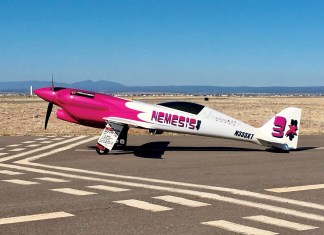
Design Process: Engine Size
The engine of an airplane must produce enough power to meet the requirements of all phases of the mission.
First, the engine must accelerate the...
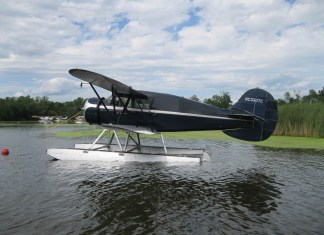
Design Process: Strakes and Ventral Fins
On some airplanes, the basic empennage does not provide acceptable flying qualities in all flight regimes. Supplemental surfaces to augment directional stability, improve high...
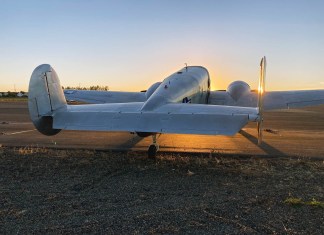
H-tails and Triple Tails
The majority of airplanes use the conventional tail configuration with a single, centrally mounted vertical tail and rudder. Sometimes, however, the vertical tail is...

Design Process: T-Tails
A T-tail is a configuration where the horizontal tail is mounted on top of the vertical tail rather than directly to the fuselage. T-tails...
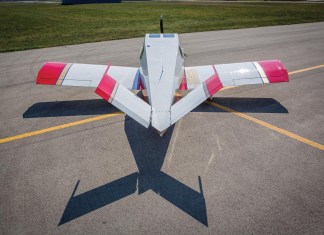
Design Process: V-Tails
A V-tail is a configuration where the horizontal stabilizer and vertical fin are replaced by a pair of surfaces mounted at a high dihedral...

Design Process: Vertical Tail Spin Considerations
Not every airplane is designed to perform intentional spins, but that doesn’t mean the designer can safely ignore the effect of the vertical tail...
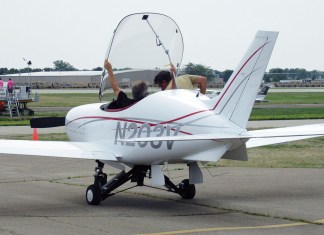
Design Process: Vertical Tail Planform
The size and shape of the planform of the vertical tail determine its ability to perform its stabilizing and control functions.
In steady-state cruise flight,...
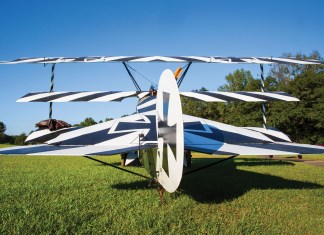
Design Process: Vertical Tail Functions–Yaw Stability and Damping
The vertical tail performs multiple tasks to stabilize and control the airplane. This month we will explore what the vertical tail contributes to the...
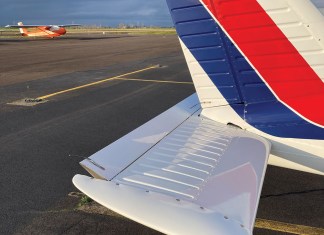
Design Process: All-Moving Tails
A conventional horizontal tail has a fixed horizontal stabilizer with an elevator hinged to it to provide pitch control. The “fixed” portion of the...
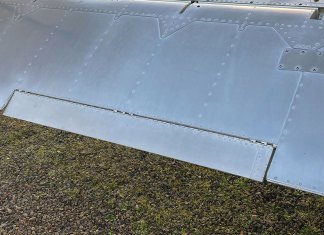
Design Process: Pitch Force Trim
For an airplane to maintain steady-state level flight it must be trimmed in pitch. The airplane is trimmed when the net pitching moment acting...
In Case You Missed It
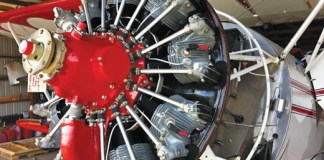
Engine Update: New Life for Old Radials
Barrett Precision Engines has taken the nine-cylinder Vedeneyev M14P radial engine to a whole other level with a fuel-injection upgrade and new ignition system. By Marc Cook.